


Skip the Calls, Make It Special — Right in the App
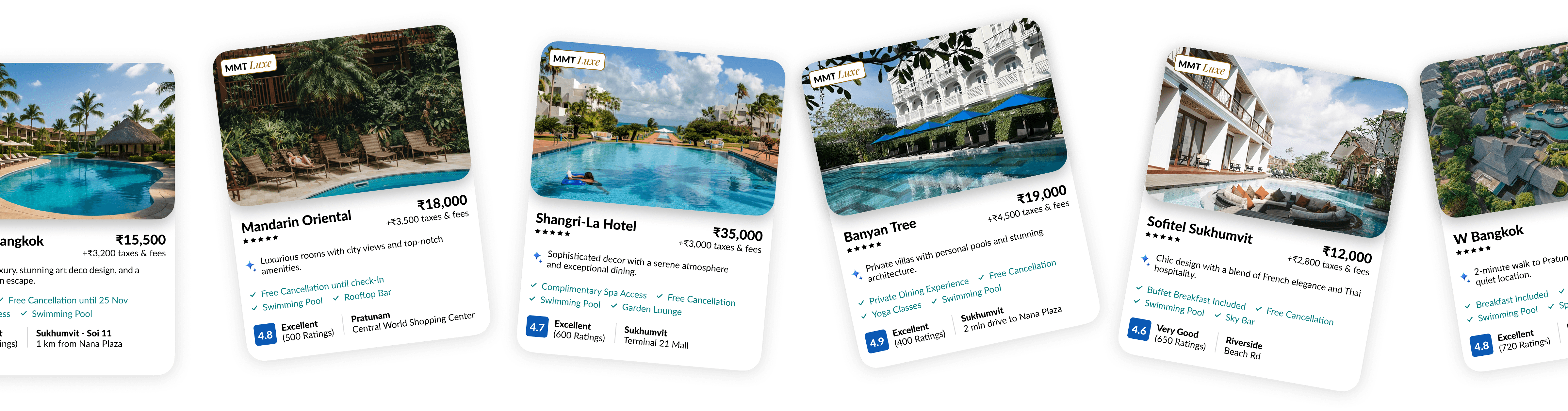
Special Requests bridges the gap between guest expectations and hotel delivery by giving travellers a clear way to share needs and ensuring hotels can act on them seamlessly.

Problem Statement
🛎️
Guests Had Special Needs
Many travellers wanted to ask for late check-ins, extra beds, or even small surprises like birthday arrangements.
🫣
Hidden Request Flow
The option to add special requests was buried deep in the booking journey, so very few people even discovered it.
⛔
No Confirmation from Hotels
Even when requests were made, guests didn’t receive any acknowledgment. This left them uncertain whether the hotel had received or acted on their request.
📋
One Long List of Requests
All types of requests were shown together in a single list, which made it harder for guests to quickly pick what they actually needed.
Business Objective
Manage requests via MMT CMS
Option to enable/disable requests
All chats centralized in Myra
Better visibility improves efficiency
Enable seamless in-app requests, no calls needed
Quick acknowledgment builds guest trust
Personal touch drives loyalty
Smooth flow boosts booking conversions
Hotel's POV
MakeMyTrip's POV
Current Design Issues
No clear entry point: There was no dedicated CTA which reduced visibility and led to low adoption.
Choice overload: Once inside the flow, all requests were shown together, creating decision fatigue
Missing context for occasional needs: There was no separate space for occasional or one-off requests
Lack of tracking & transparency: Users couldn’t see their request's progress
User Metrics

From data, I understood:
Awareness Gap – Only 16% of guests (30% premium) accessed Special Requests, showing poor discoverability despite being free.
High Drop-offs – 84% dropped off mid-flow due to confusion, effort, or lack of clarity on request placement, leading to more hotel calls.
Lost Potential – With 80% using just one request, opportunities for personalization, upsell, and higher engagement were missed.
No Communication – Only 16% of users received updates from hotels regarding the status of their requests, while hotels faced significant challenges in managing and responding to them.
Competitor Analysis

Cleartrip
Categorization of different types of requests

Ixigo
Dedicated CTA to enter the special requests funnel
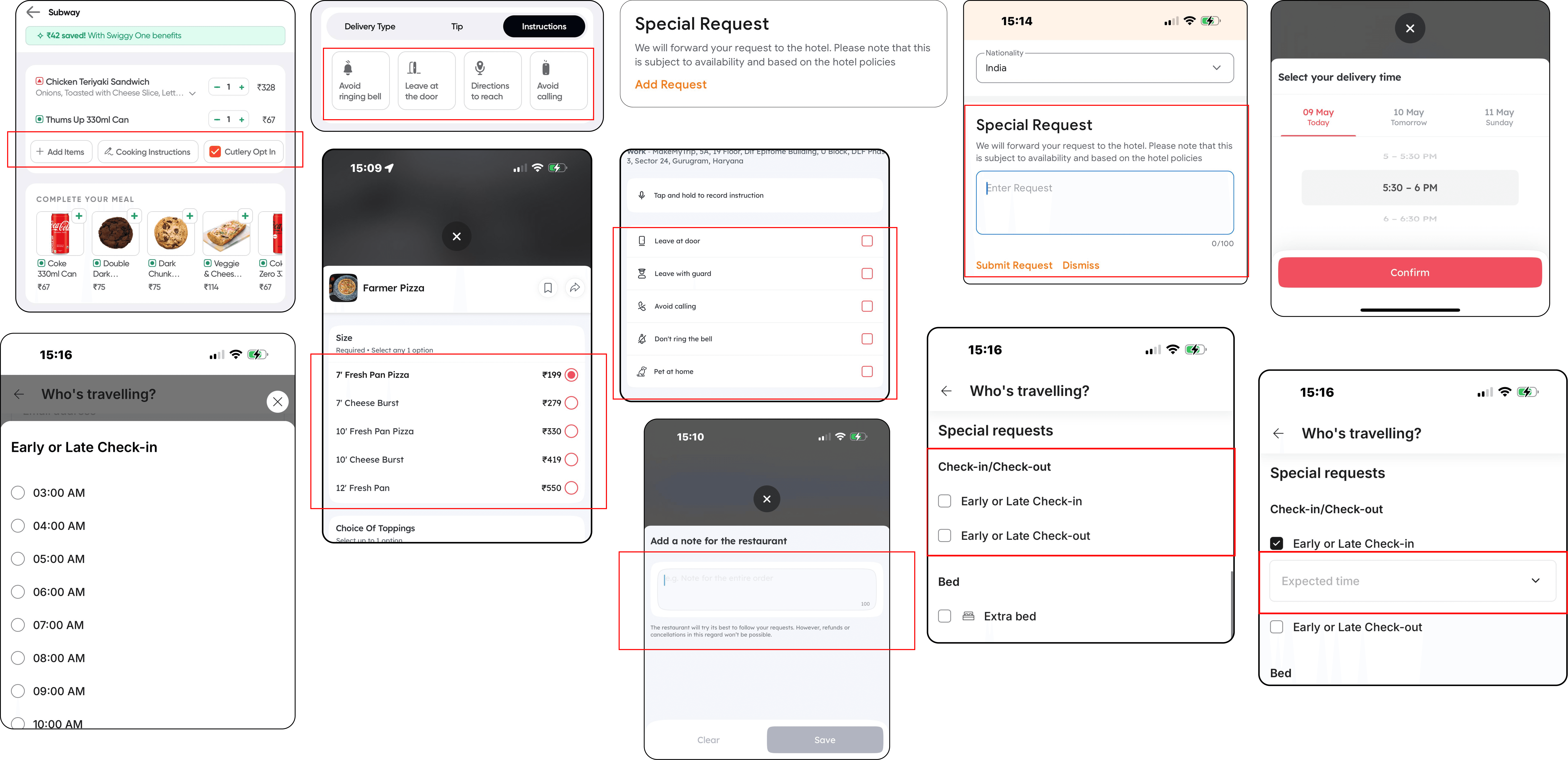
Swiggy
Great at solving issues upfront using chips to reduce number of clicks.

Zomato
Check list used similar to MMT to list different options of a product
Iterations and Feedback
The upfront Special Request card evolved through multiple iterations to strike the right balance between visibility, usability, and compactness.
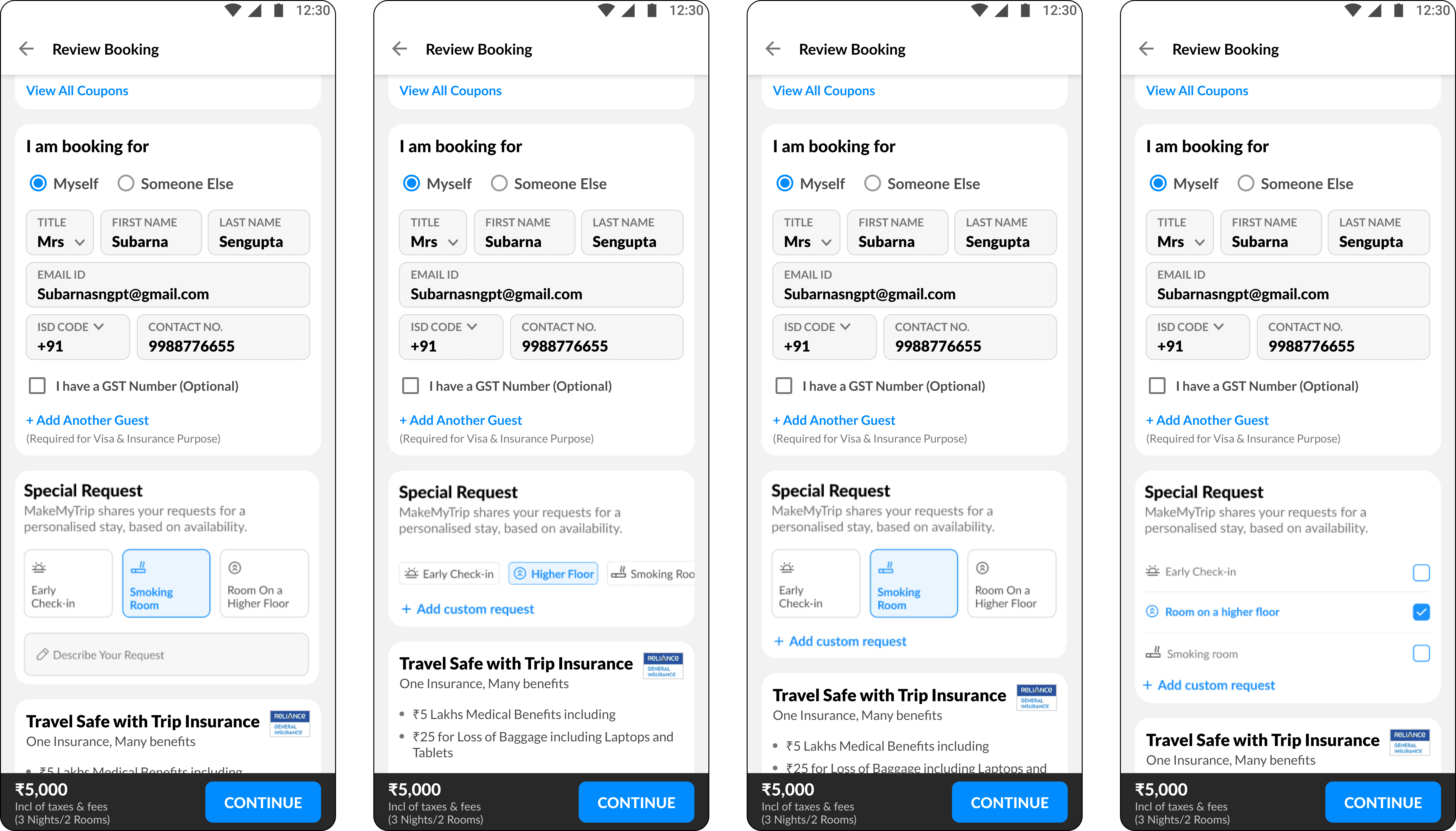
Surfacing Top Requests: Initial designs prioritized the top three most-used requests for quick access. This boosted efficiency but increased card height, pushing down critical review page content.
Custom Requests CTA: To solve free-text input issues—keyboard overlap and bloated card height—a clear “Add Custom Request” CTA was introduced. Standard and custom requests were now separated, improving usability without overloading the card.
Full Request List Upfront: Showing all requests horizontally upfront revealed low retention due to dead-scroll behavior, highlighting the risk of hidden options.
Checkbox Selection: A list-view with checkboxes (inspired by Zomato) improved visibility for standard requests. However, it increased card height and struggled with edge cases, like secondary-level (L2) requests.
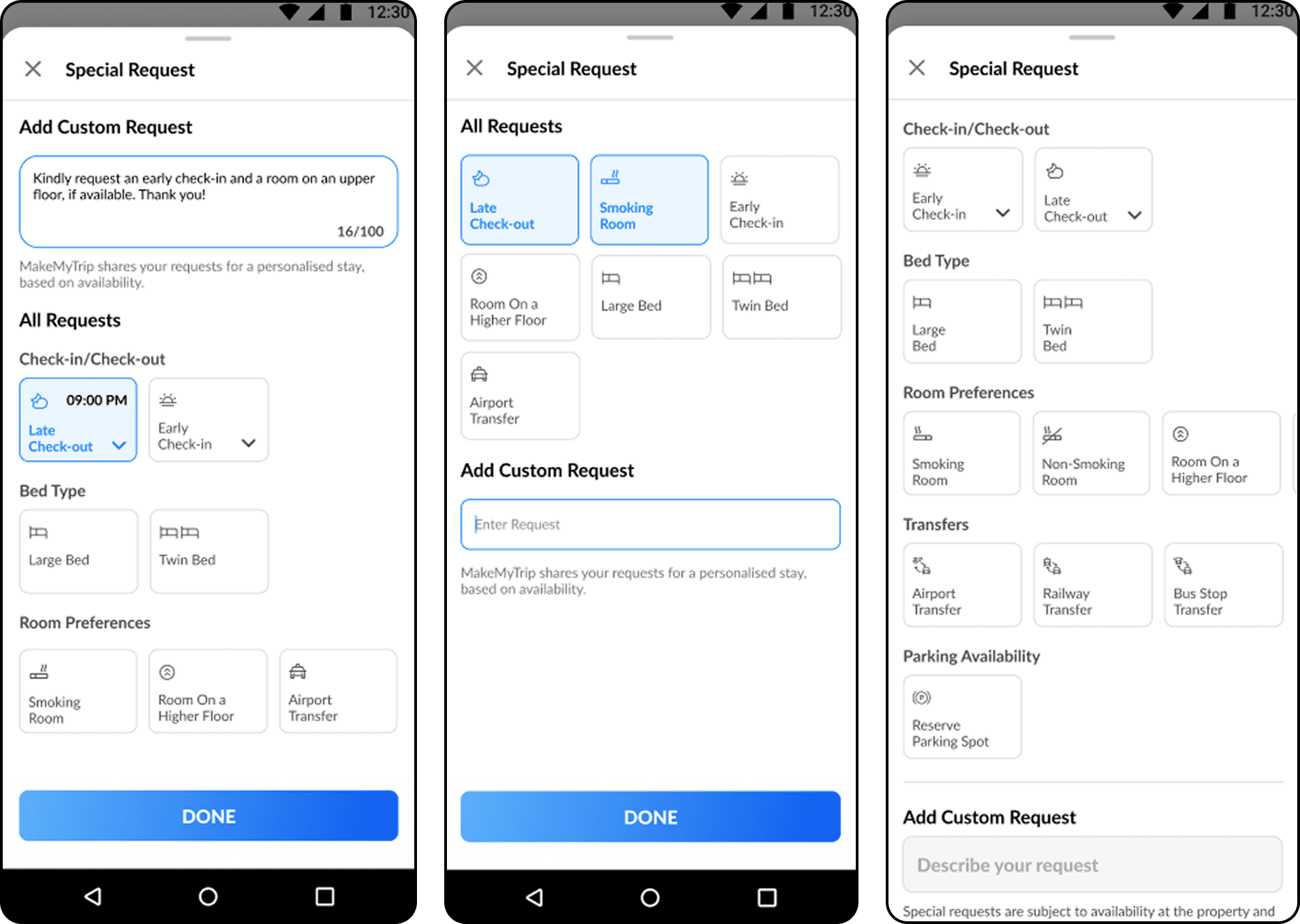
L2 Issues: Too many tabs & icons increased cognitive load. Big tabs introduced horizontal scroll, low readability when handling multiple requests and handling icons will be difficult when adding new requests in the future
Each iteration sharpened the design, gradually optimizing for discoverability, functional reliability, and a lean, scannable interface.
🎯
Precise List
+
⏱️
Quicker Decisions
+
💡
Lesser Duration
=

Special Requests
The User Interface
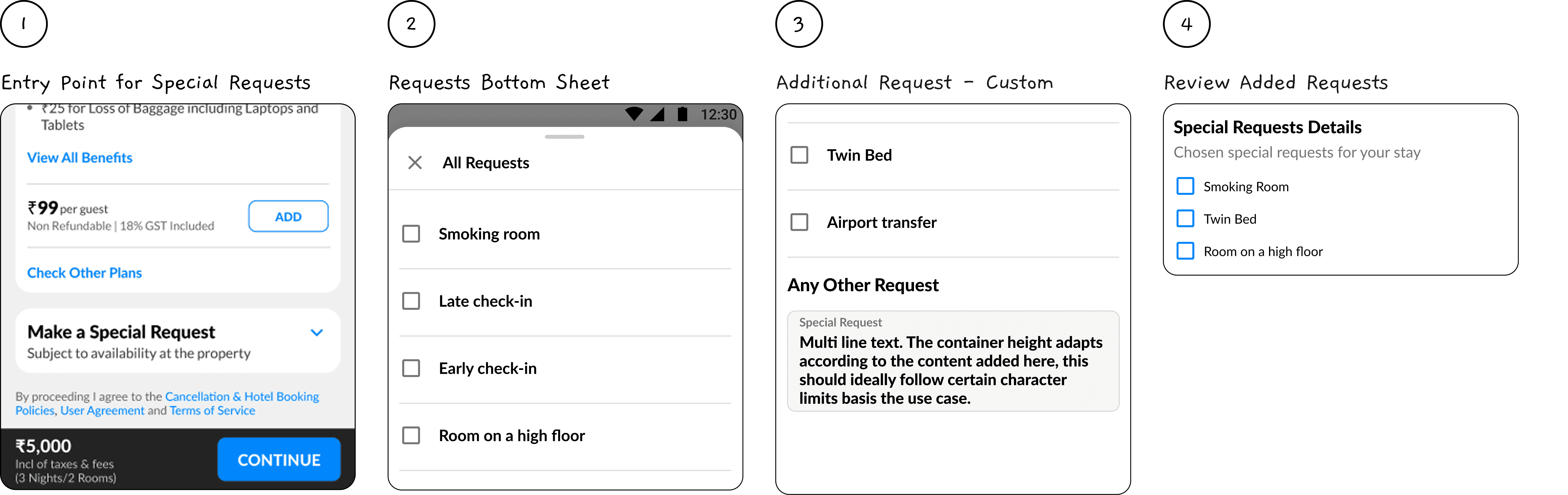
ENTRY POINTS
Enabled users to discover and begin adding requests seamlessly from any relevant touchpoint.
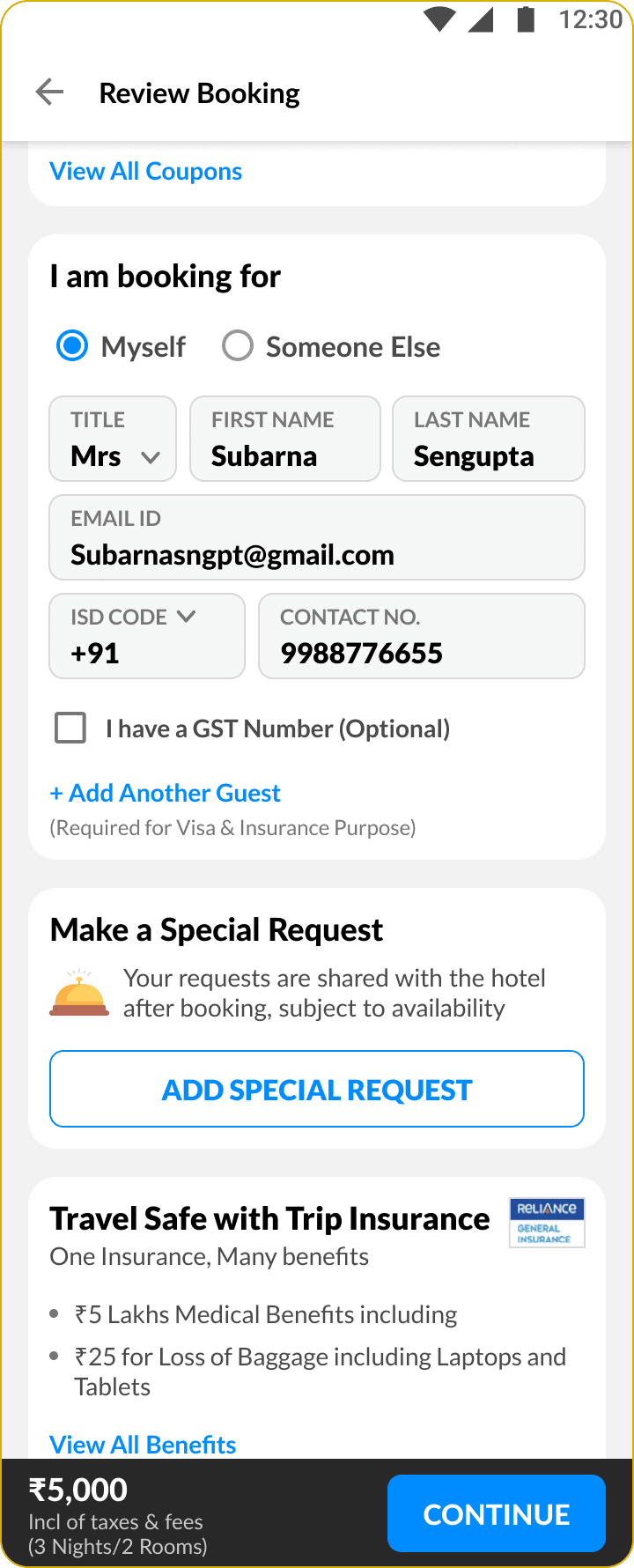
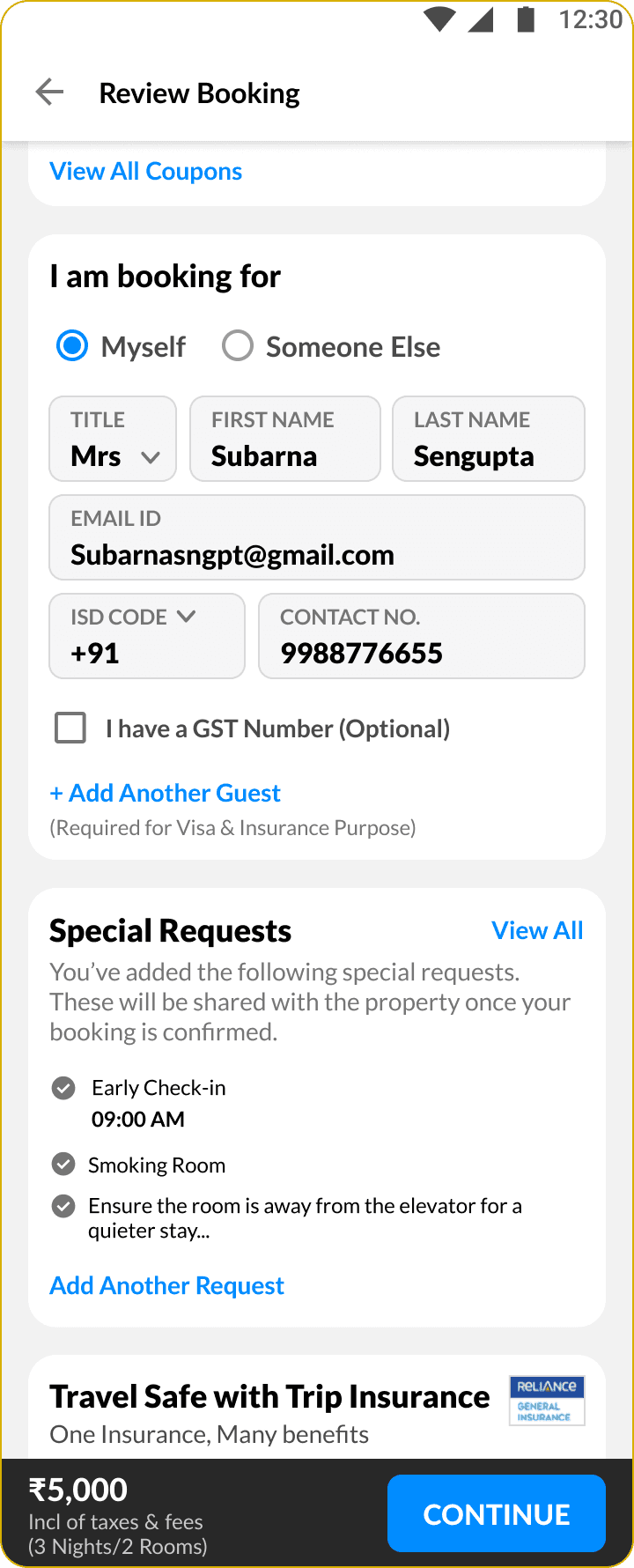
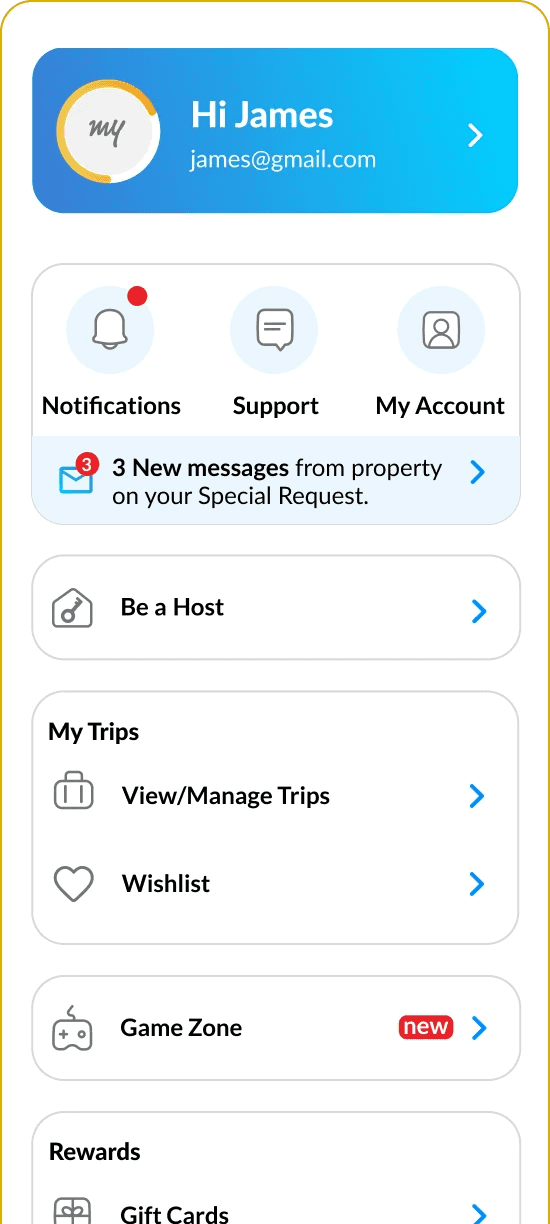
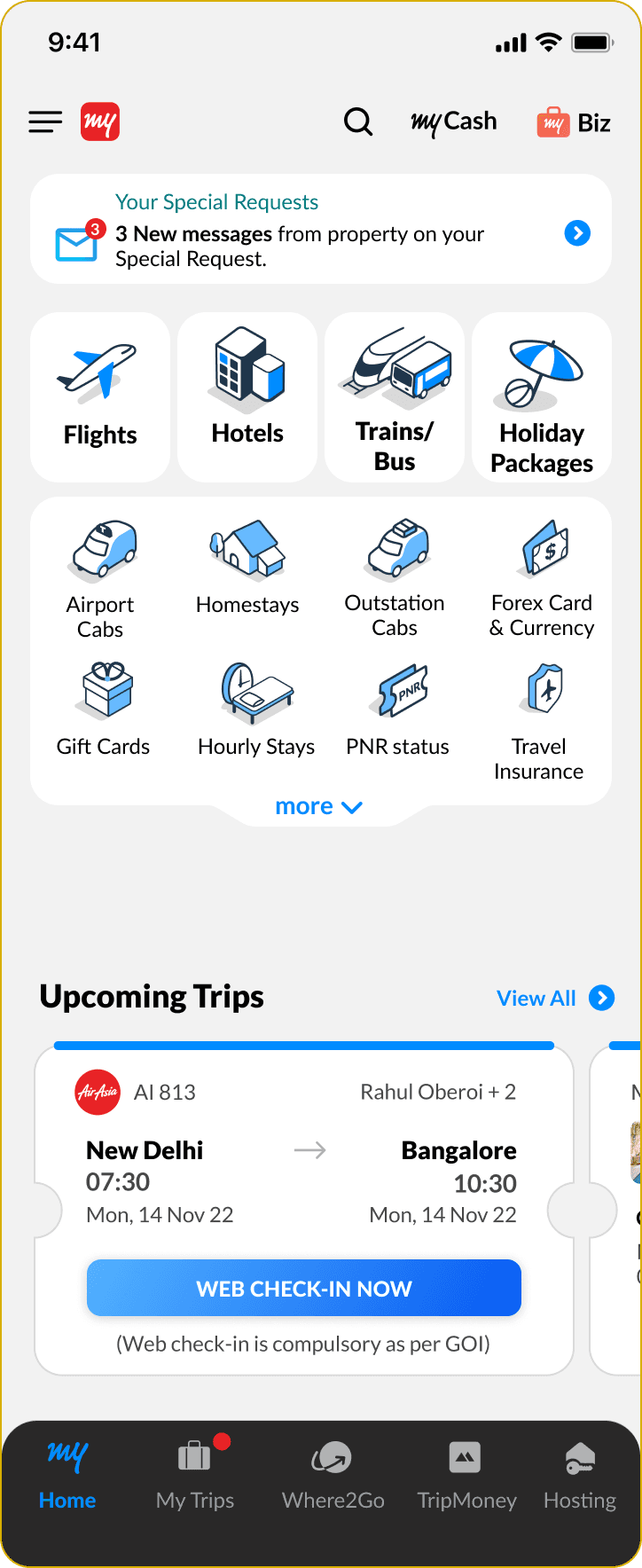
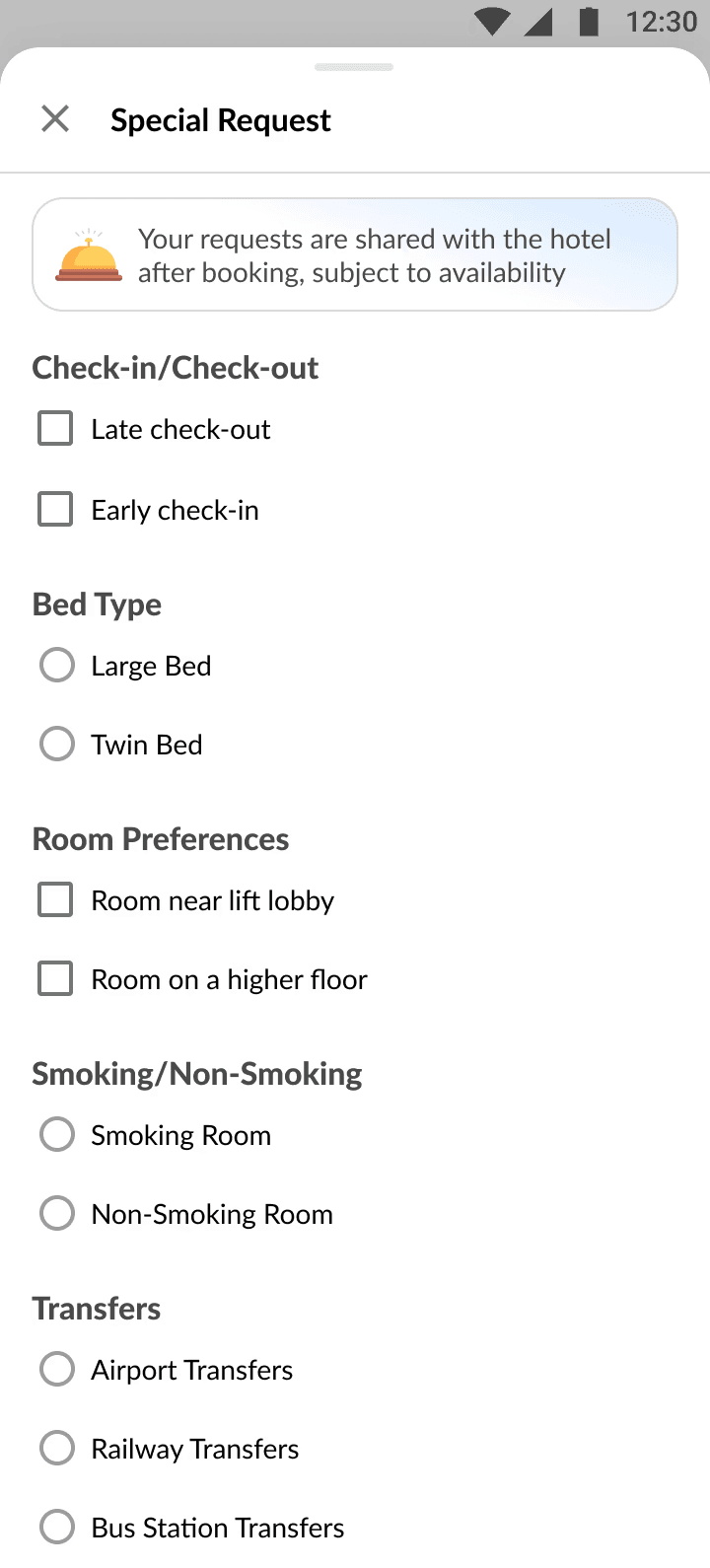
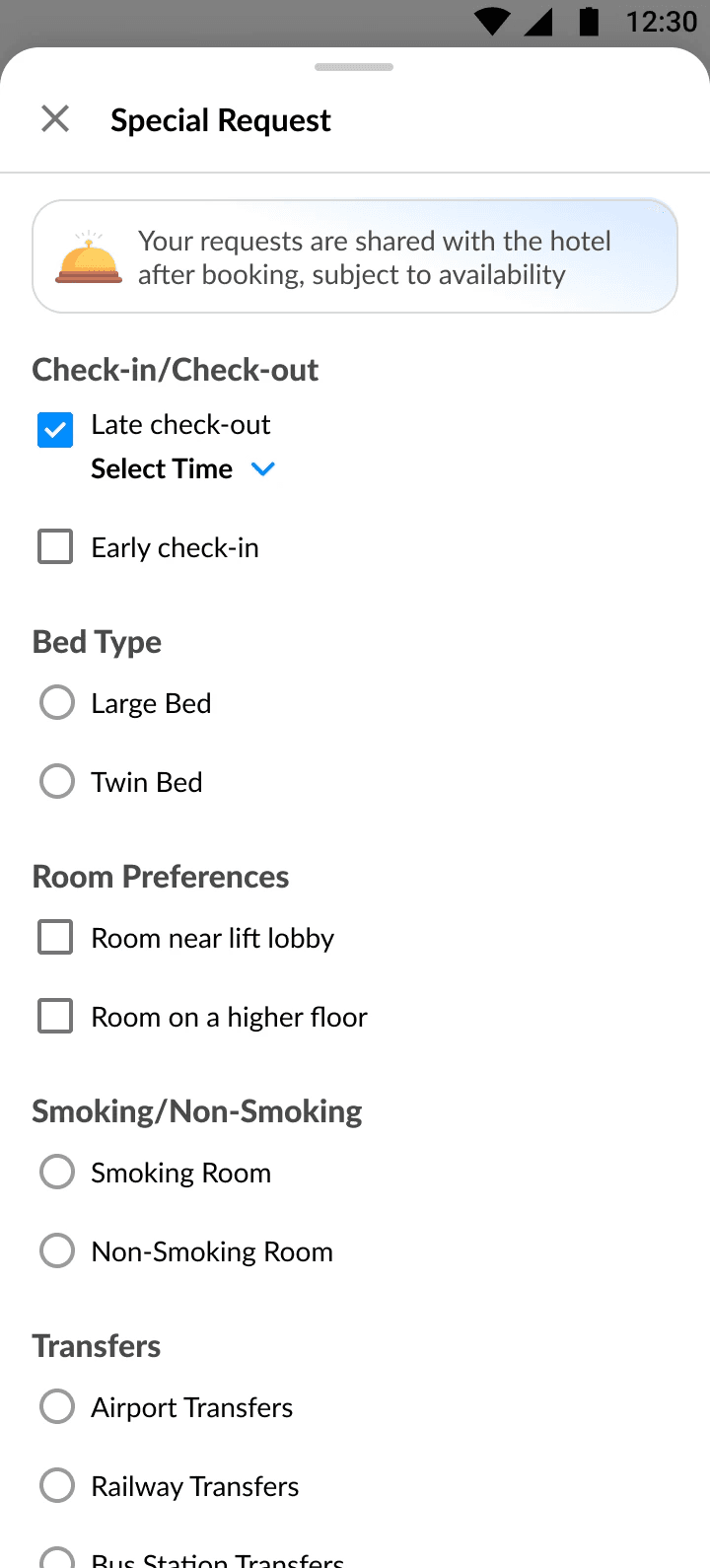
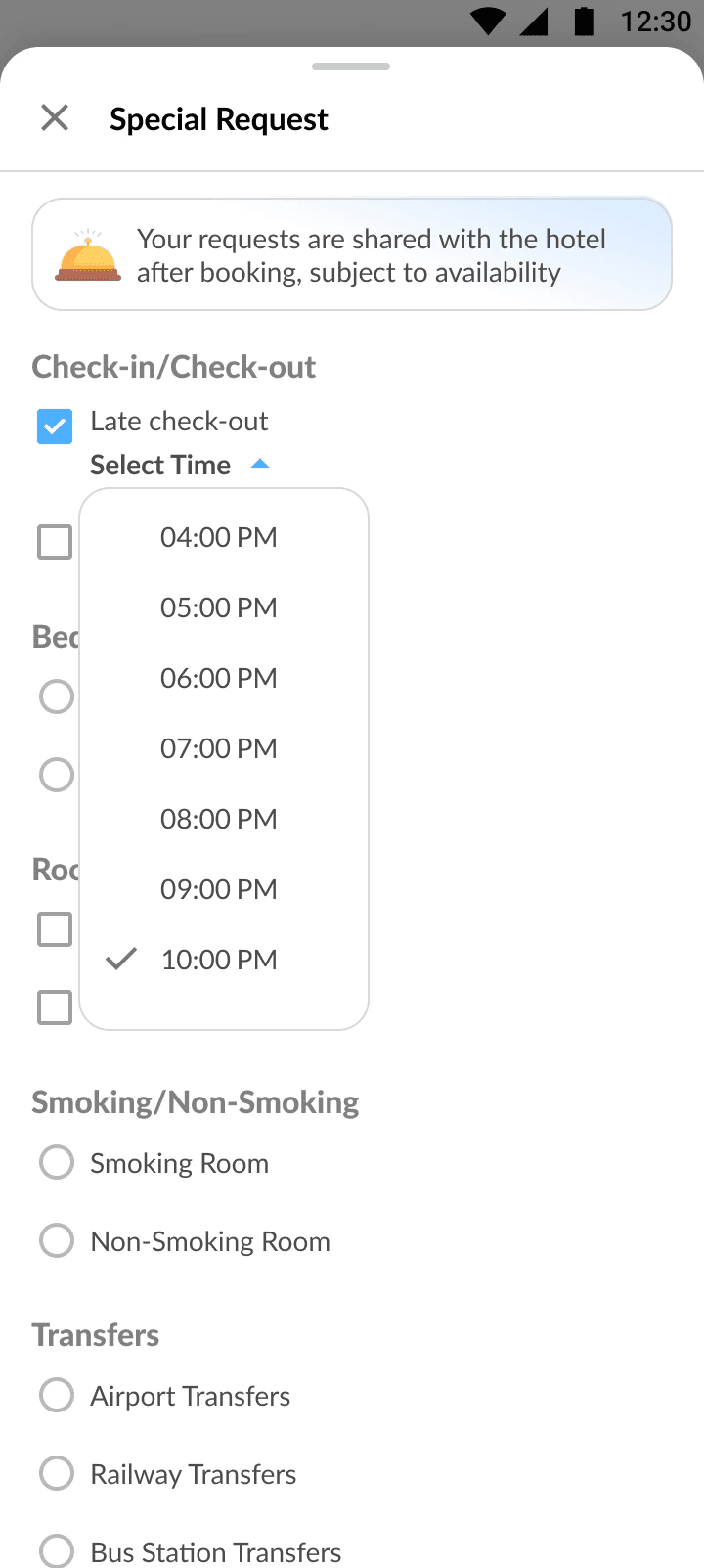
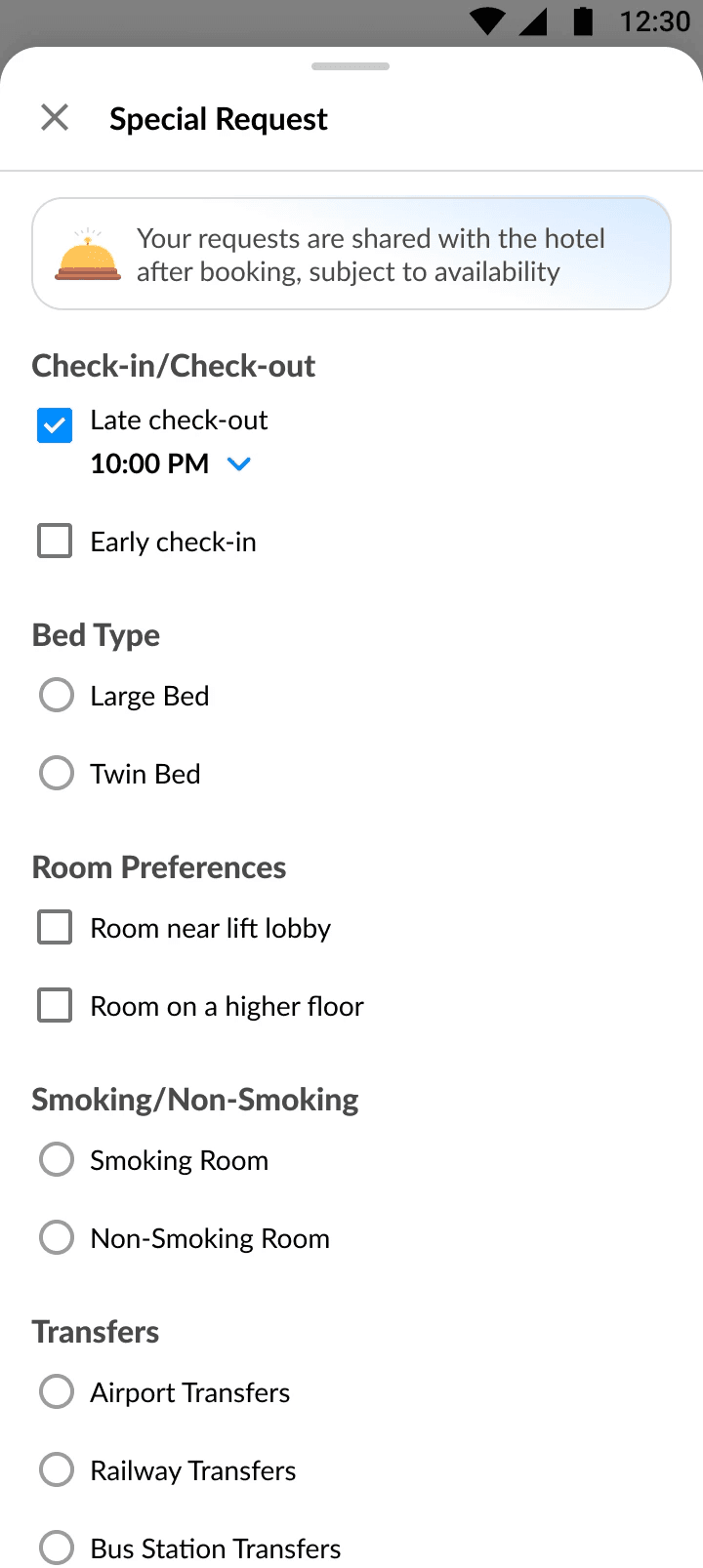
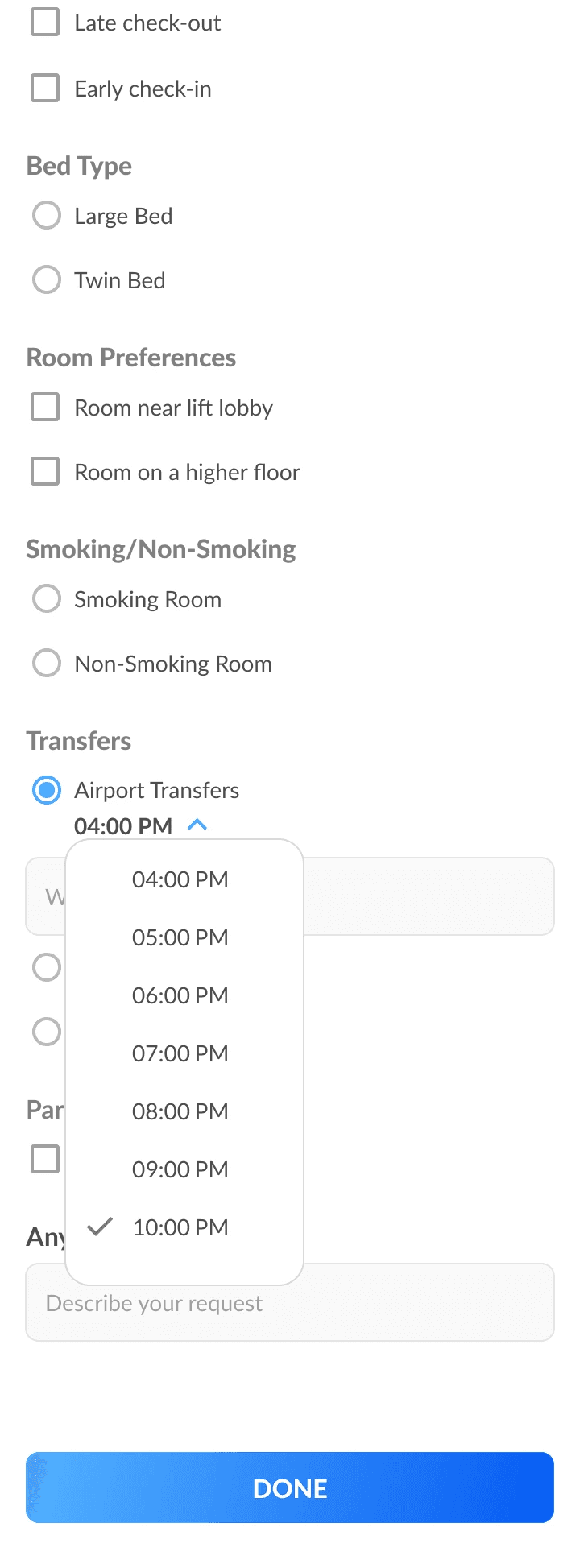
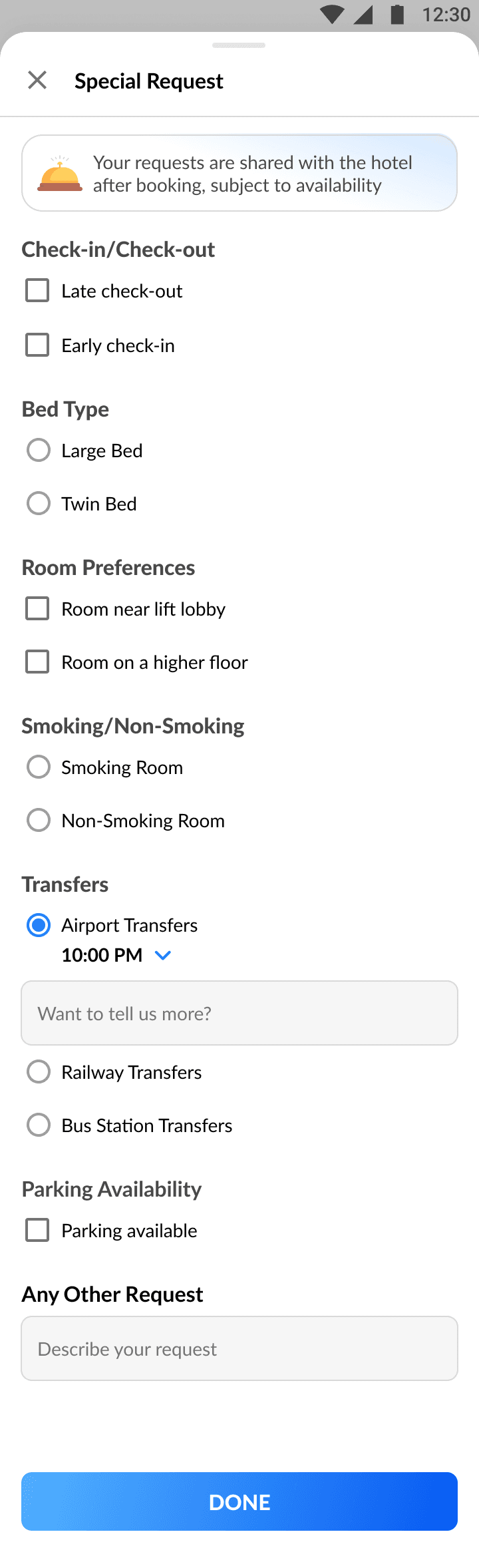
PLACING A REQUEST
Made adding special requests quicker, clearer, and more intuitive.
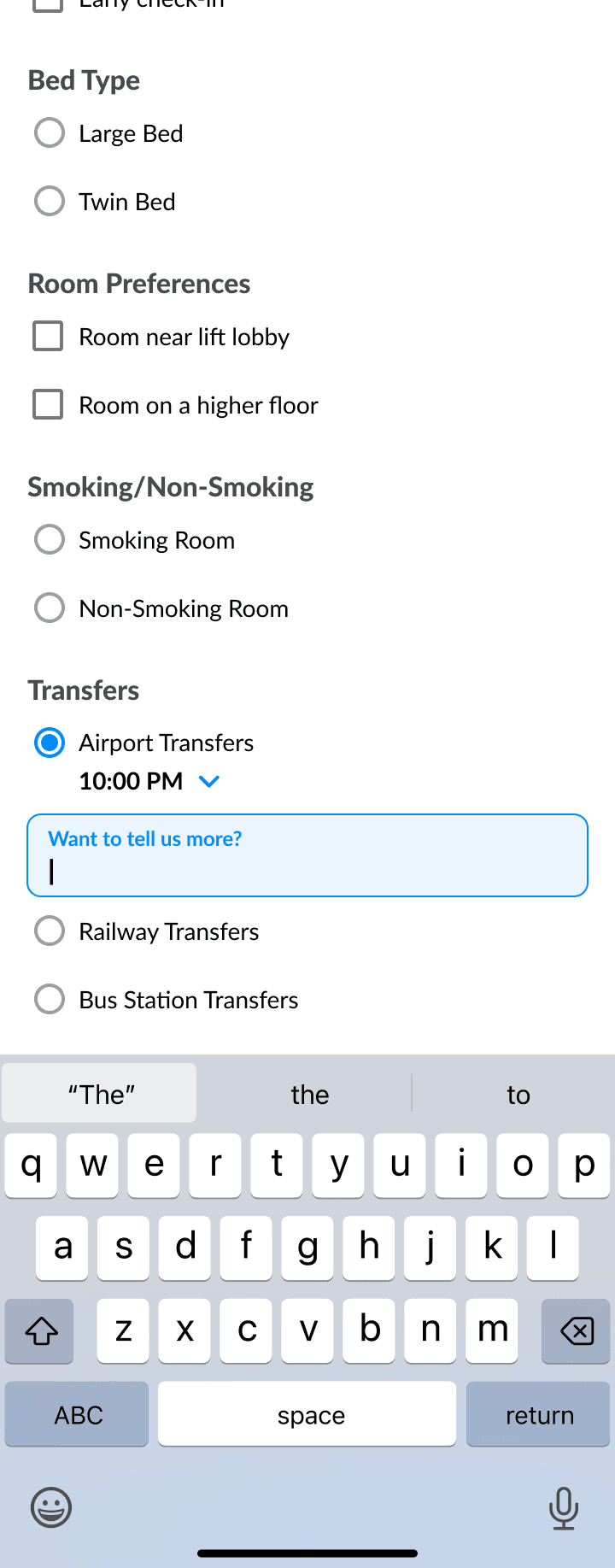
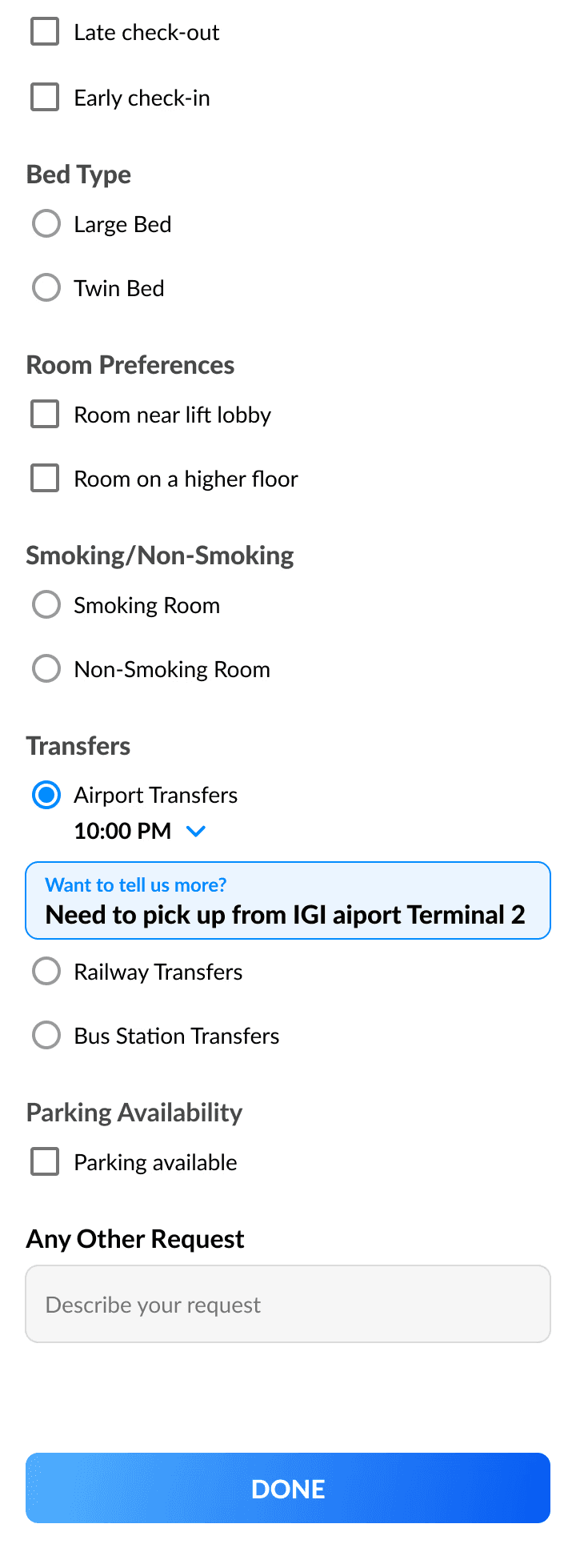
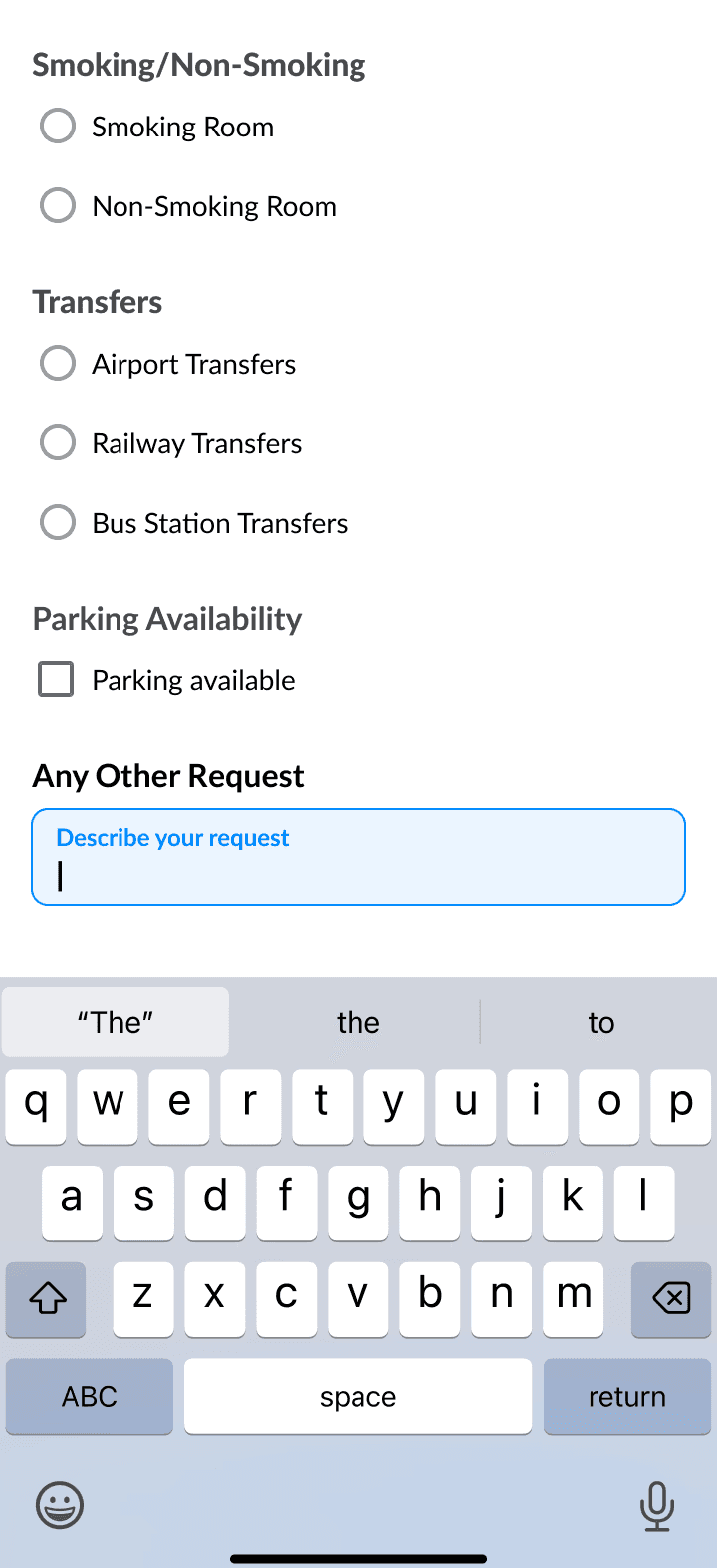
CUSTOM REQUEST FIELD
Allows users to type specific needs beyond predefined options.
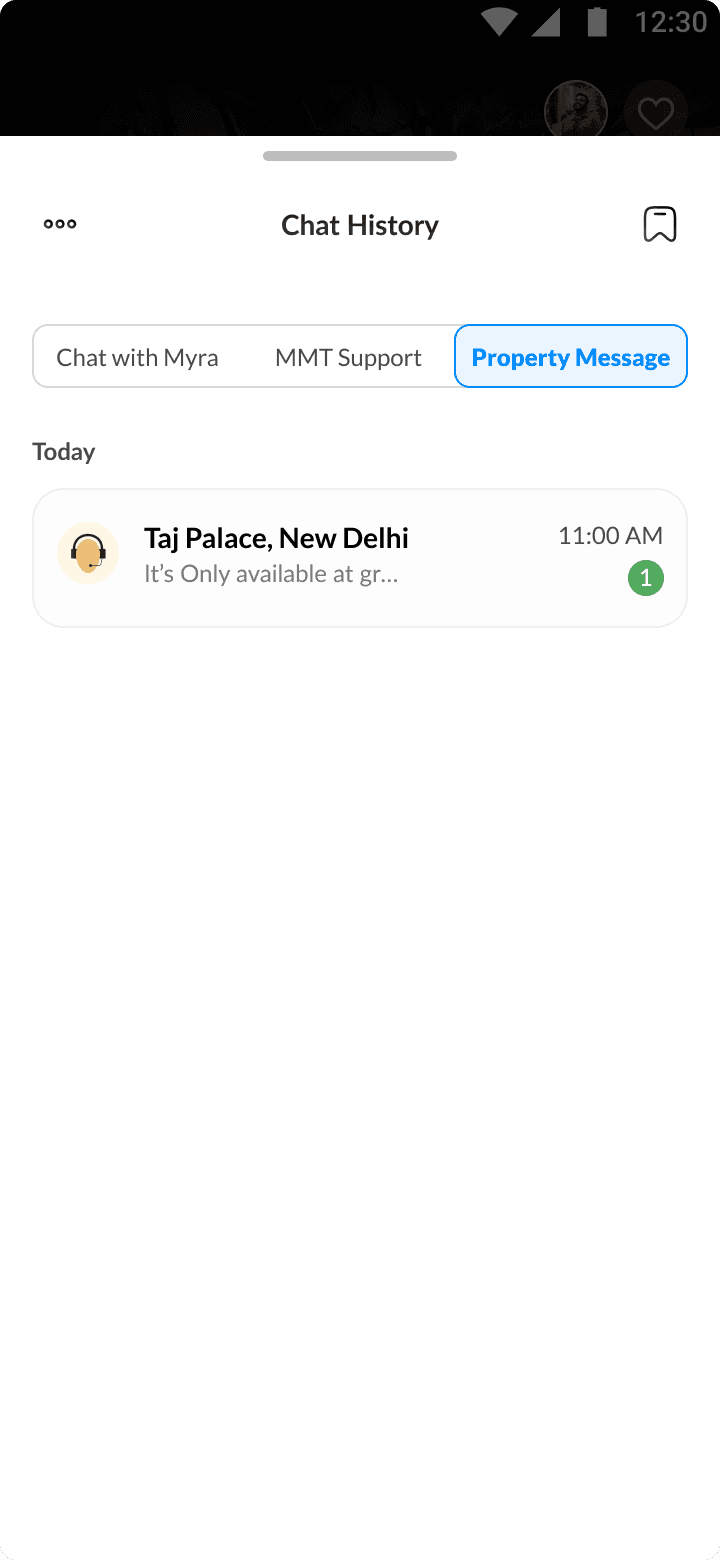
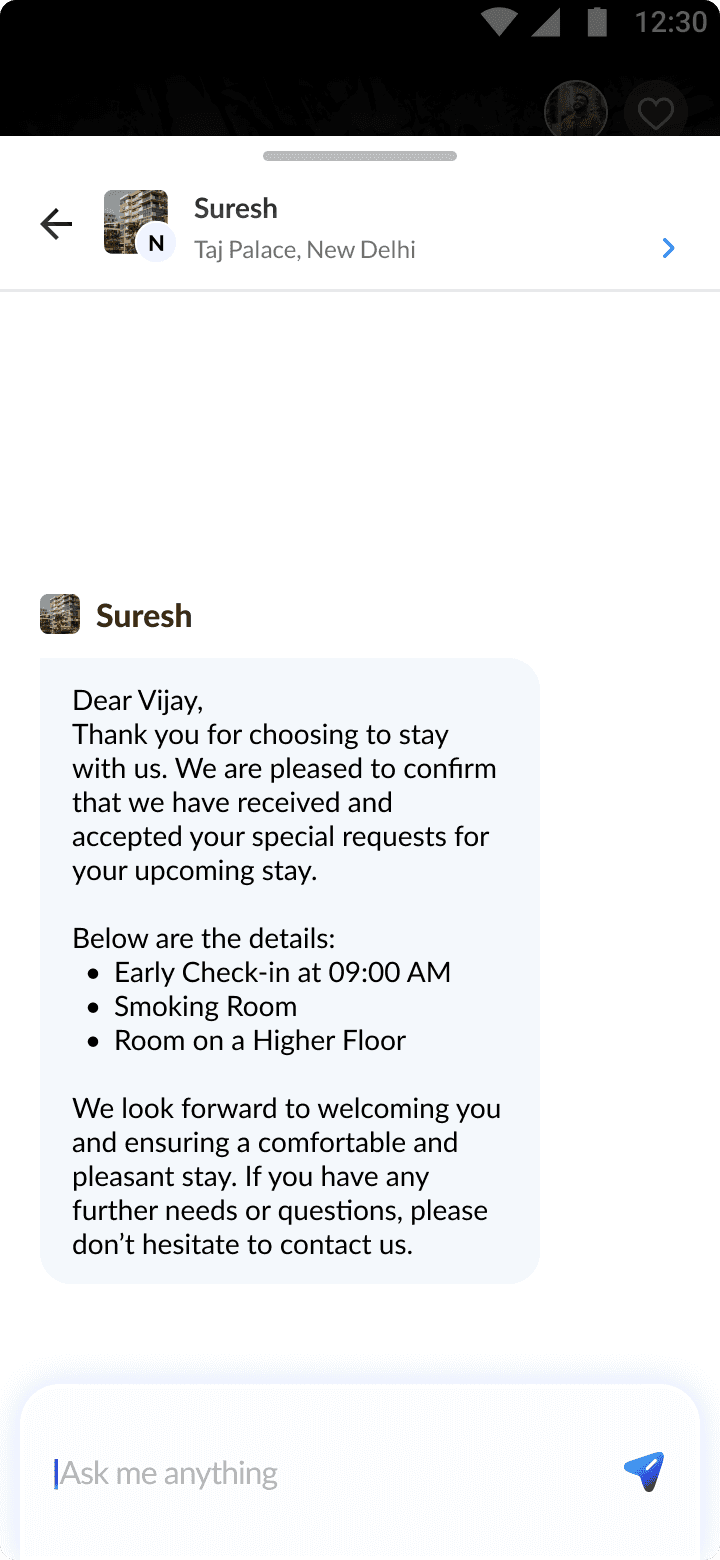
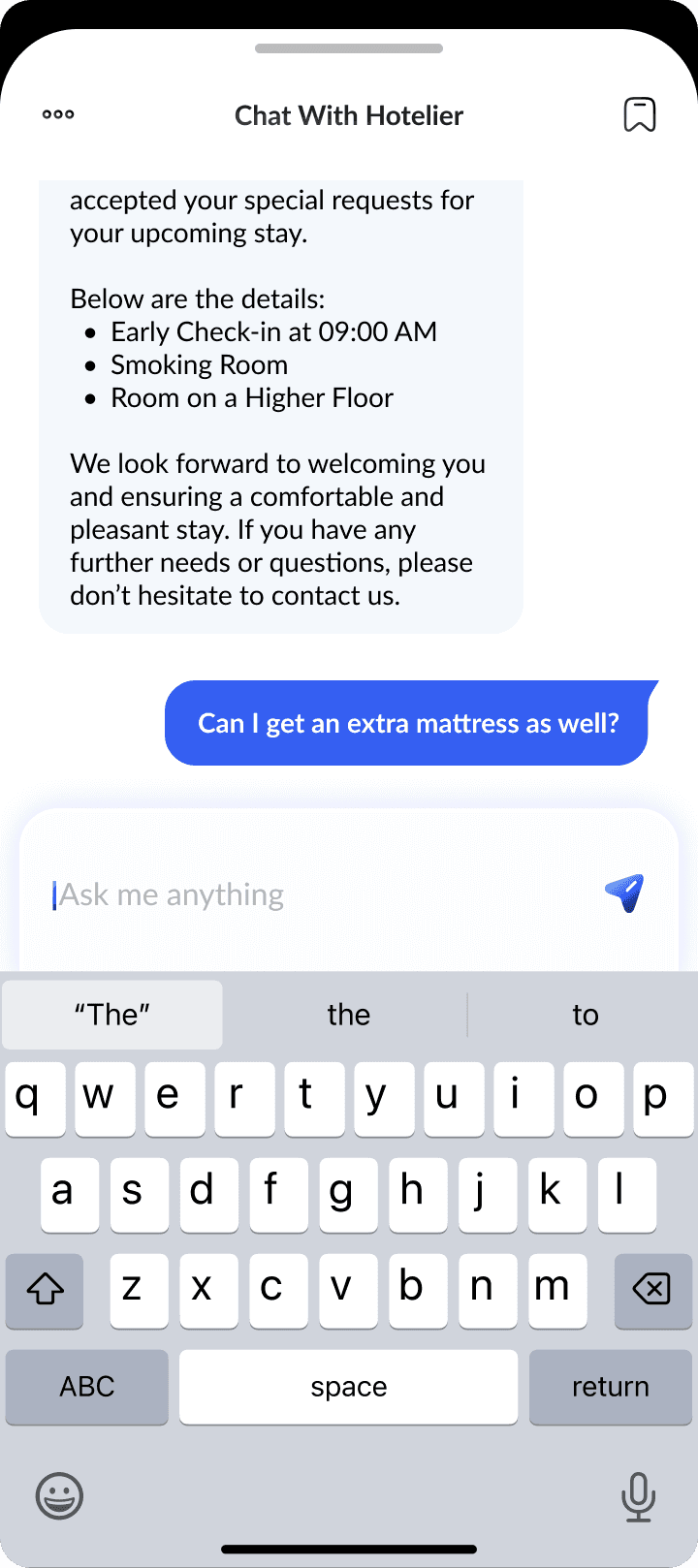
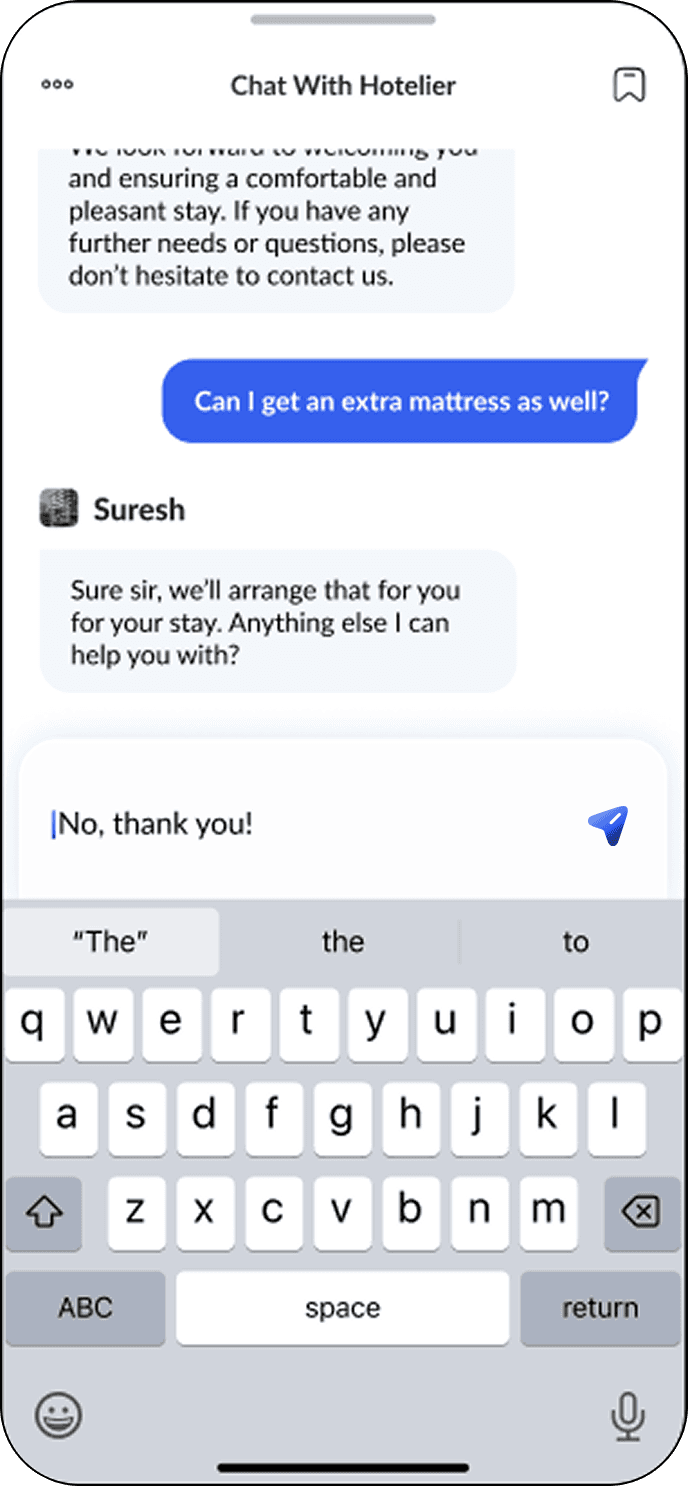
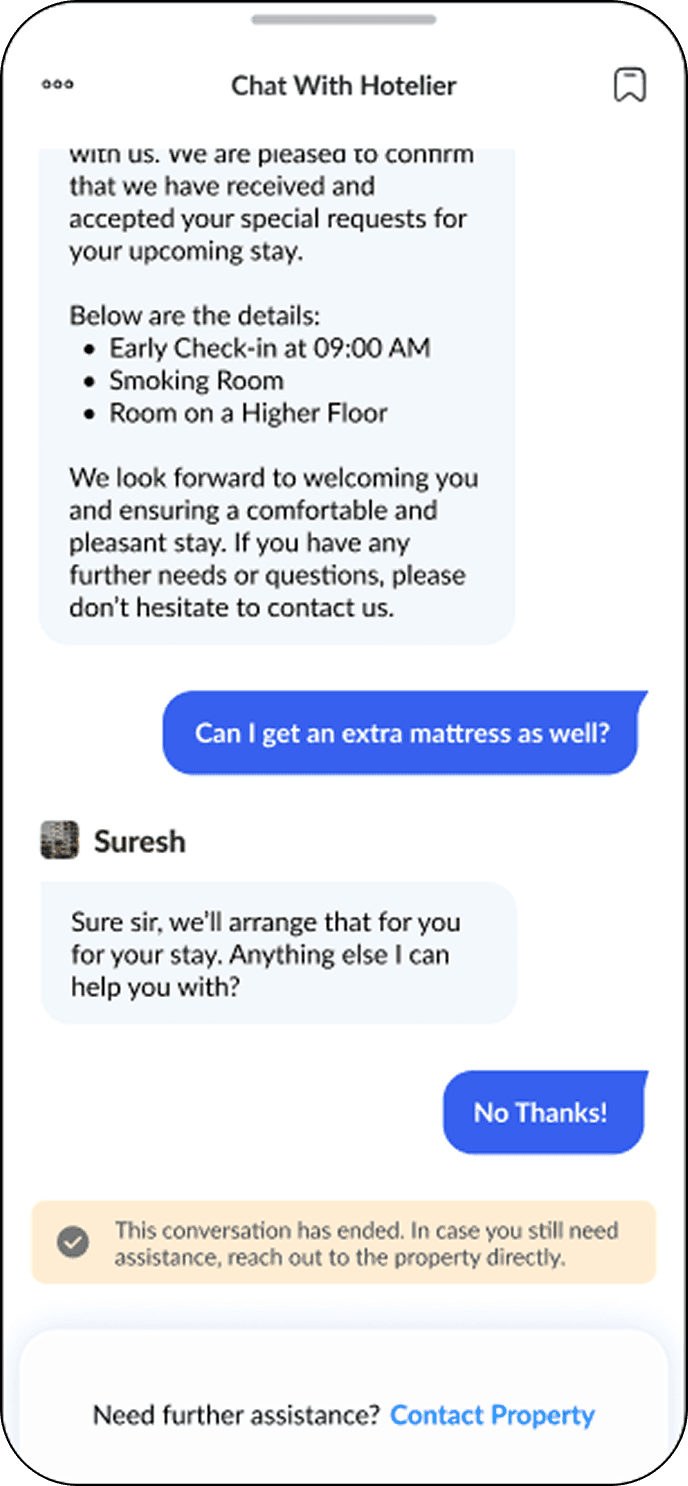
CHAT WITH HOTELIER (NEW)
Introduced a chat interface to resolve requests and queries instantly with the hotel team.
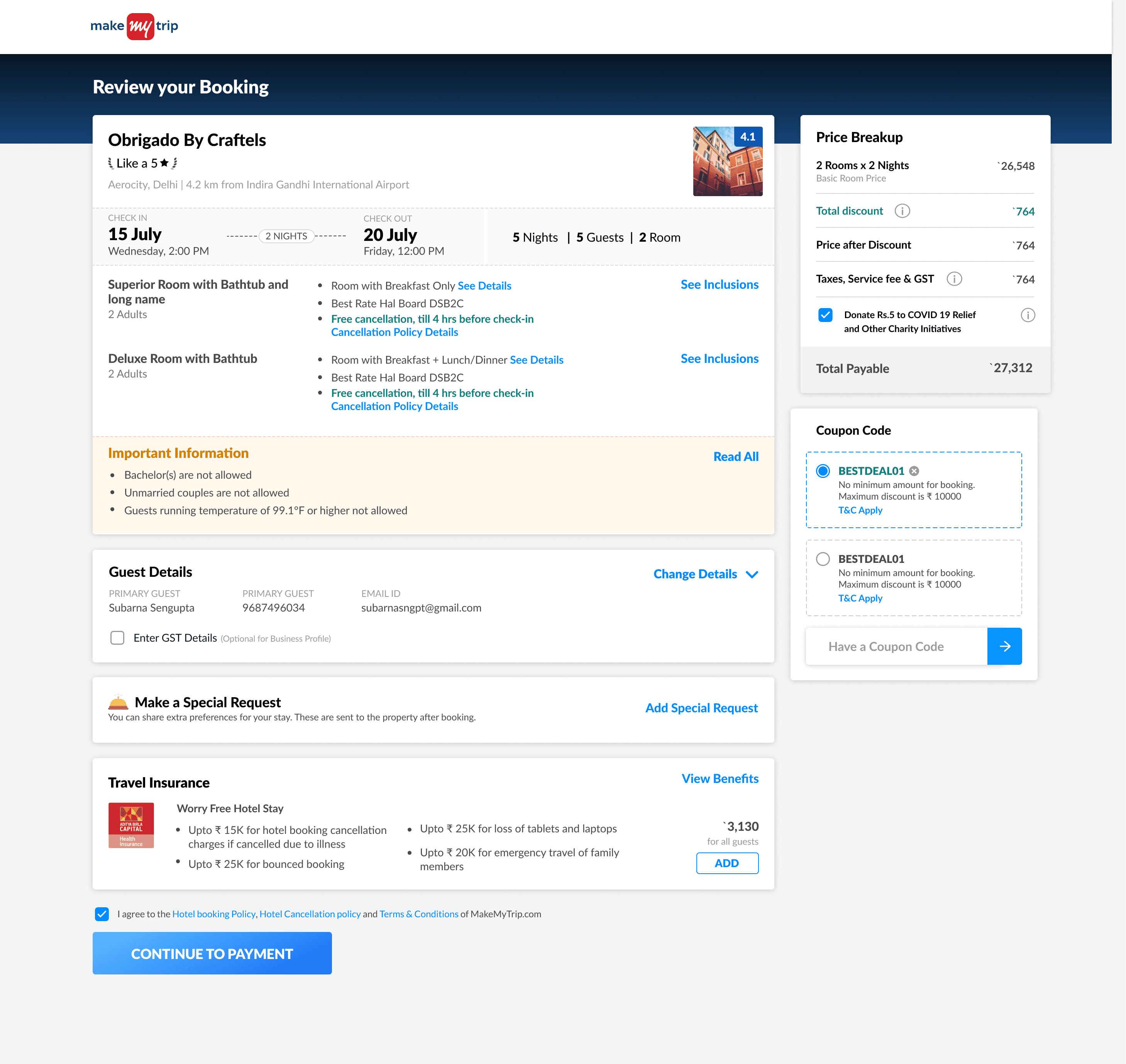
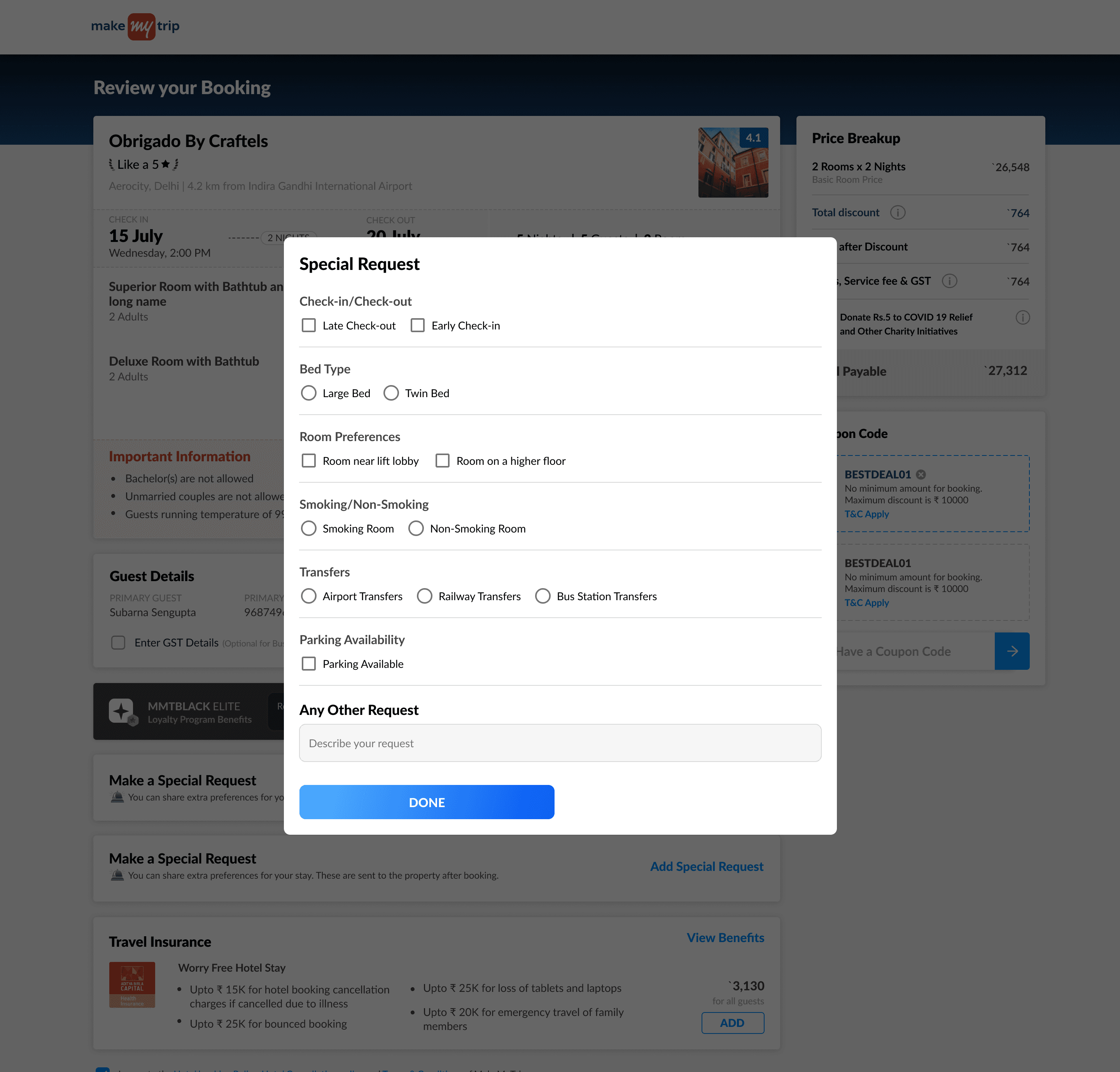
DESKTOP UI
Extended the redesign to desktop for a unified and seamless cross-platform experience.
Impact of the Project
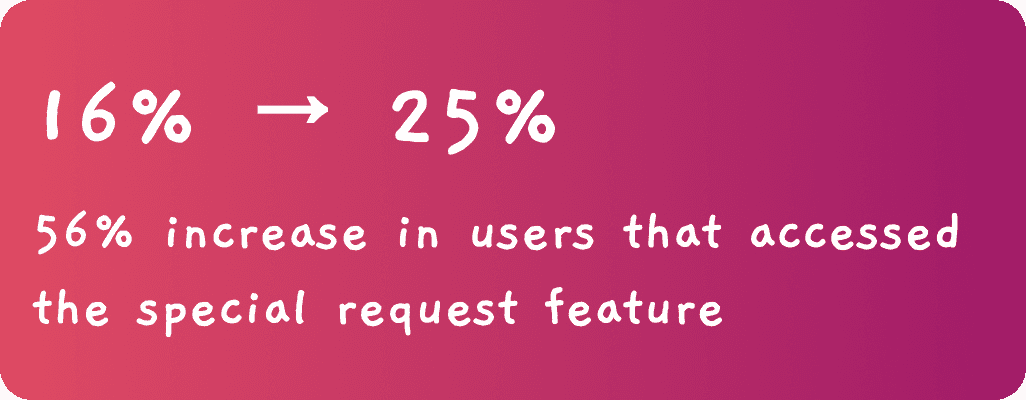
More users are now discovering and engaging with Special Requests — funnel access jumped from 16% to 25% within two weeks, showing improved visibility and stronger user intent to personalize their stay.
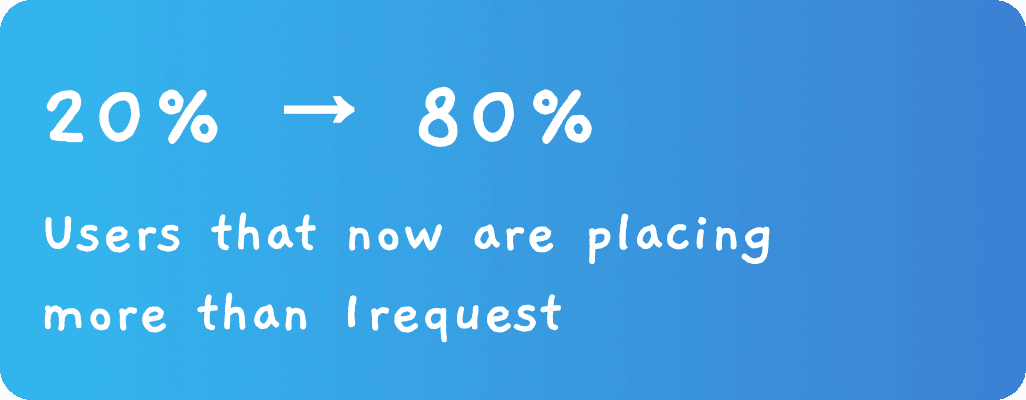
Users are now placing multiple requests per booking — the split flipped from 20/80 to 80/20, reflecting deeper engagement, better personalization, and clearer communication with hotels.
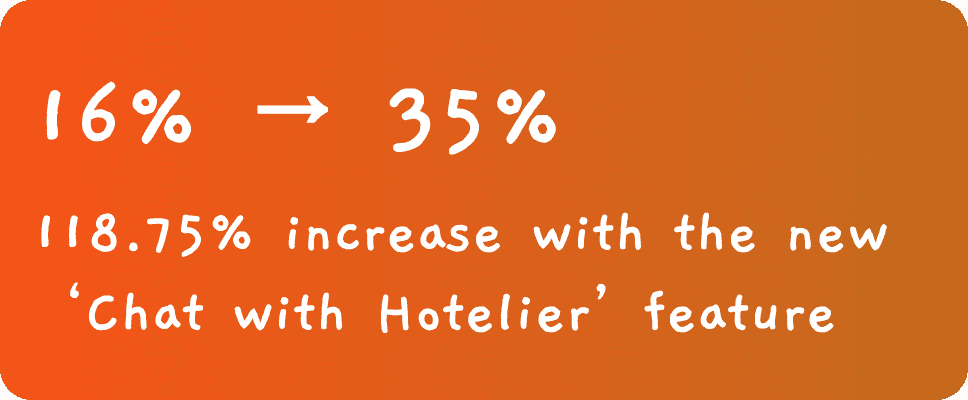
Hotel response rate increased from 16% to 35% — a 120% improvement — as the new Chat with Hotelier feature enabled faster, direct communication and easier request management for hotel staff.
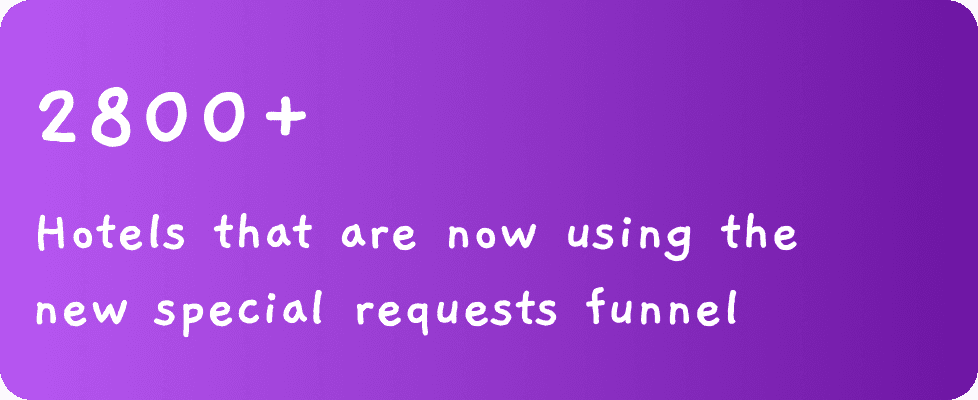
Achieving stronger engagement and adoption even with a smaller rollout compared to the earlier 5,000-hotel coverage, highlighting the impact of the redesigned experience.
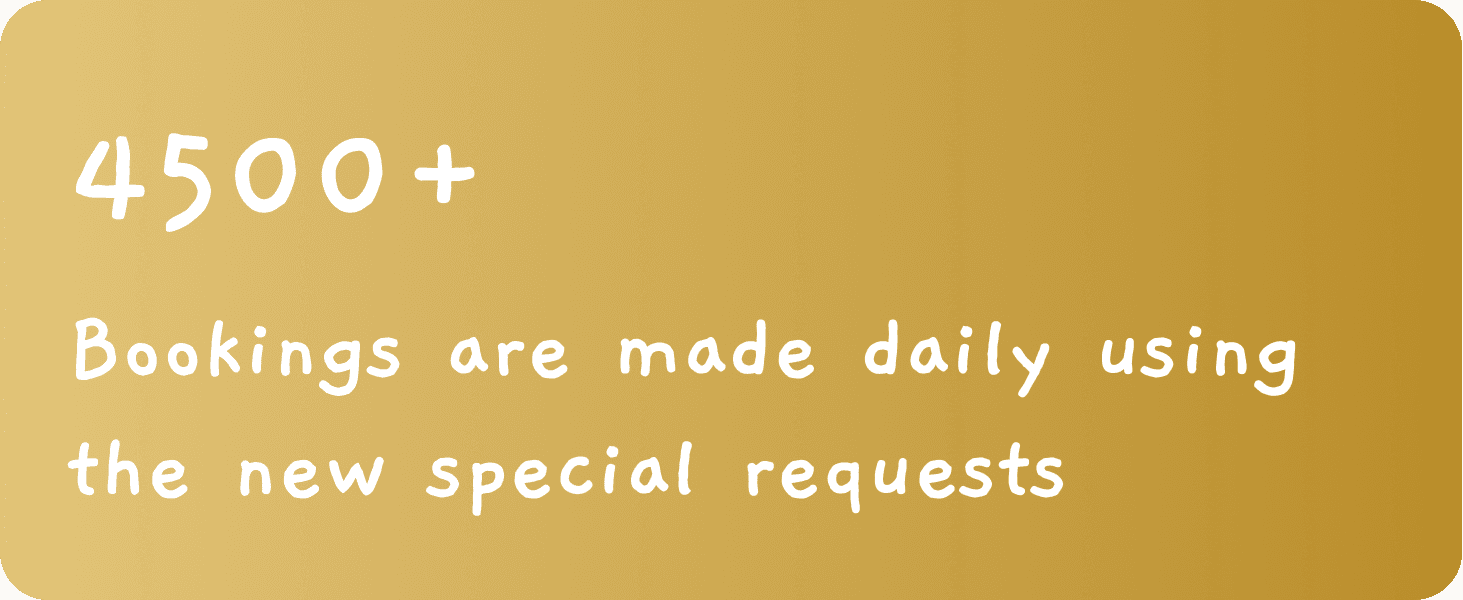
Over 4,500 bookings are now made daily using Special Requests, showcasing its integration into users’regular booking behavior and strong feature adoption.
What I Learned
This project taught me a lot more than just design.
I learned to pause and really listen to what users were struggling with not what I thought they were.
Understanding the real pain points became my starting line.
I realized how powerful the right data can be. Working closely with the product team helped me connect numbers to behavior: funnel entries, CTRs, drop-offs etc. all of it told a story about what was really happening.
I also learned that great design means nothing if it doesn’t move the needle for the business. The sweet spot lies in creating experiences that users love and the company values.
Through every round of feedback, iteration, and stakeholder conversation, I learned to stay open to defend what mattered, but adapt when needed.
Most importantly, I learned to own my work completely. Not just the pixels, but the outcome. To be accountable for what I design and the impact it leaves.