

Increasing Reviews on Amazon
Designing a Post-Purchase Engagement System
My Role
Led research, strategy, and UX design to improve review participation on the Amazon app.
Timeline
7 Days
Team
1 Product Designer
Success Metrics (12 month cycle)
Review Submission:
1-3% → 5-7%
Text reviews :
30% → 50% Repeat reviewer(<3): +25%
The Problem Statement
Only a small fraction of Amazon customers leave reviews despite most relying on them to make purchase decisions.
The current review experience lacks visibility, timing, and motivation, resulting in low participation and missed opportunities to strengthen trust.
Understanding the current flow
Flow One
Home → Orders → Specific Order → Write a Review → Star Rating → Write Review → Add Title → Submit
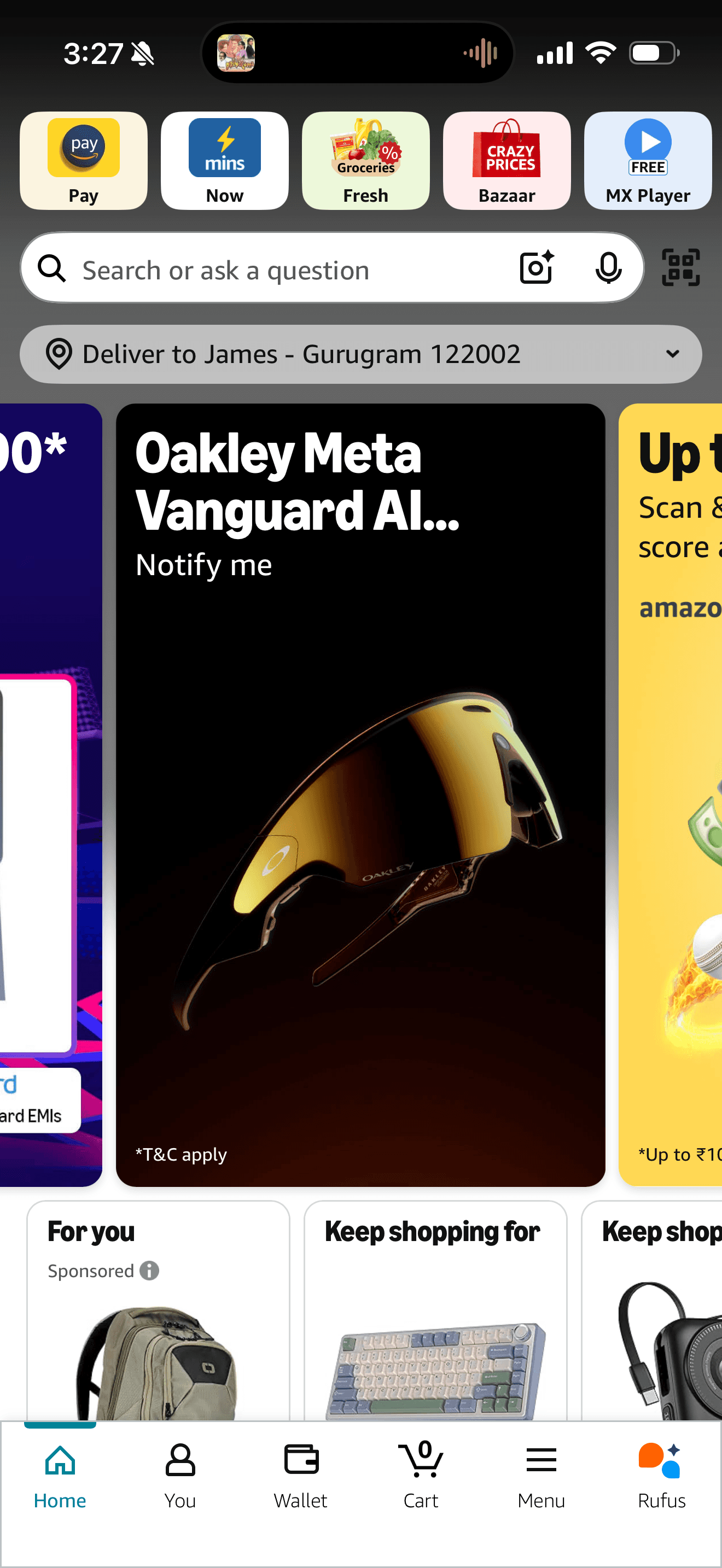
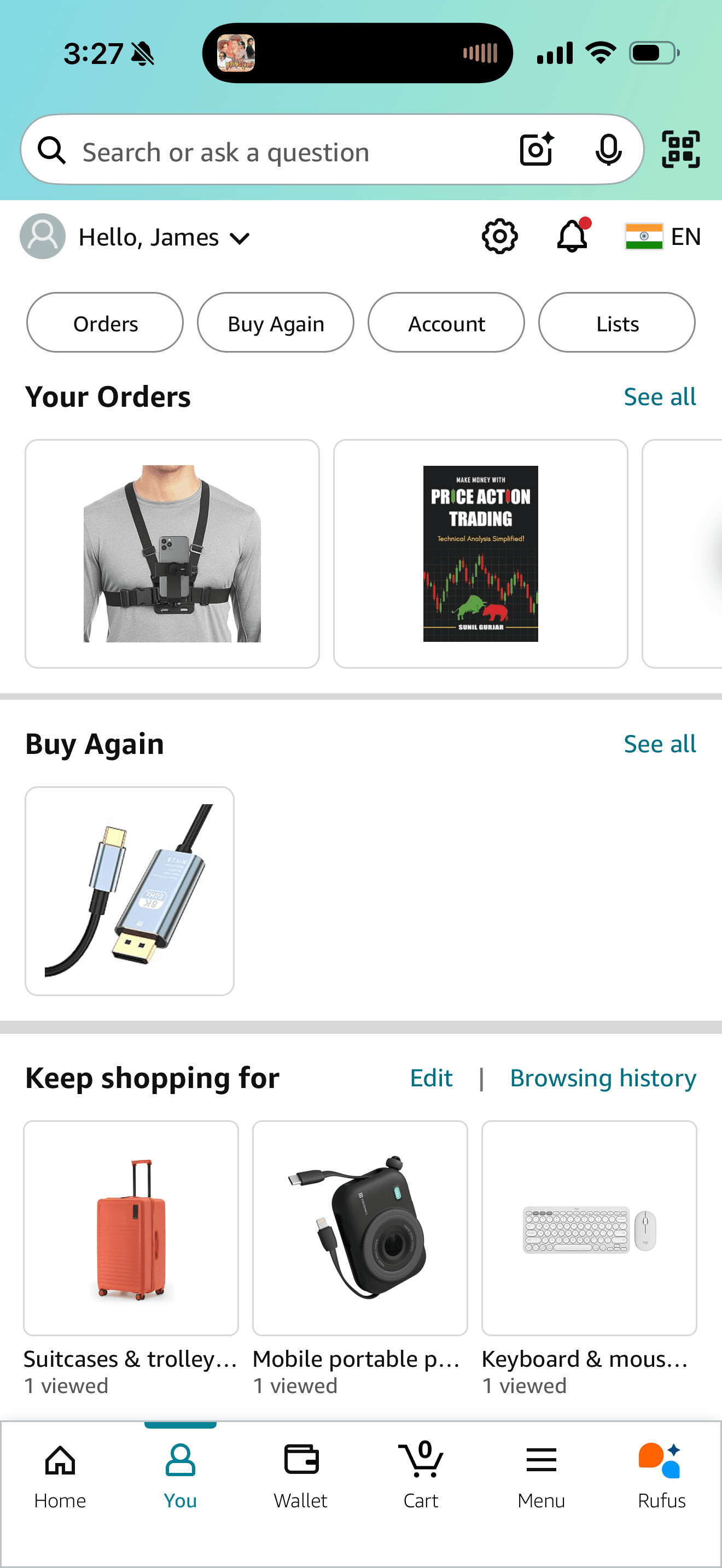
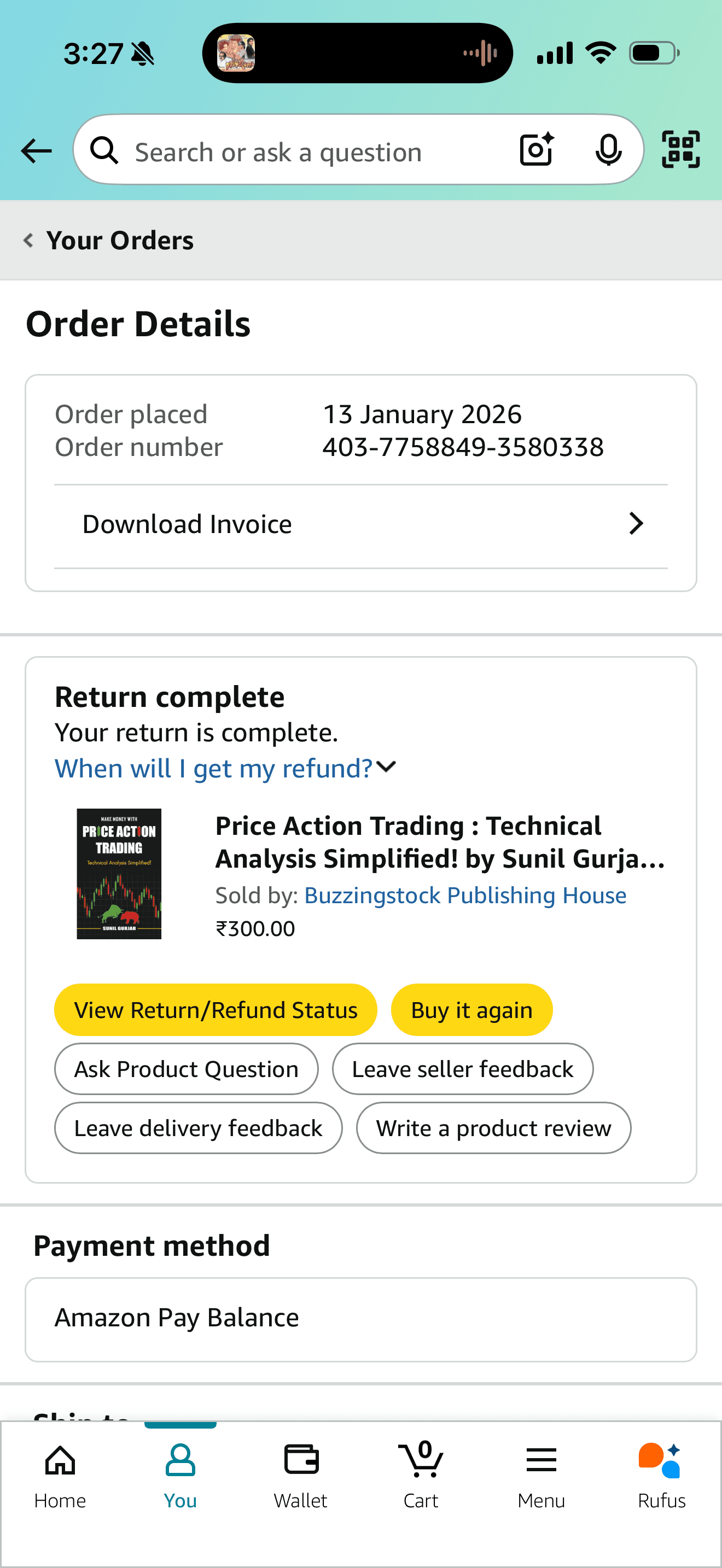
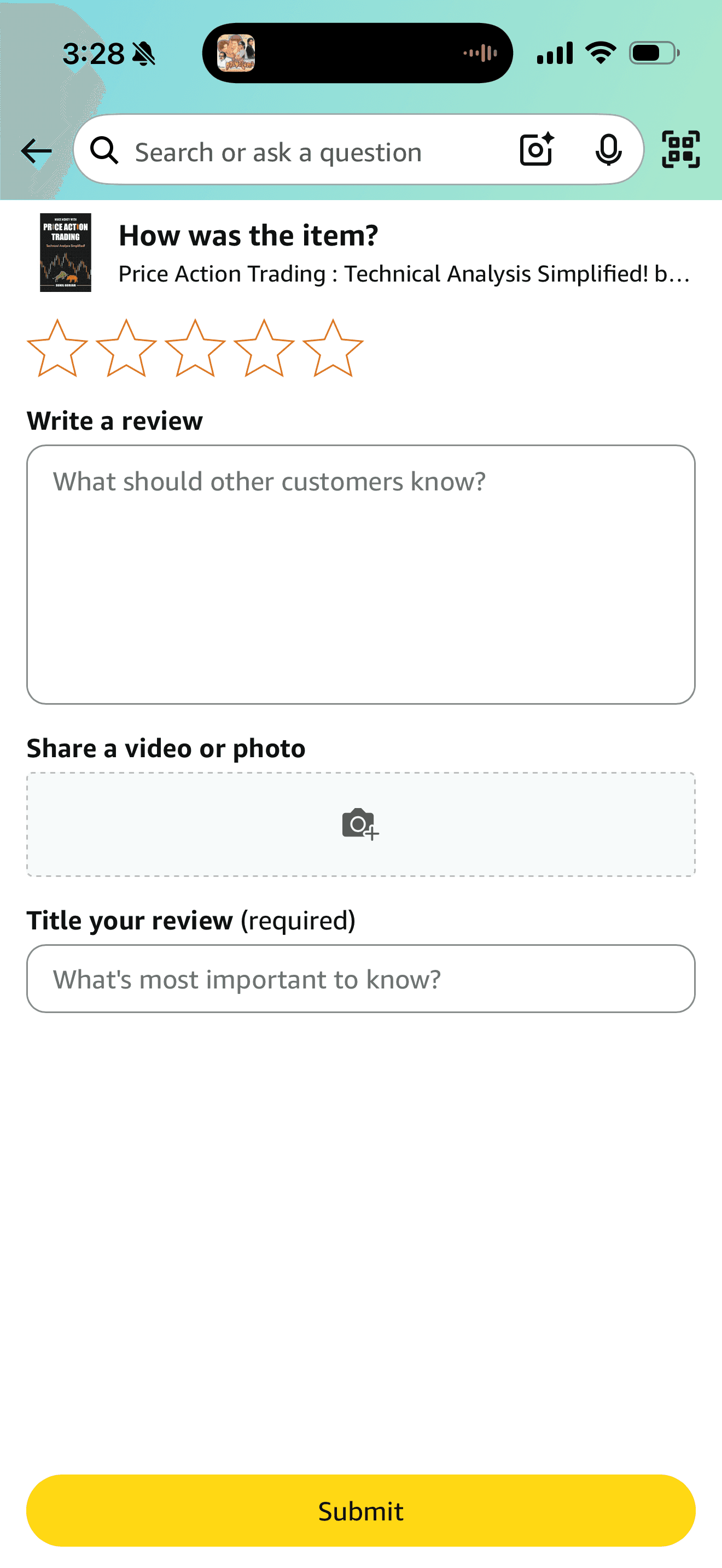
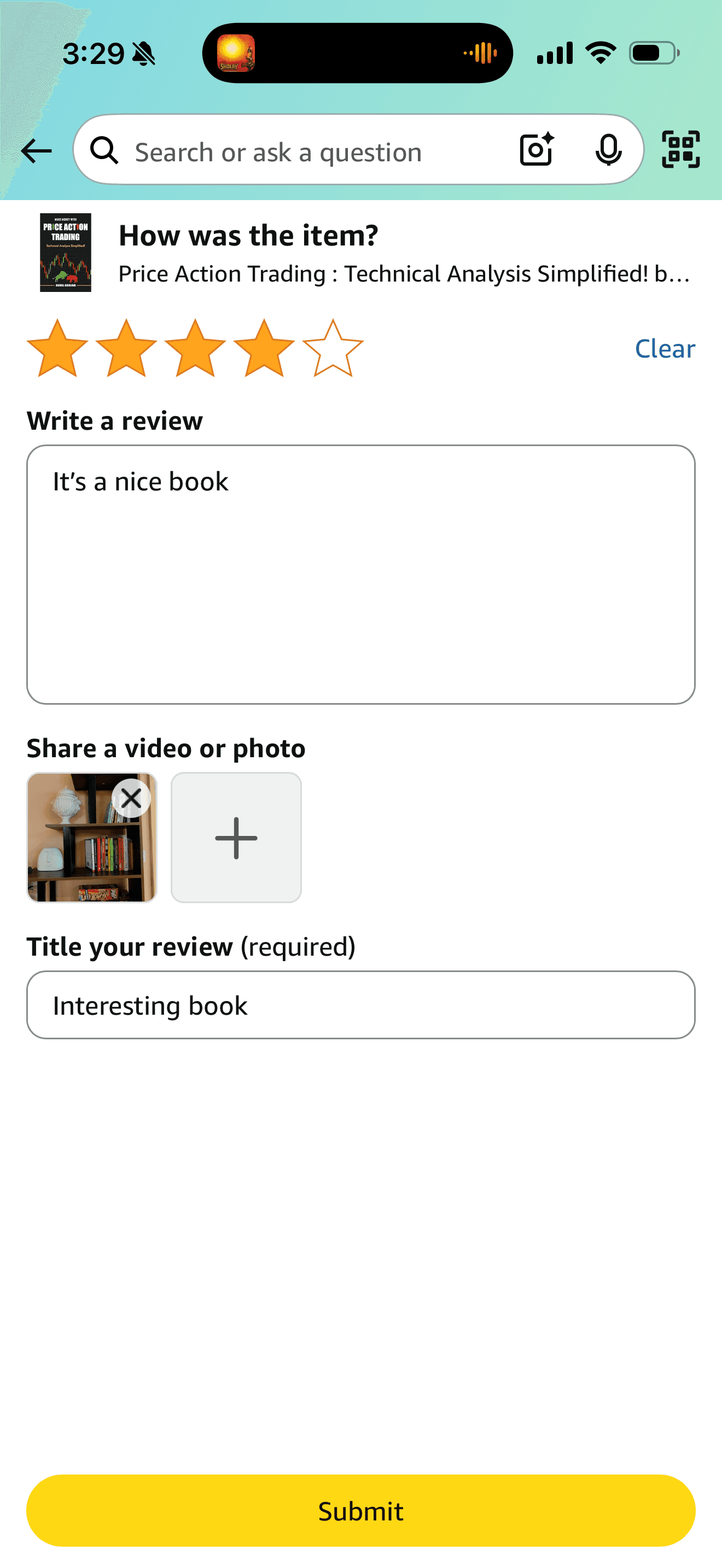
This flow shares one fundamental issue.
The review action is buried.
Users must navigate multiple steps to reach it. There is no strong in-app trigger after delivery. Once a product is prepaid and delivered, the user has no operational reason to return to the app.
Customer survey research
Source: BrightLocal Consumer Review Survey
To ground the problem in real behavior, I studied external ecommerce research.

Over 90%
online shoppers read reviews before making a purchase decision.
1-3%
Amazon buyers leave a review after purchase according to industry analyses.
77%
customers say they will leave a review if a business asks them.
Which means reviews and ratings are the most important aspect of a decision making of the user which impacts business. 1 takeaway is making reviews flow extremely simple for the user.
Customer profile analysis


Brand New Customers
First time buyers unfamiliar with navigation and review flows. No habit formed.
Occasional Users
Purchase occasionally. Understand the app but rarely explore deeply.
Power Users
Frequent buyers. Comfortable navigating. Potential high-value contributors if motivated correctly.
Demographics Lens

Ages 10-18
Low ownership and low contribution behavior.
Ages 19-28
High consumption of reviews. Low contribution rate. Large opportunity segment.
Ages 30 above
More expressive and more likely to leave descriptive reviews.
The strongest opportunity lies in converting silent readers into active contributors.
Insights from Ex- Amazon Employee

In discussion with an ex Amazon intern, one insight reframed the challenge.
The problem is not writing reviews. The problem is starting the review flow at all.
He also highlighted a structural opportunity.
When users return or exchange an item, they are already inside the app, interacting with that specific order, and emotionally engaged. This is a high-intent moment. Currently, return data remains internal. Bridging this gap offers a powerful opportunity.
Metrics (Hypothesis)
68% Users
Never give reviews
5-8% Users
Enters the review flow
2-4% Users
Complete the review
30% Users
write a review
70% Users
Gives ratings
Concluding the research
Based on the demographics, customer profile, survey and hypothesis 5 features have been decided that will impact across the product for all types of use cases.
📱
Upfront Nudges
Brand new users and occasional buyers (19–28 age group).
Increases visibility and helps users who don’t know where to review.
📢
Predictive tabs
Occasional users and younger audiences (19–28).
Reduces effort and makes reviewing fast and intuitive.
💰
Amazon Voice
Power users and 30+ age group.
Rewards consistent contributors and builds long-term engagement.
✍🏻
Review Assist
Busy professionals and hesitant writers across all segments.
Eliminates writing friction and increases text-based submissions.
Analysing the competition
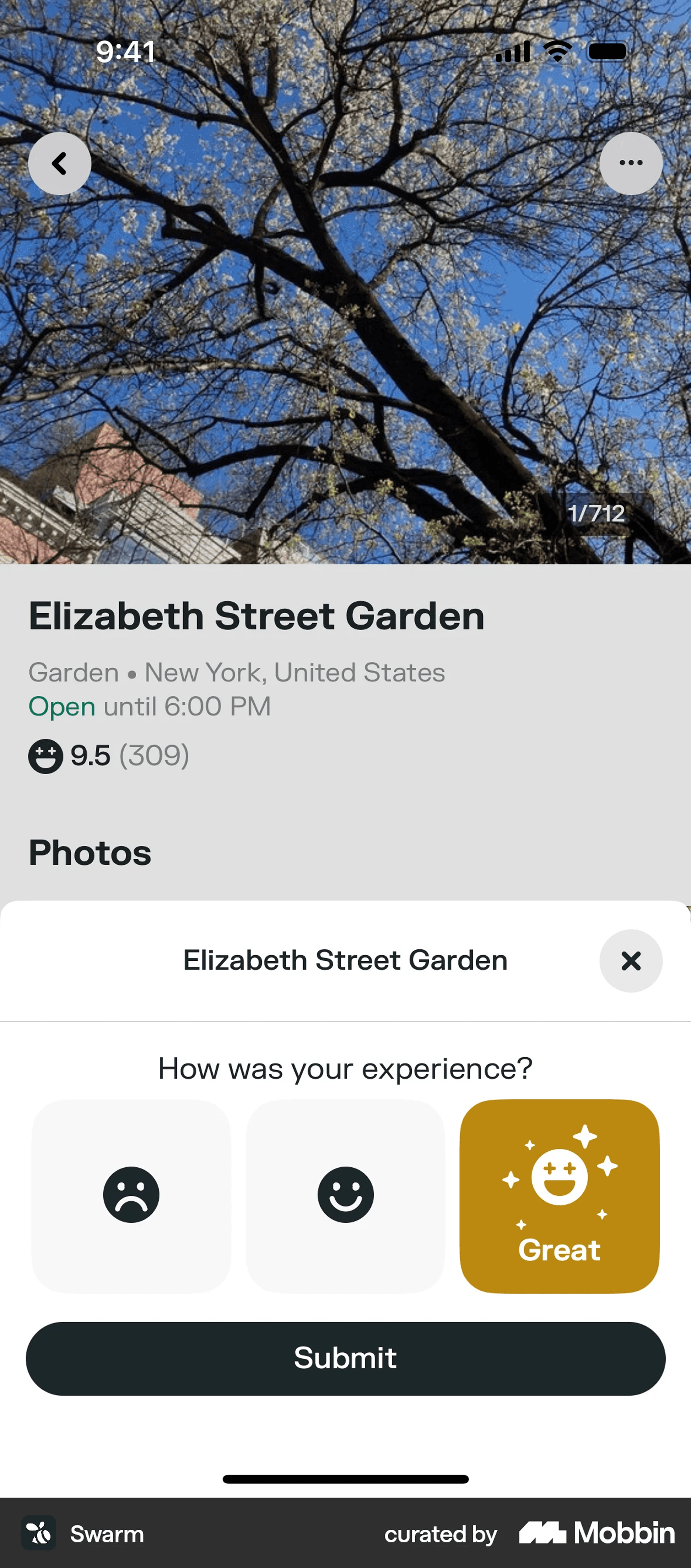
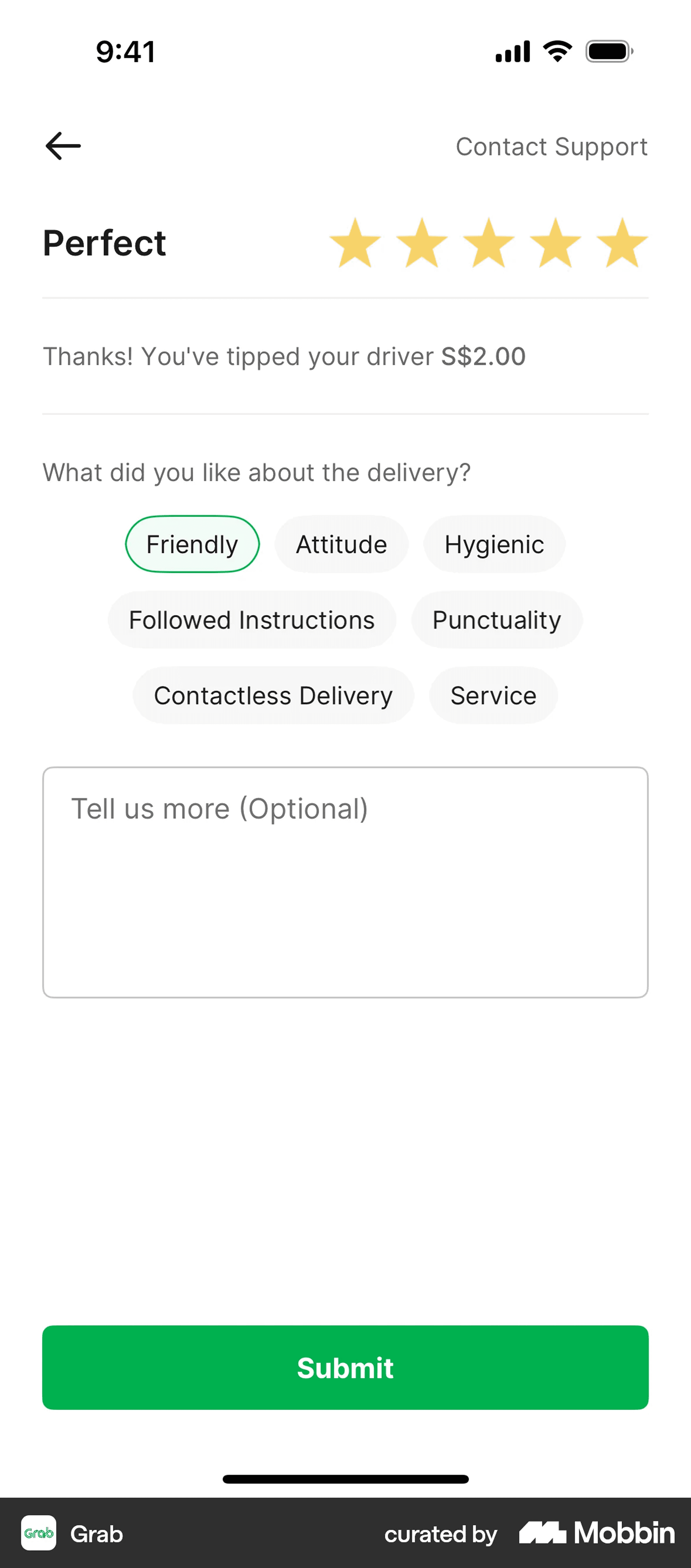
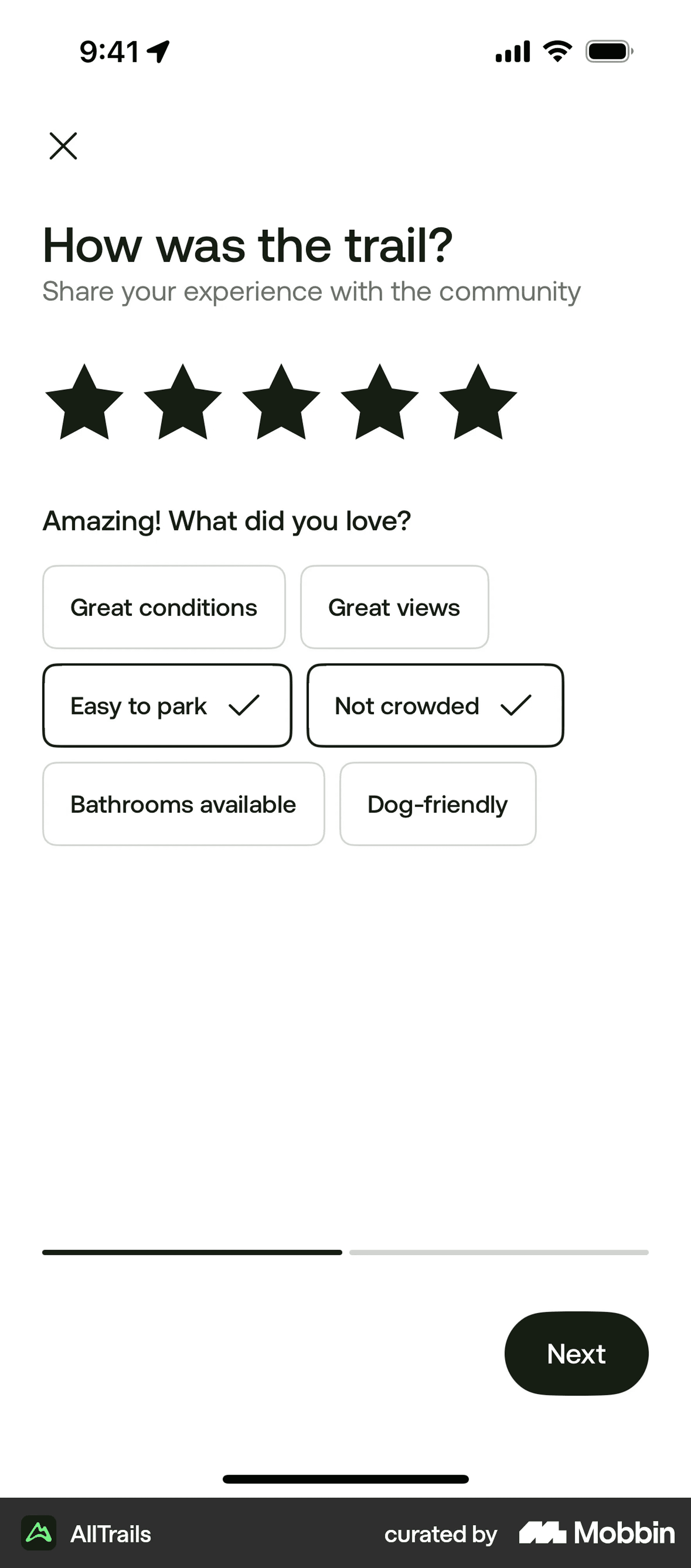
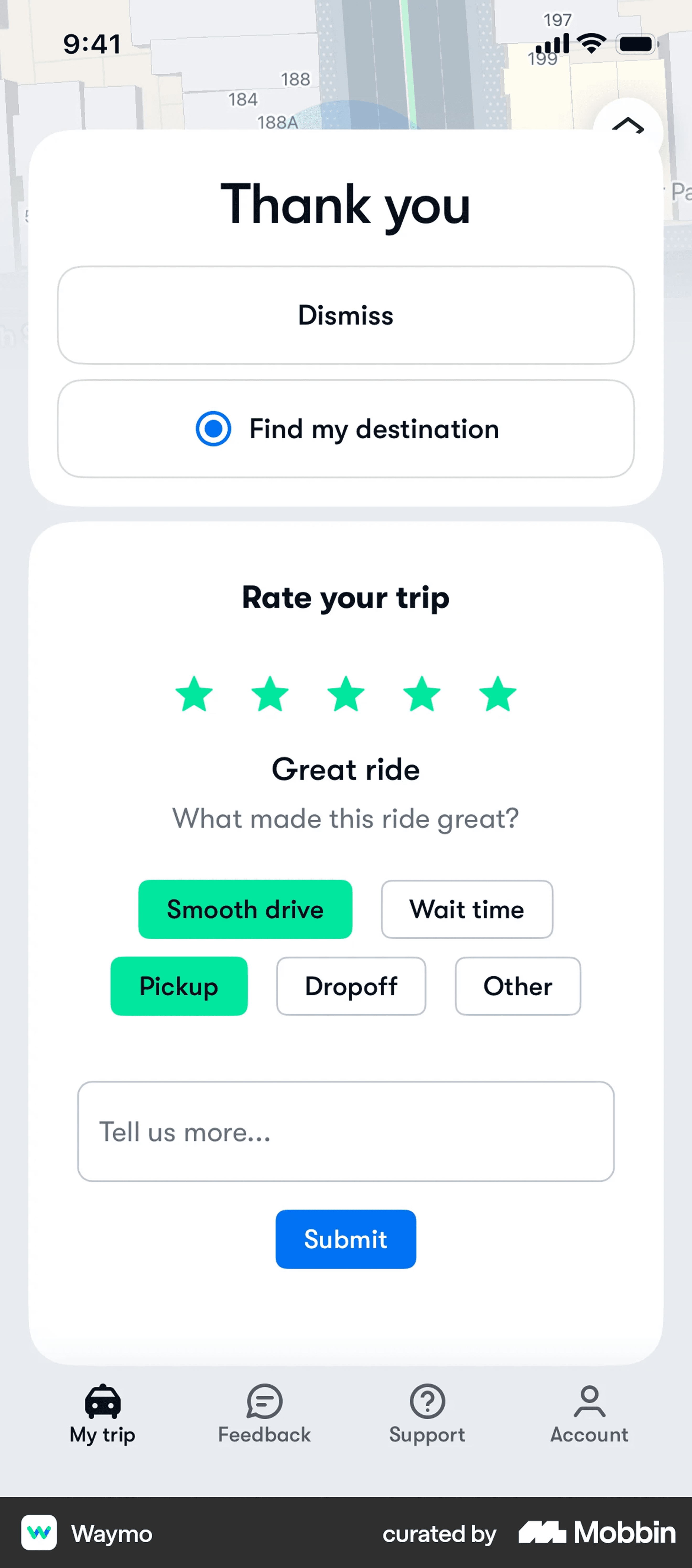
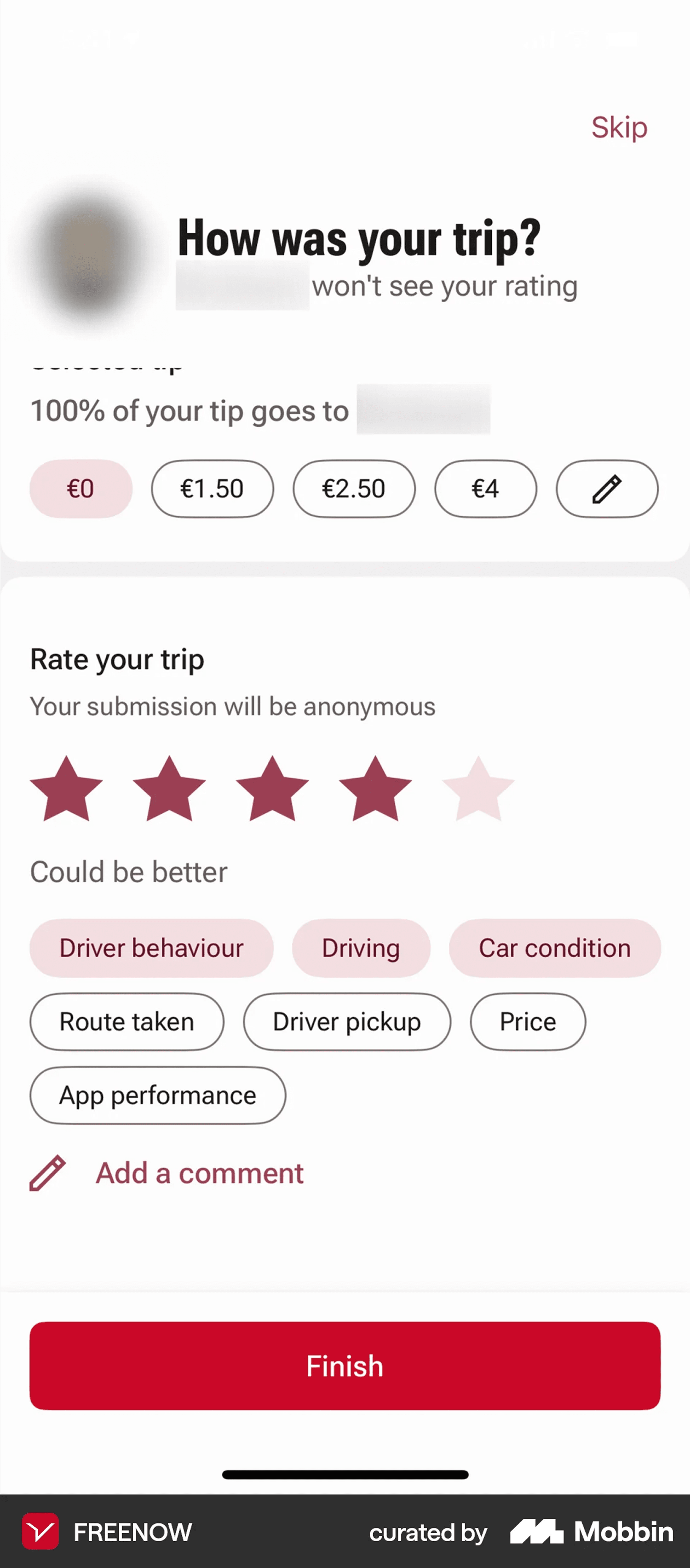
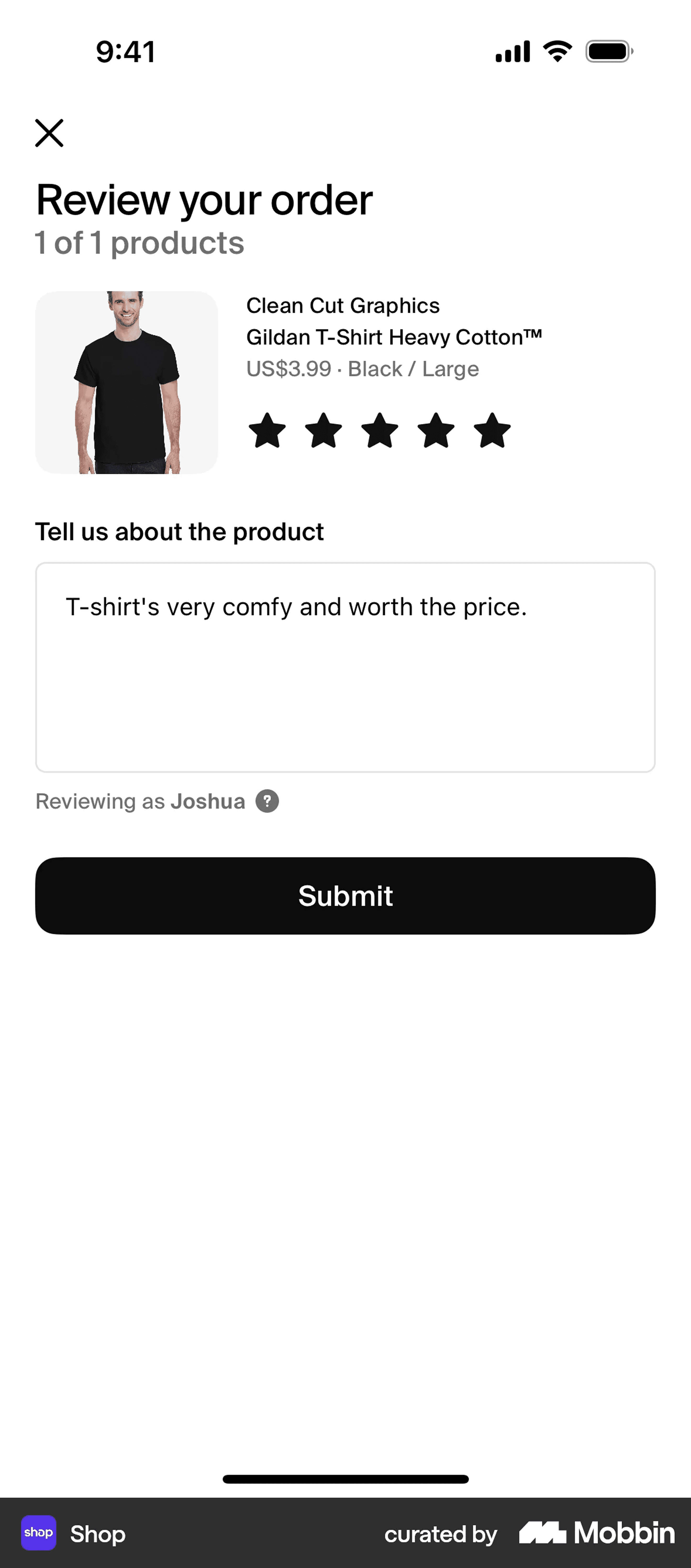
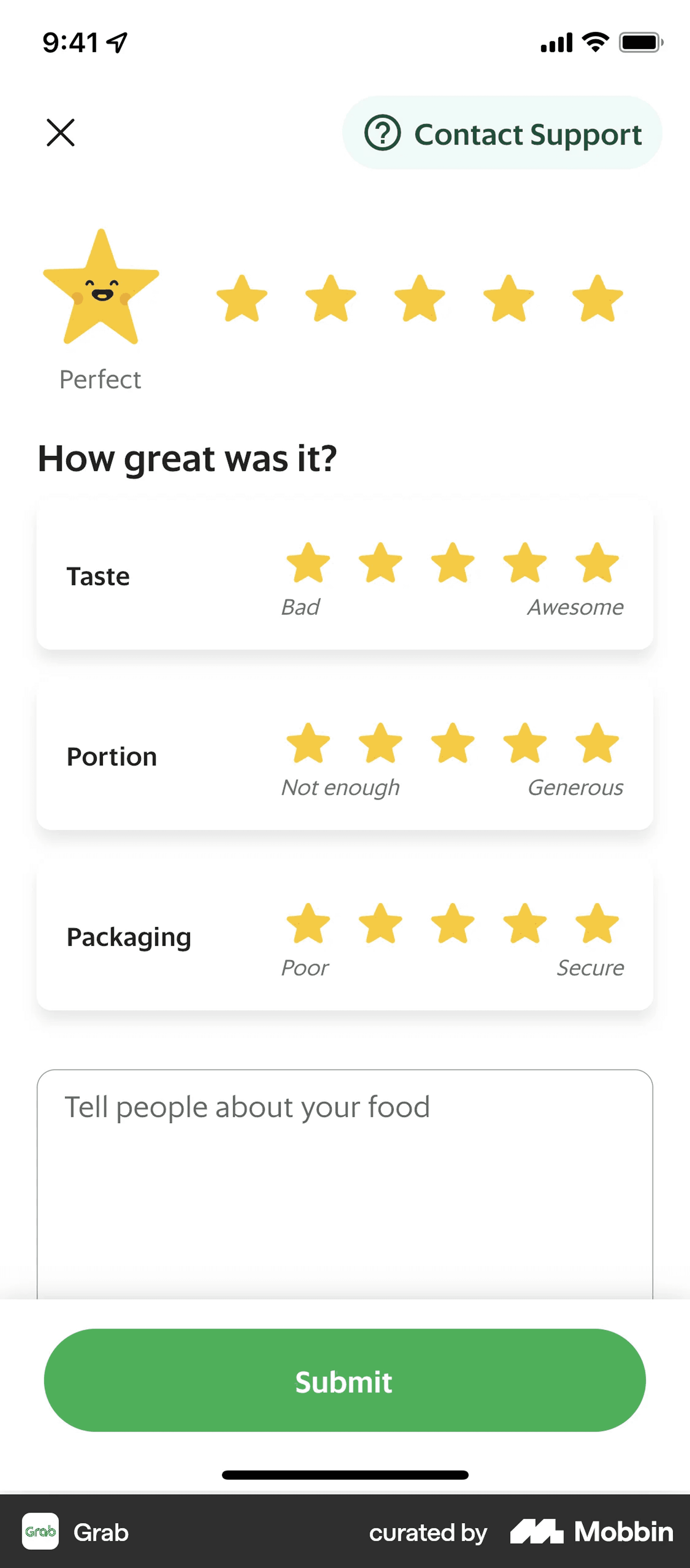
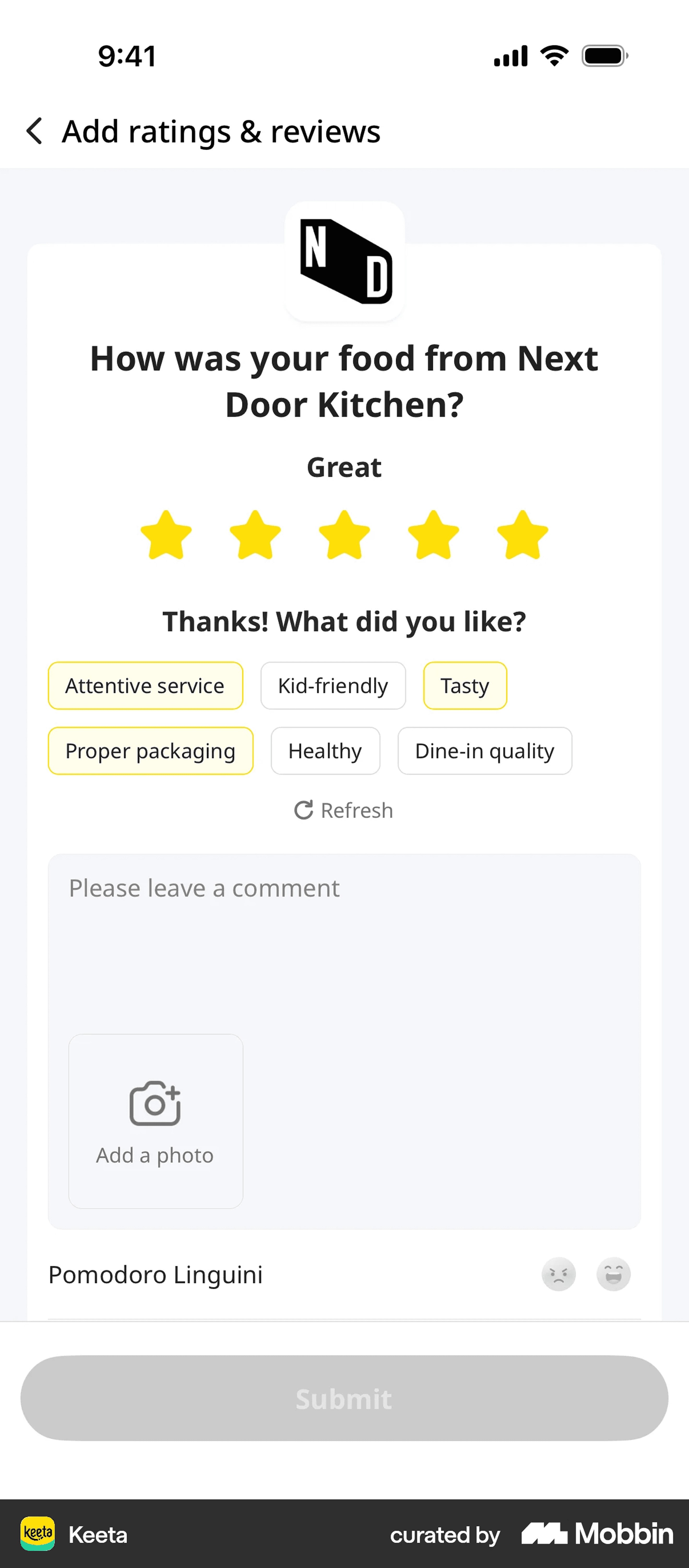
An analysis of leading consumer platforms revealed that
Emotion-based ratings increase engagement by making feedback intuitive and faster than traditional star systems.
Structured prompts and predictive response tabs significantly reduce writing effort and improve completion rates.
Cleaner, simplified UI with guided flows lowers cognitive load and increases the likelihood of review submission.
Iterations for the designs below can be viewed here: https://www.figma.com/design/UpjbOIgIG6ugo9hLHZmTDE/Amazon-Reviews?node-id=13-44&p=f&t=DwVDTioIlG2xX4np-0
Solution 1: Nudges
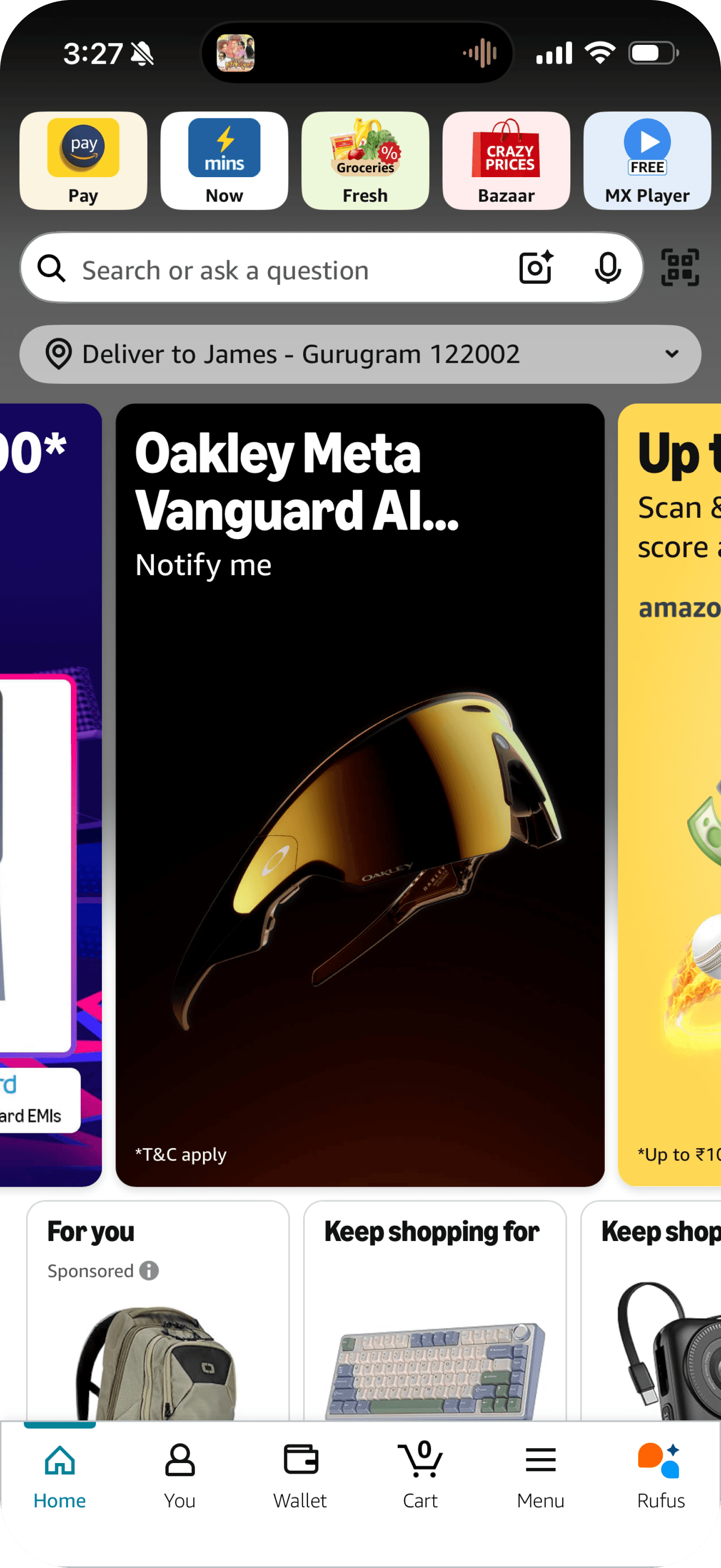
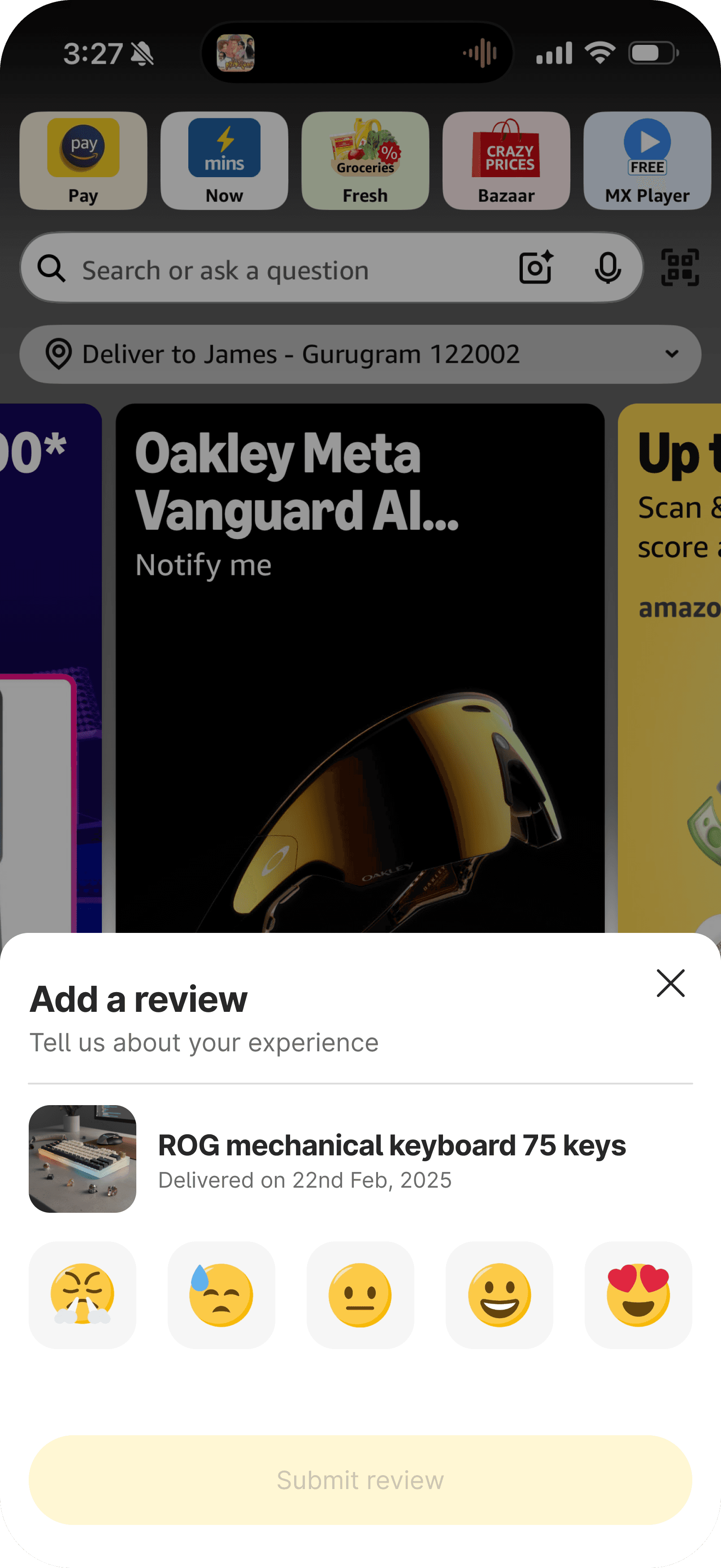
Nudges are contextual, non-intrusive prompts that appear at the right moment to gently guide users toward leaving a review.
Who it impacts
Primarily brand new and occasional users who lack awareness or do not navigate to the Orders section.
Why it’s better
It removes deep navigation, increases visibility at the right moment, and captures users when they naturally return to shop.
Impact on numbers
Expected to significantly increase review exposure and initiation rates, helping lift overall participation from 1–3% toward the 5–7% target.
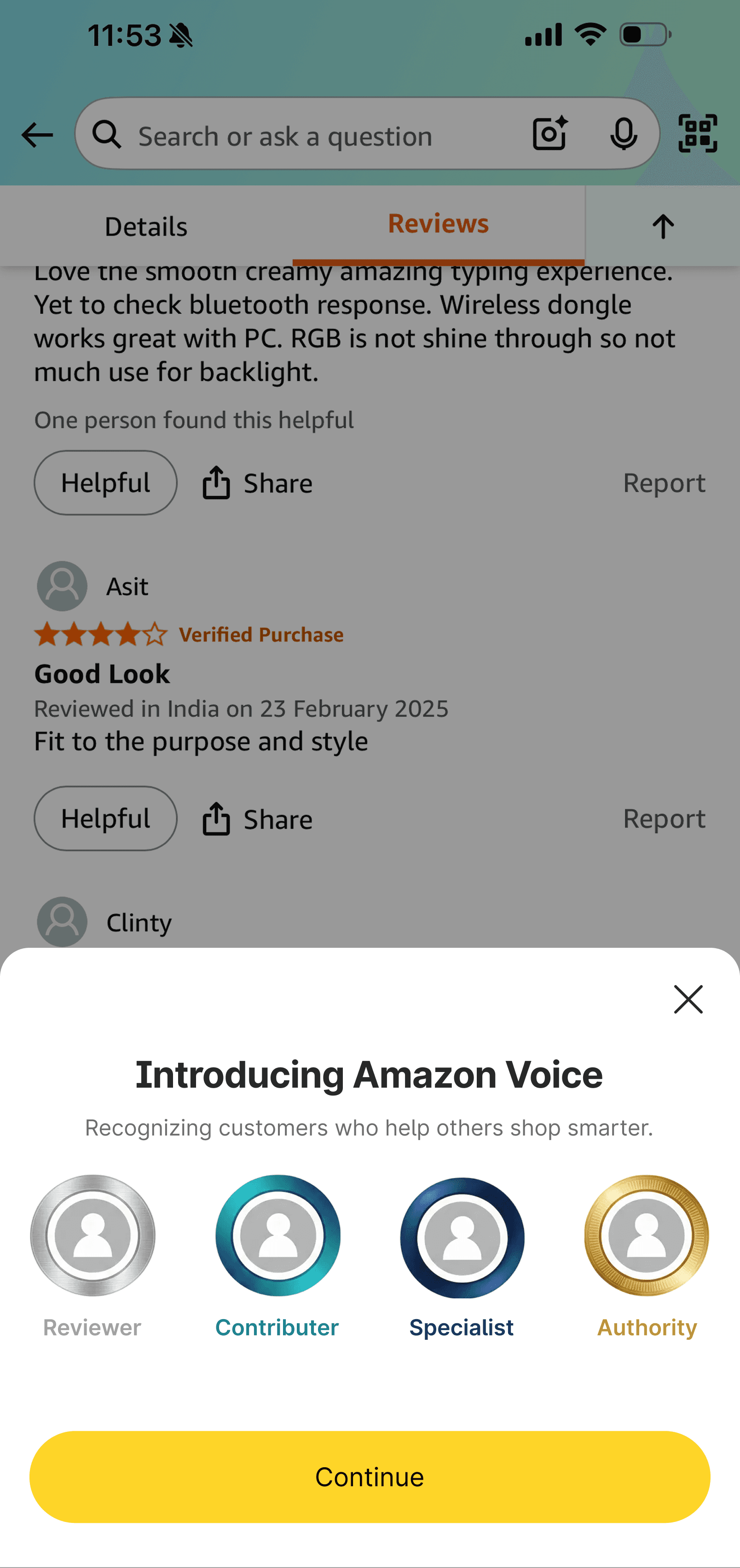
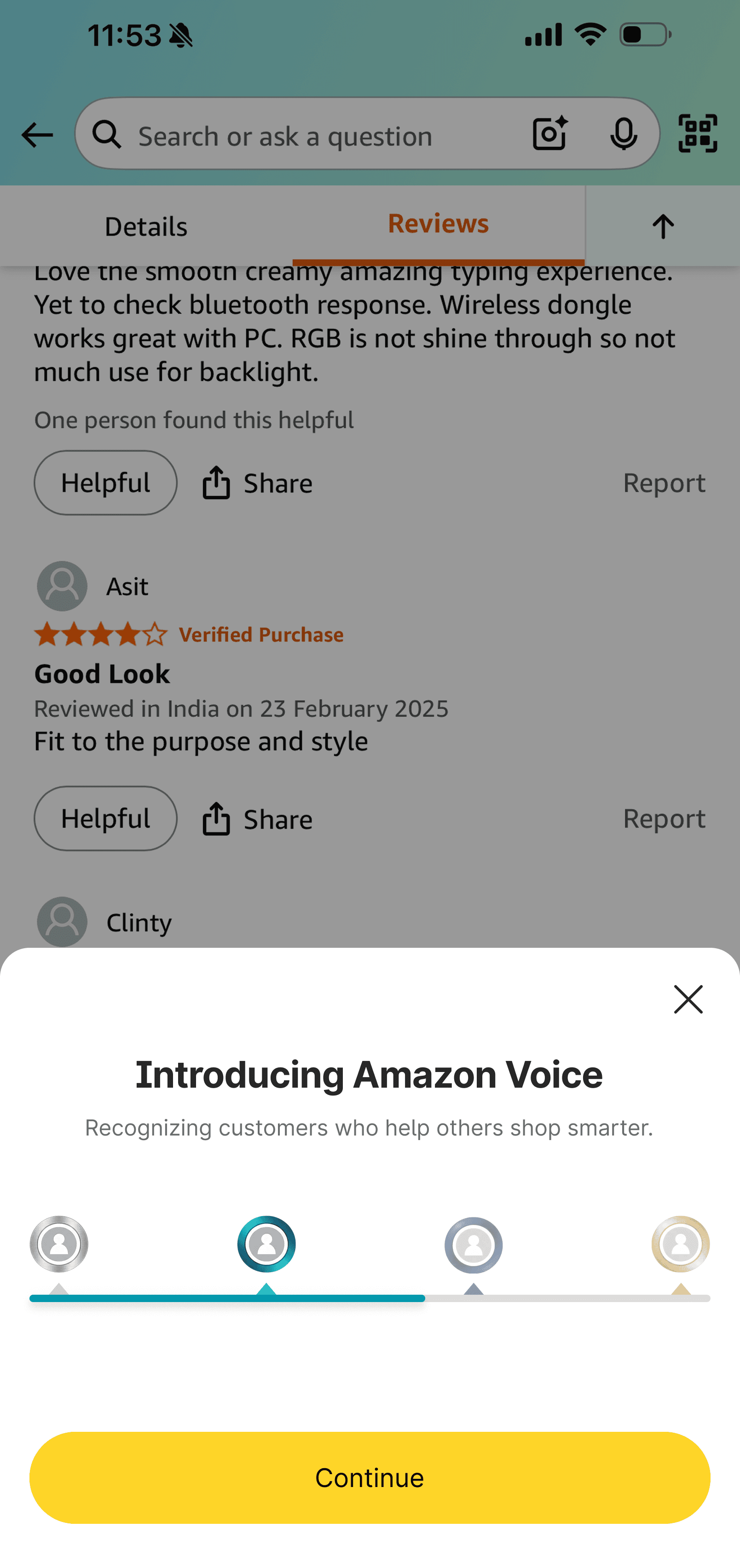
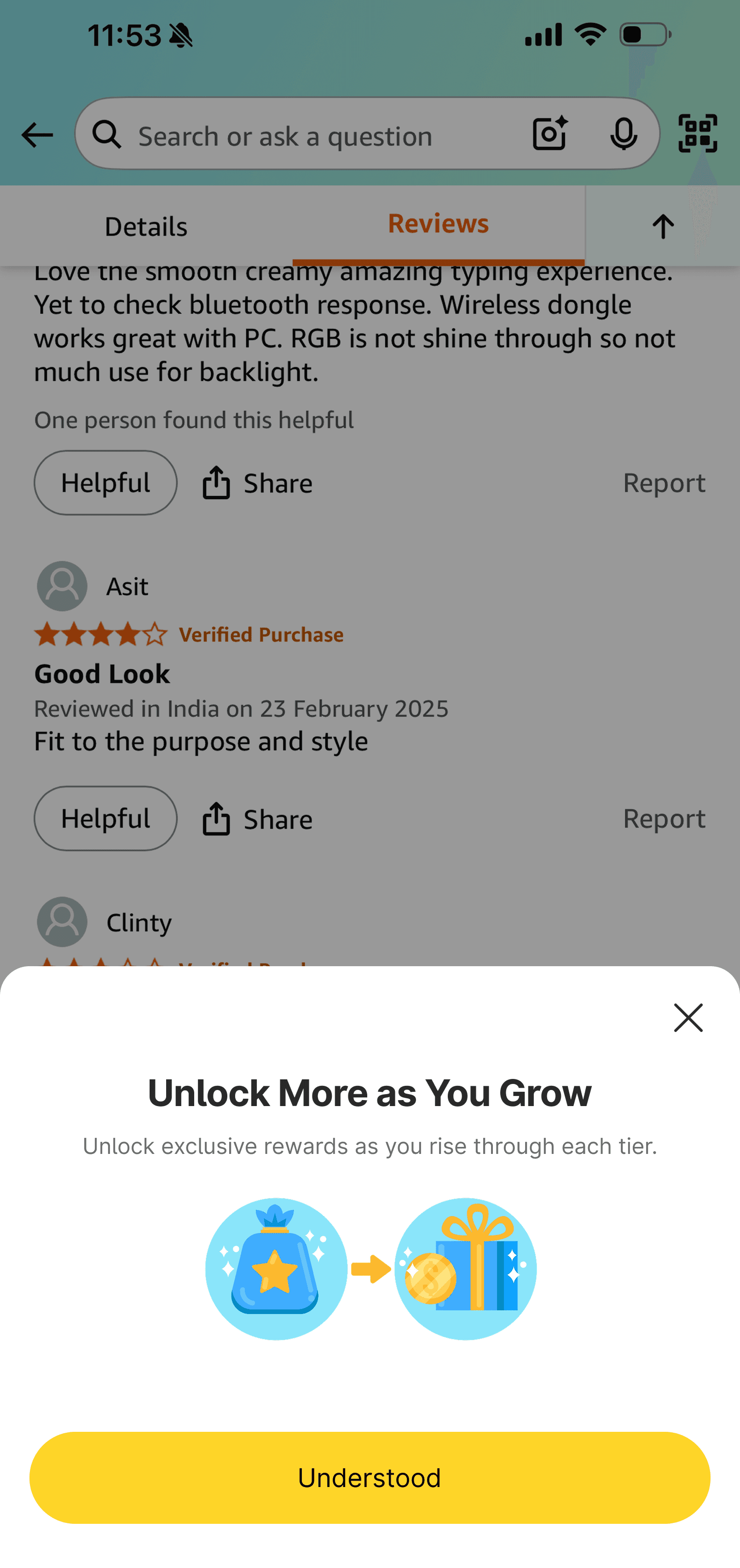
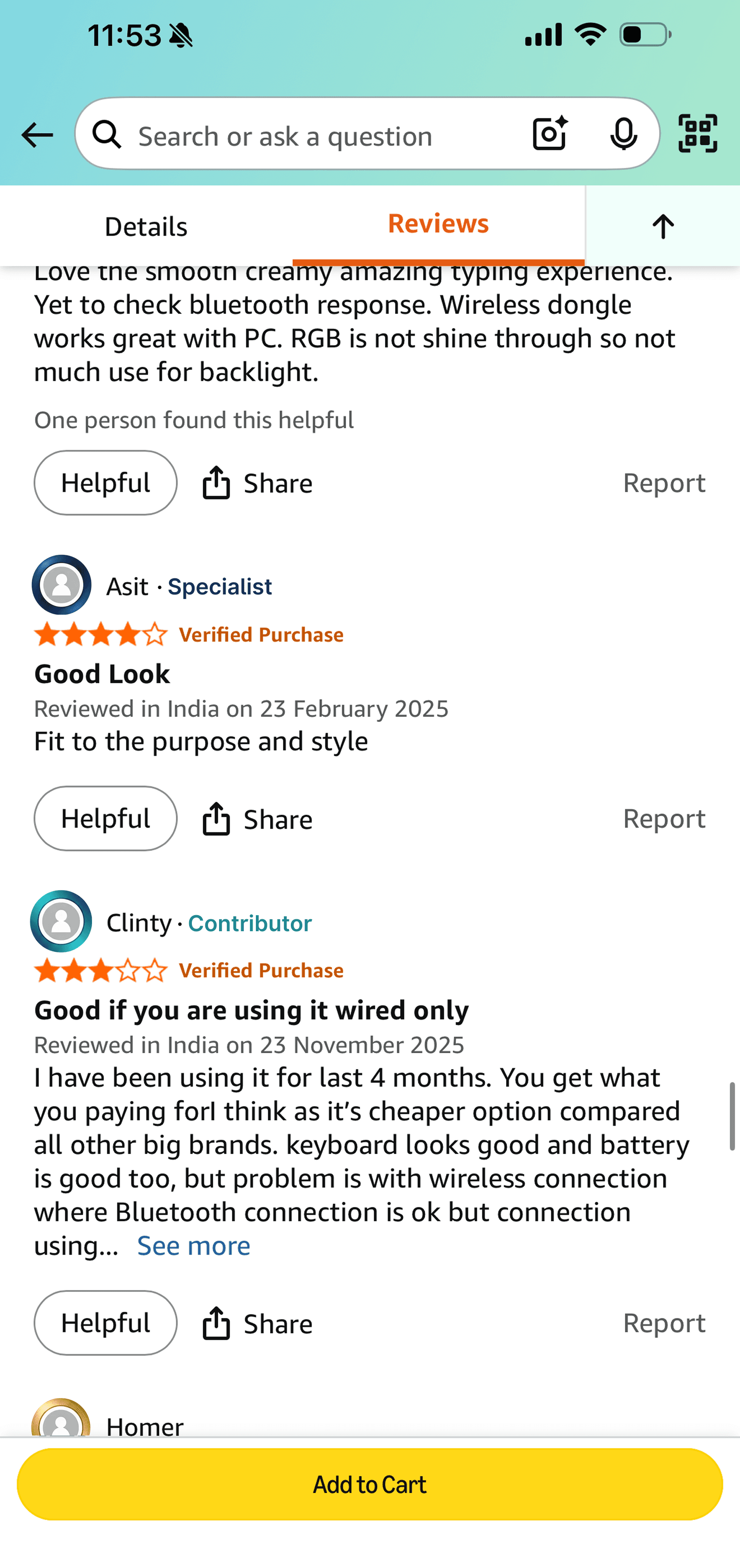
Solution 2: Loyalty Rings
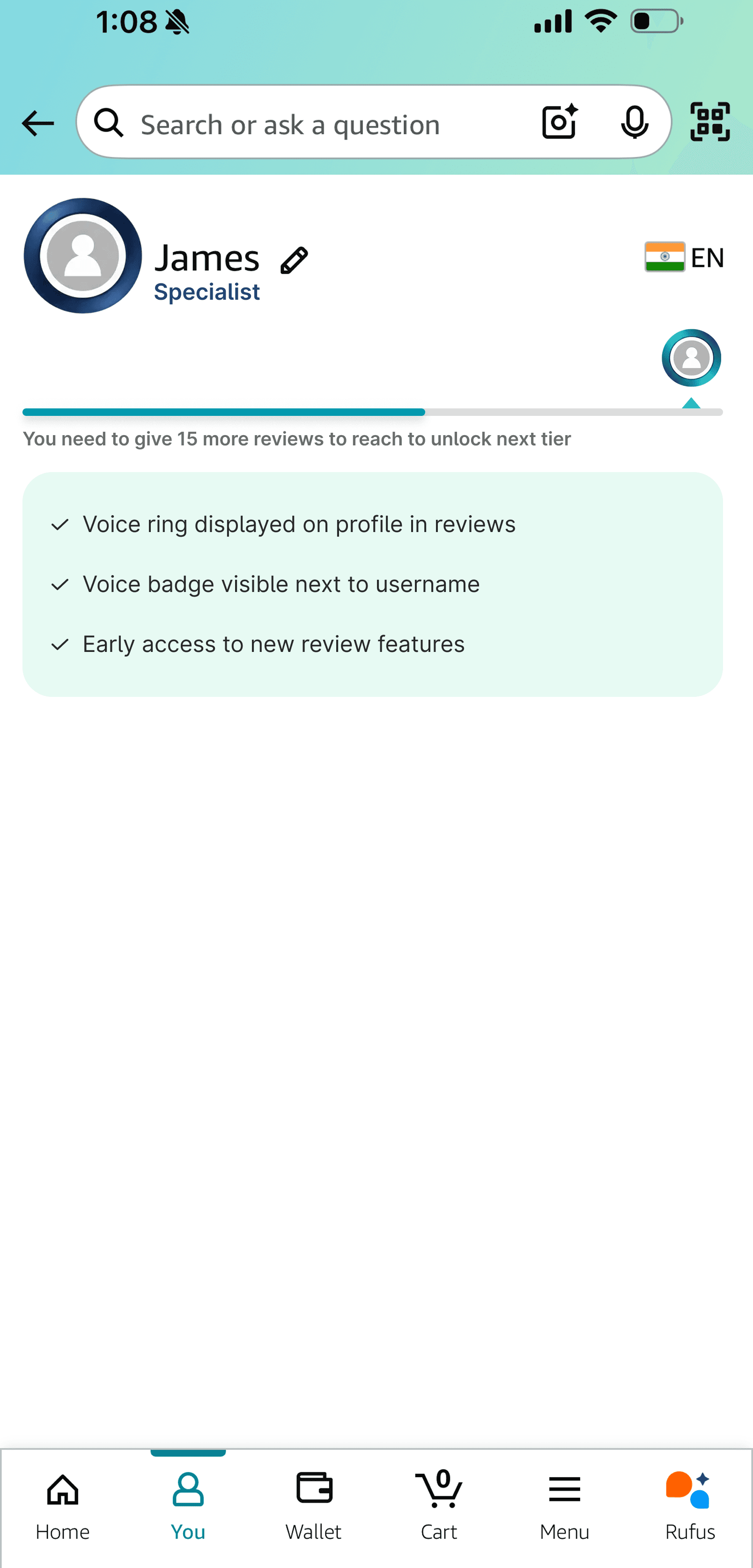
Loyalty badges create a visible identity for contributors by recognizing consistent, helpful reviewers through tier-based status.
Who it impacts
Primarily power users and repeat contributors who need recognition and motivation to continue reviewing consistently.
Why it’s better
It transforms reviewing from a one-time action into a progression-based identity system, rewarding helpfulness and building long-term engagement.
Impact on numbers
- Increase repeat reviewer participation by 20–25%
- Increase average reviews per active contributor by 15–20%
- Improve written review ratio by 10–15% through motivation and visibility benefits
Demerits
It can create a no. of reviews that are pushed instead of real intent of the customer to add reviews.
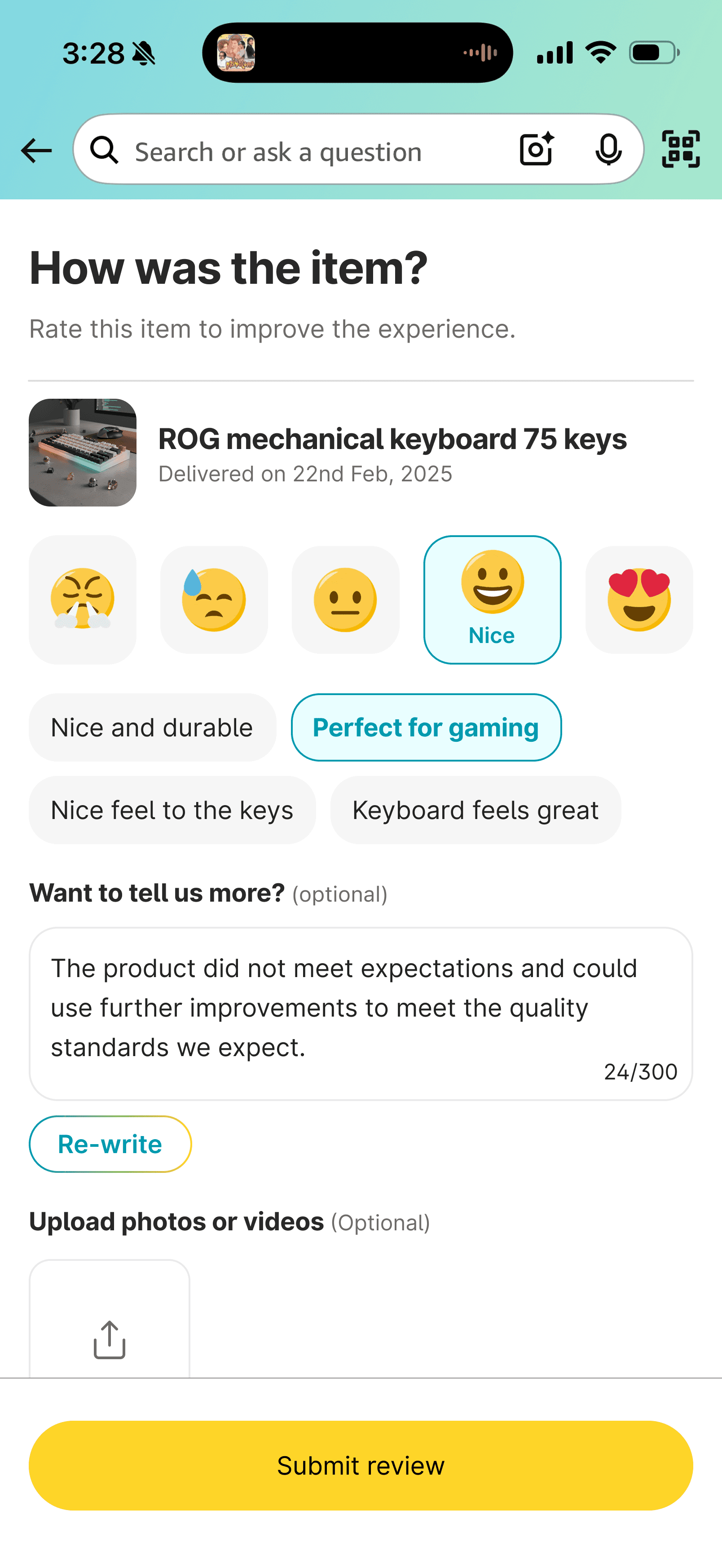
Solution 3: Write with AI
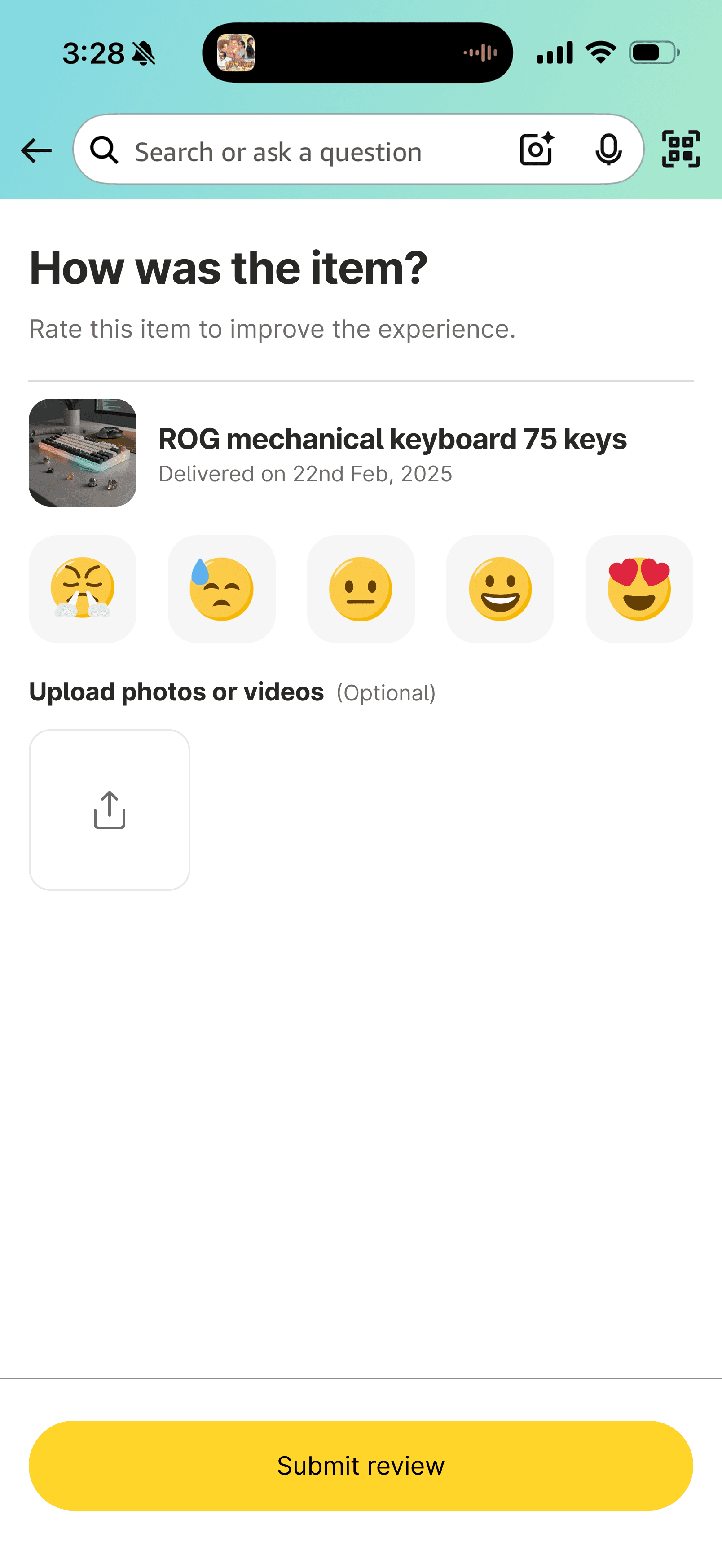
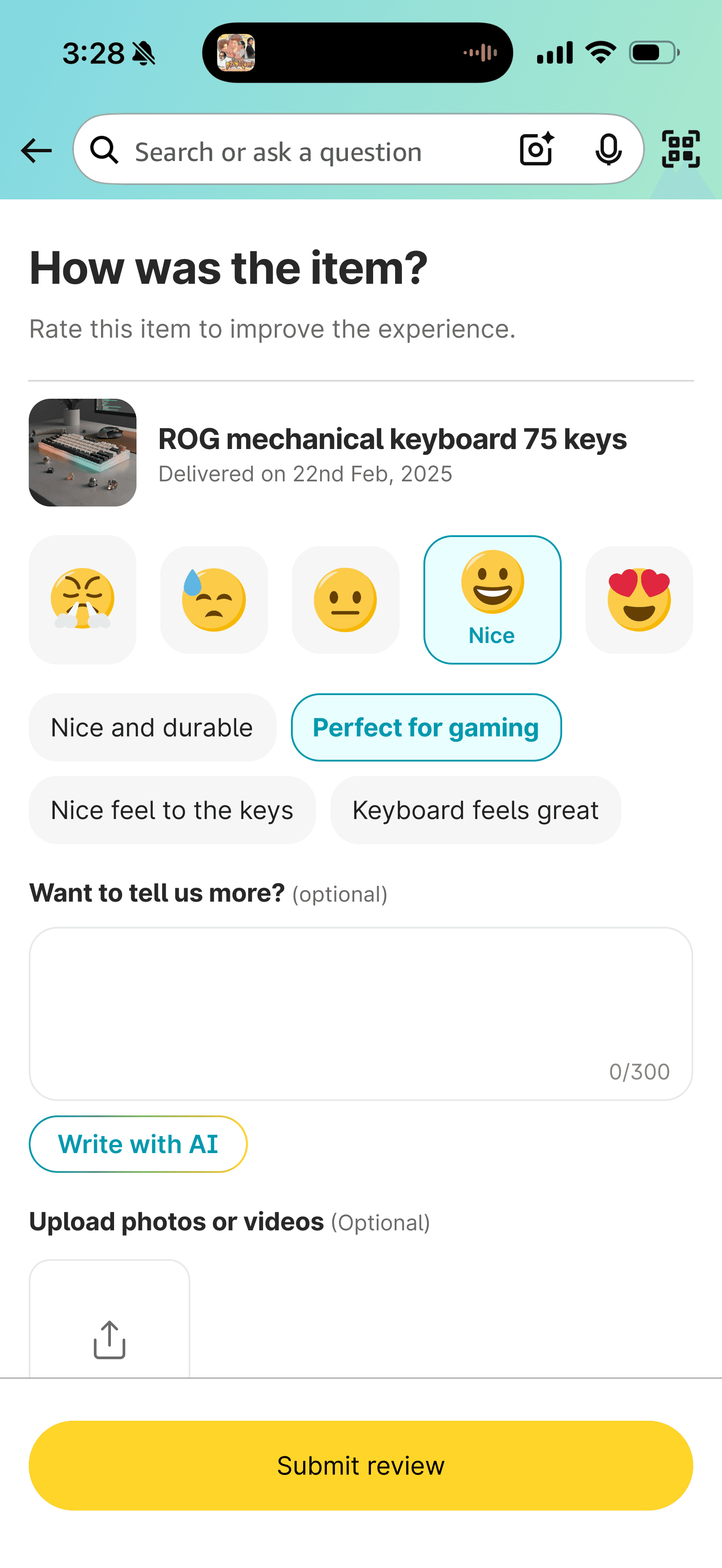
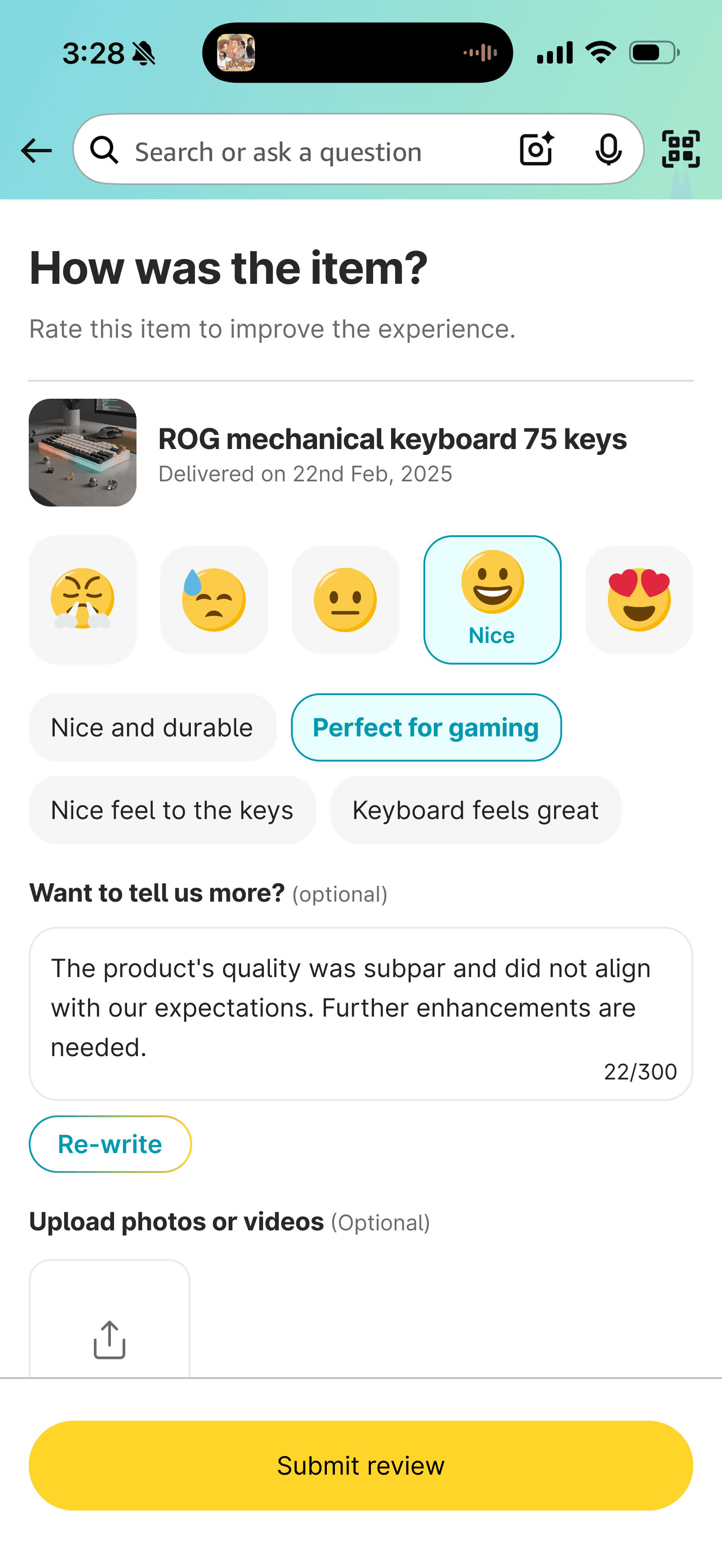
An AI-powered feature that generates a personalized review draft based on the user’s rating and purchase behavior, allowing them to edit and submit in just a few taps.
Who it impacts
Occasional users who avoid writing due to effort, and power users who want faster, structured review submission.
Why it’s better
It eliminates blank-page friction, reduces cognitive load, and transforms review writing into a low-effort micro-action while keeping users in control to edit or approve the draft.
Impact on numbers
Expected to significantly increase written review completion rates and boost text-based submissions by 15–20%, reducing drop-off within the review flow and improving overall review depth and quality.
Demerits: AI technology is still evolving and reviews are trusted by customers, so this can have some negative impact on the authentication of the review. (HYPOTHETICAL)
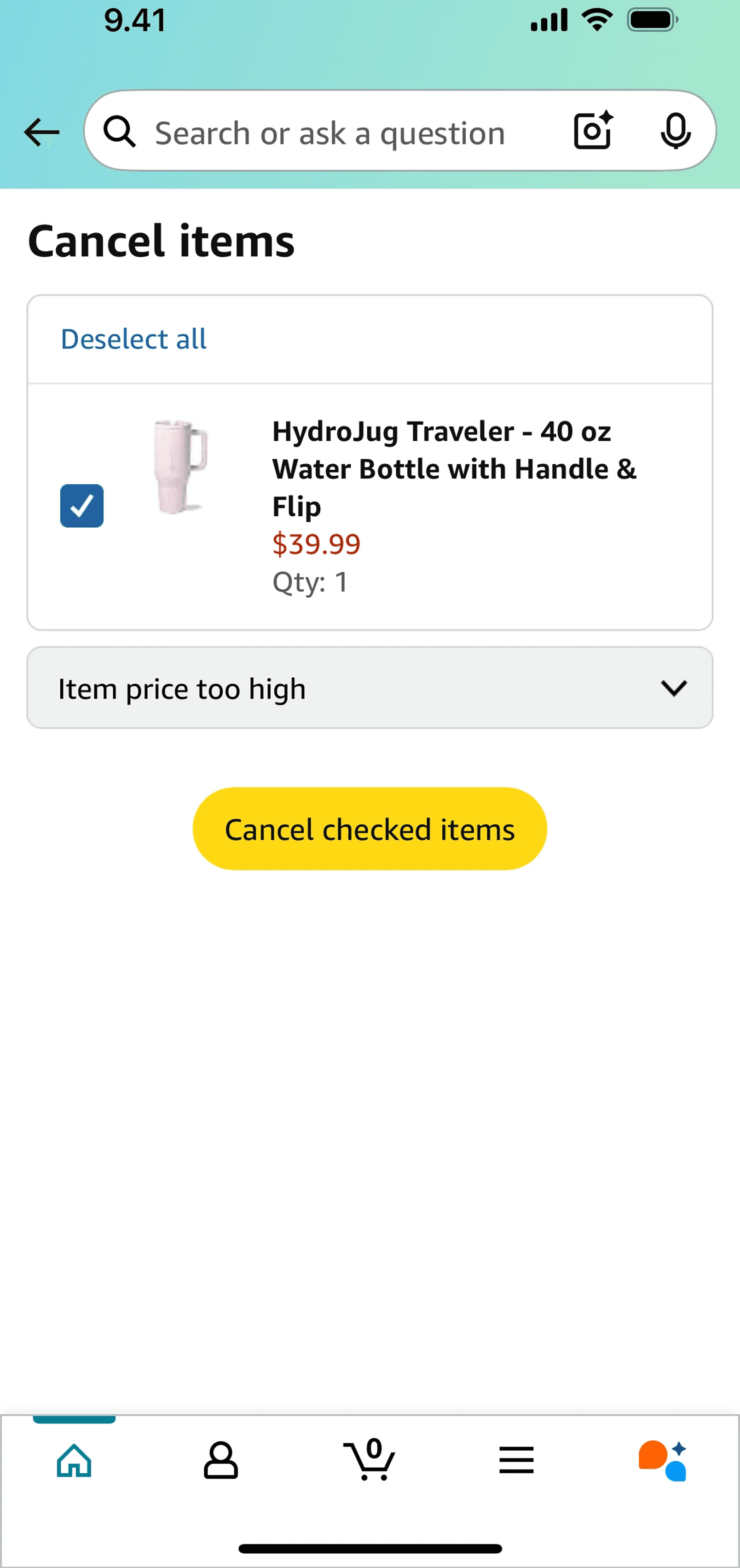
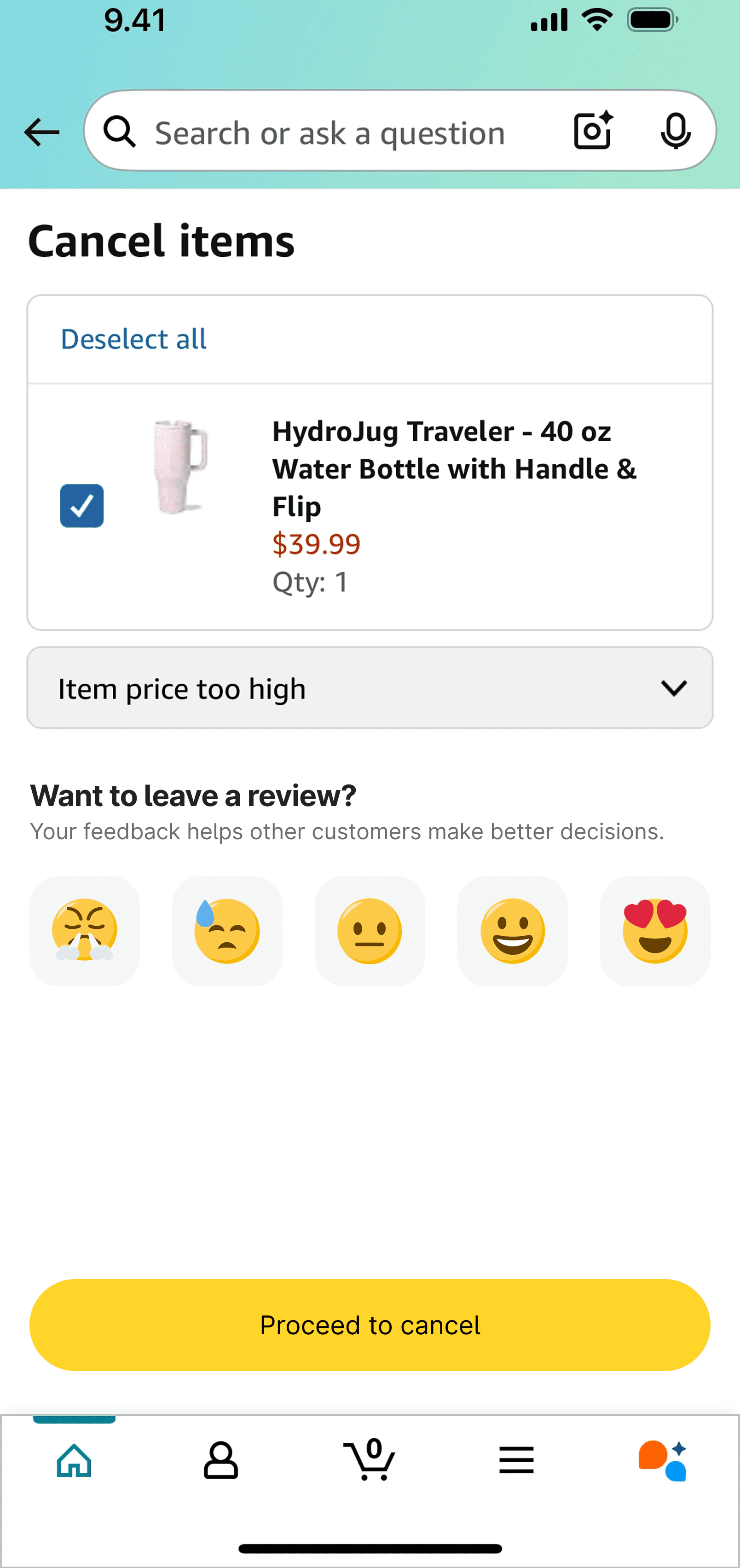
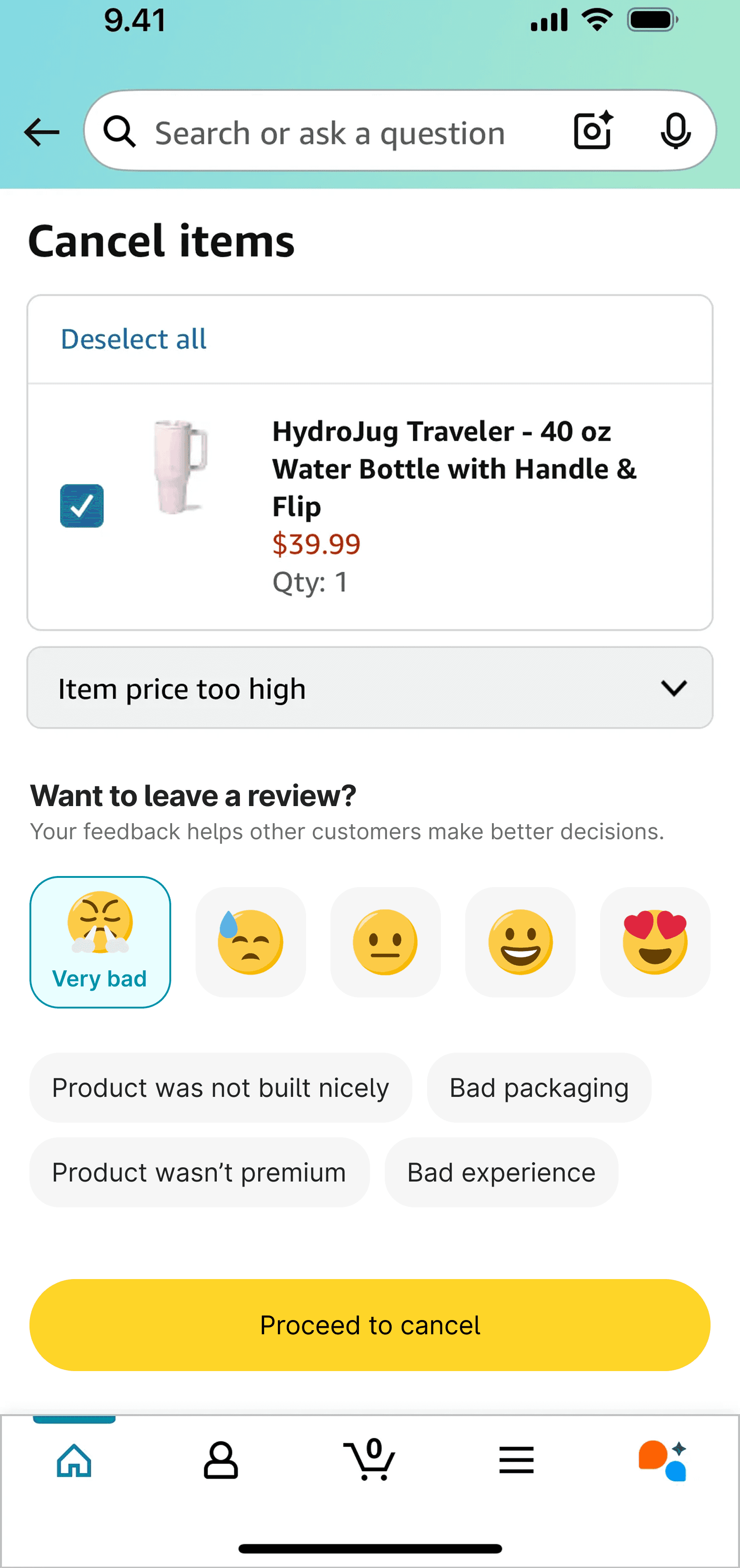
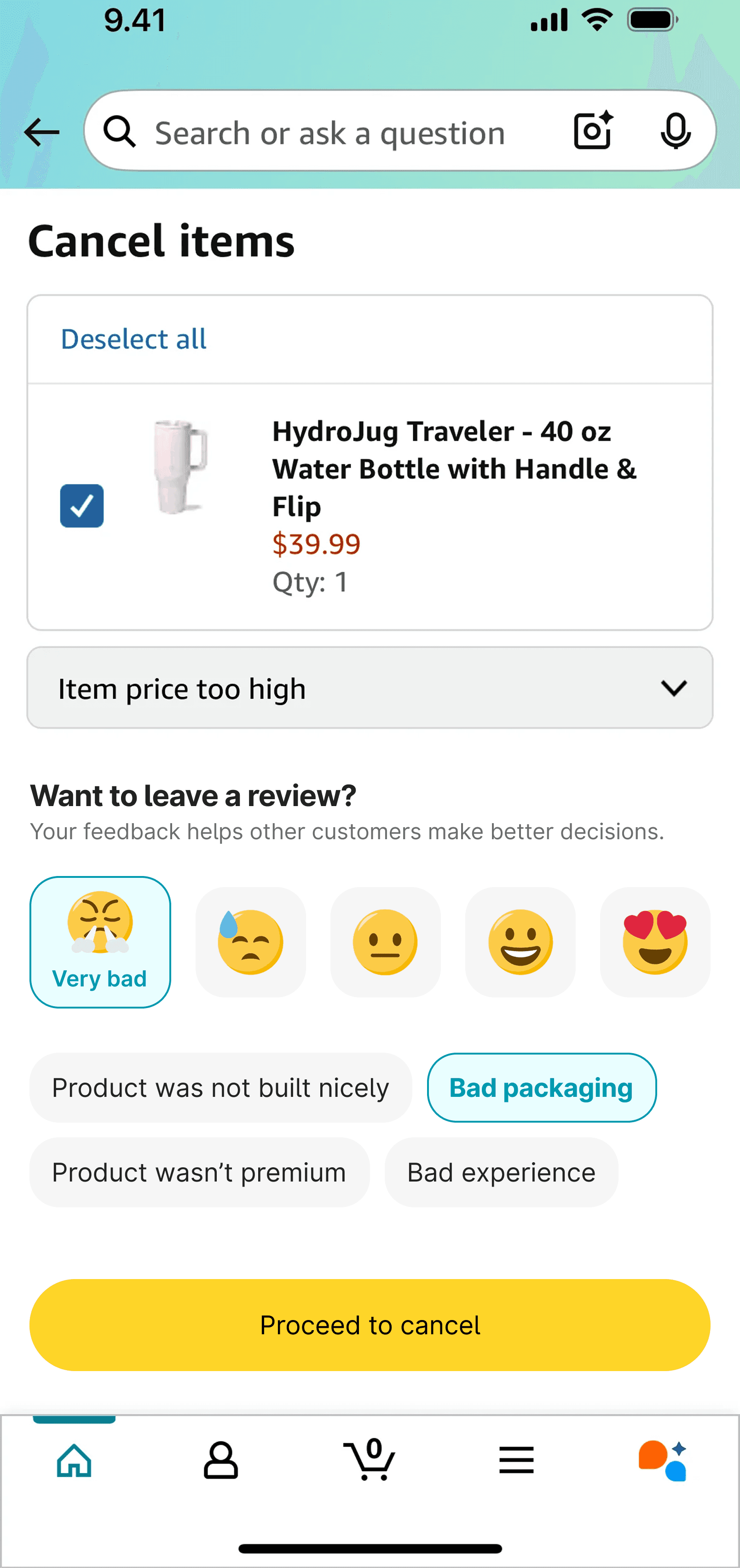
Solution 4: Adding reviews in Return Flow
A contextual review prompt shown during the return or cancellation flow, inviting users to optionally share their experience publicly after selecting a reason.
Who it's for
Users who are actively engaged with the product experience, especially dissatisfied or neutral buyers.
Why it’s better
It captures feedback at a high-intent moment, when users are already thinking about the product, reducing effort and increasing relevance.
Impact on numbers
Captures feedback at a high-intent moment when users are actively evaluating the product, increasing the likelihood of authentic reviews.
Demerits
It can lead more increased amount of negative reviews in the longer run.
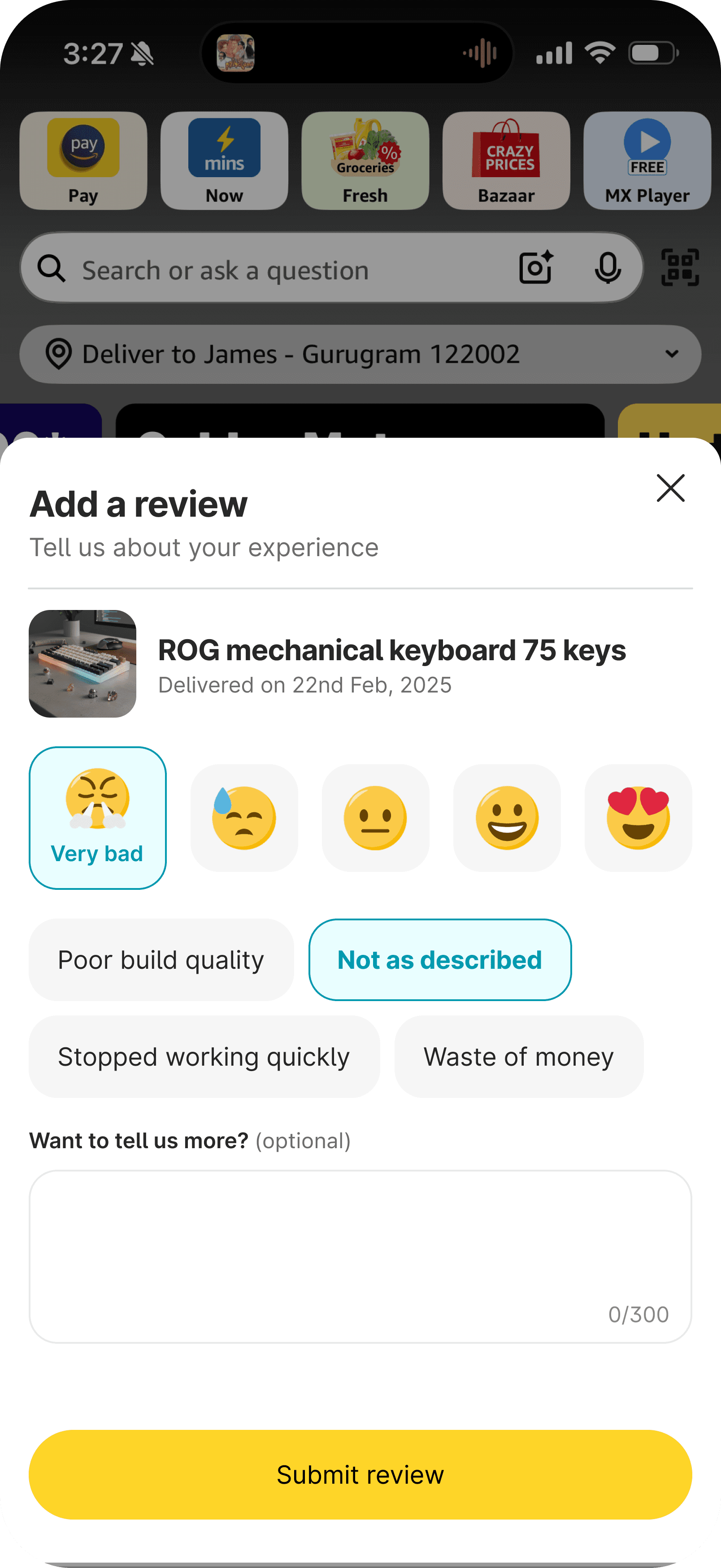
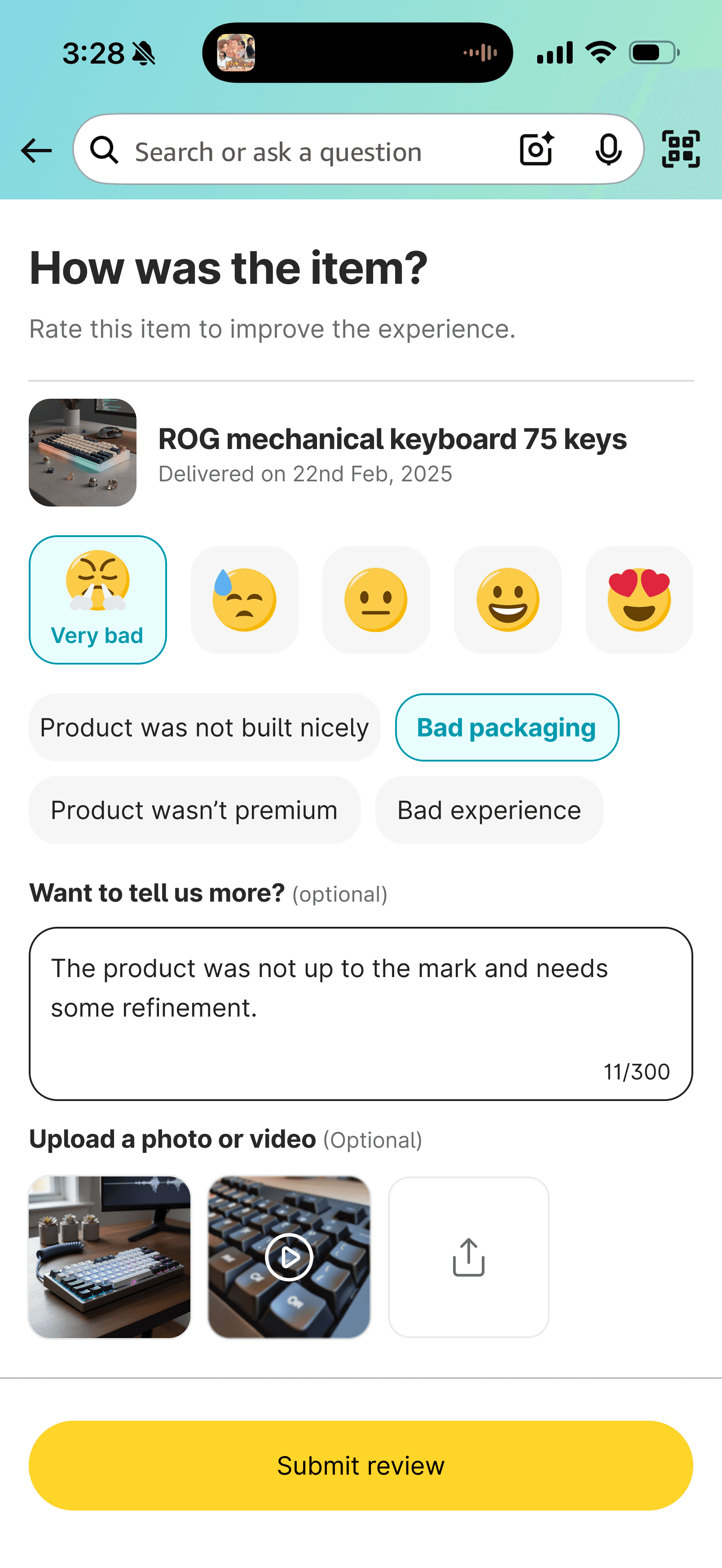
Solution 5: Revamping L2
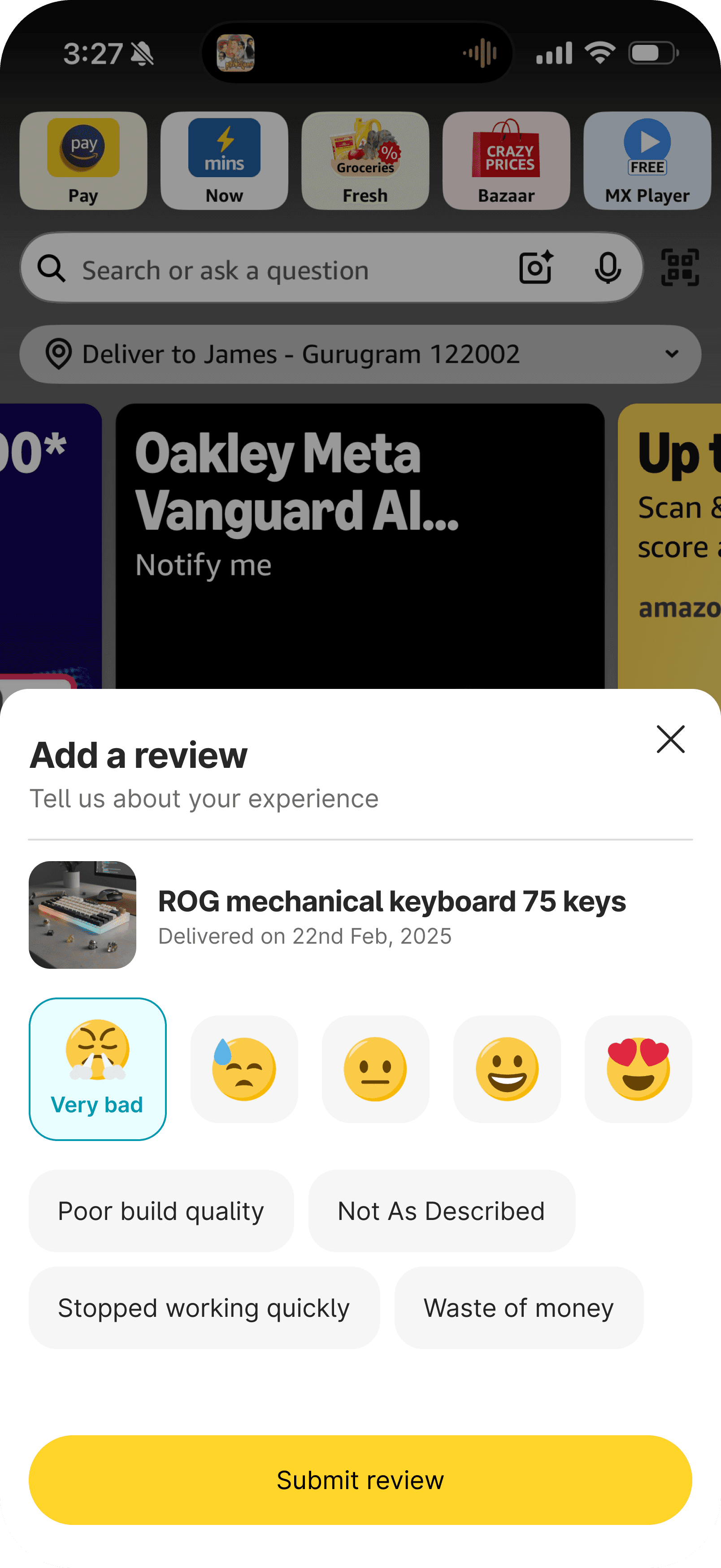
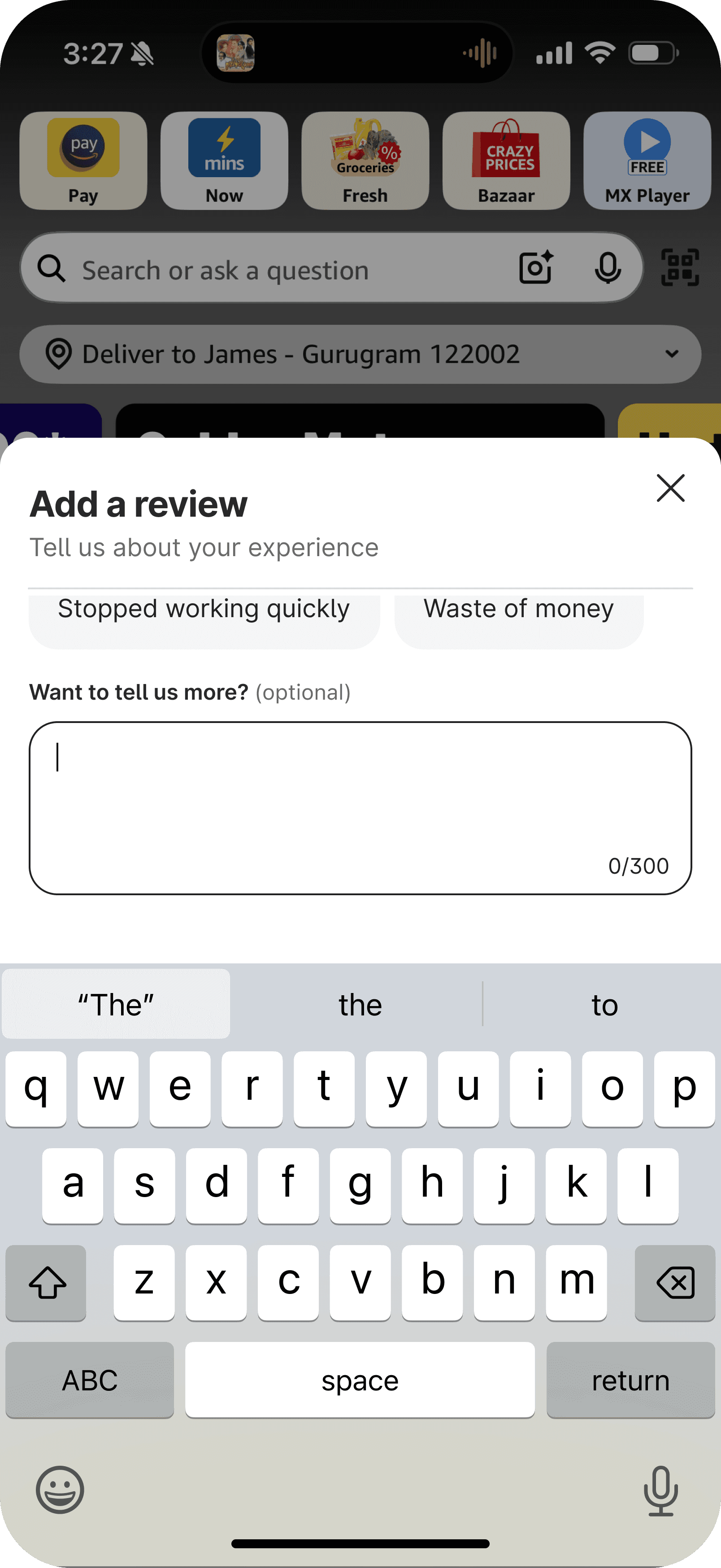
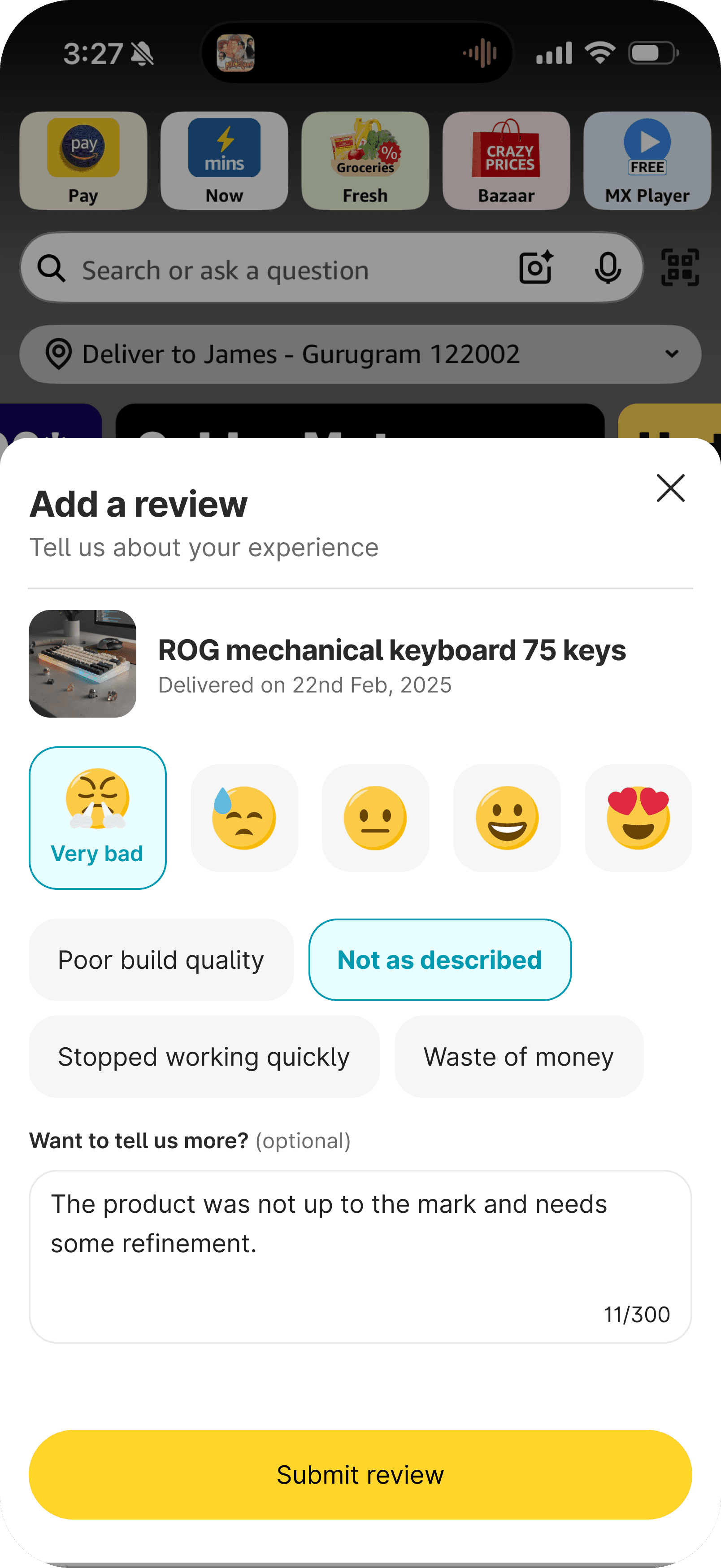
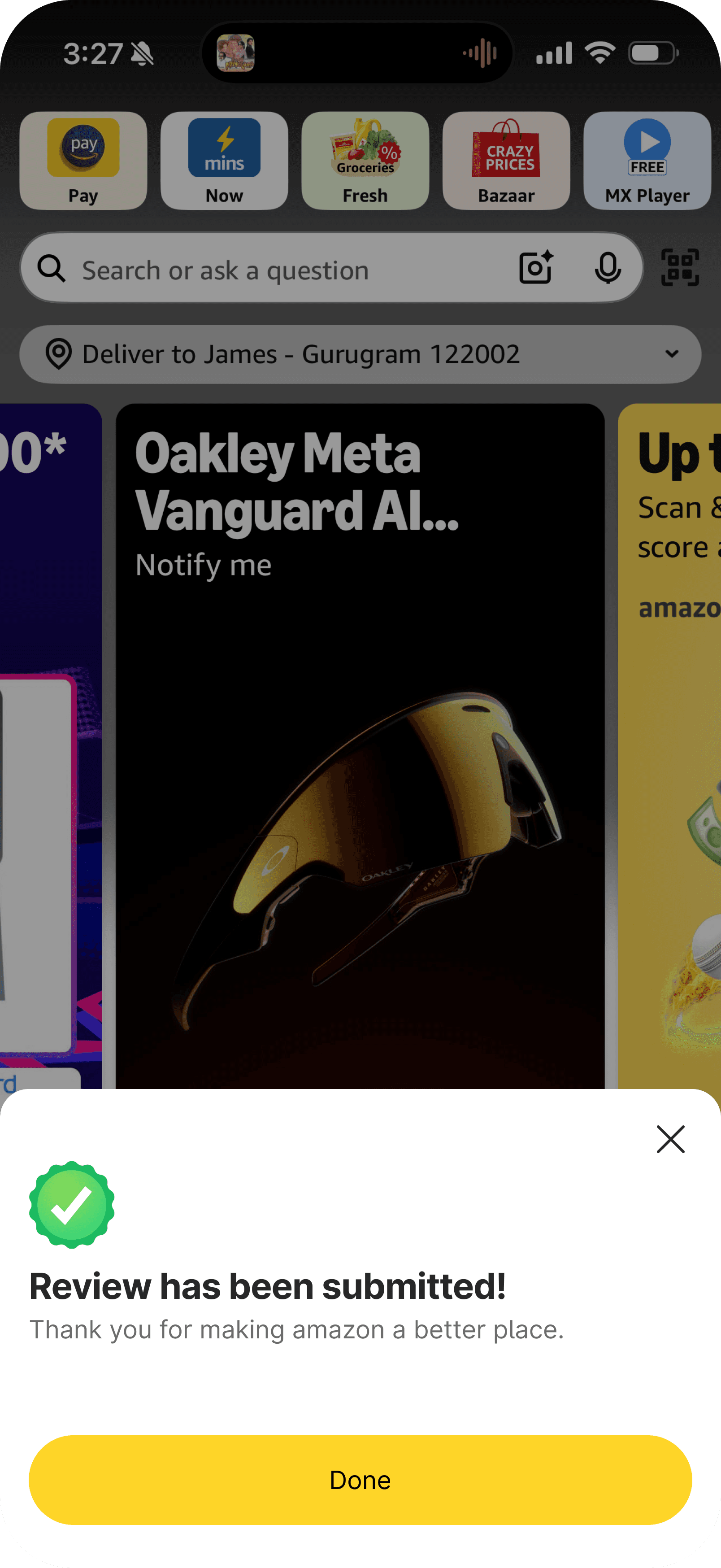
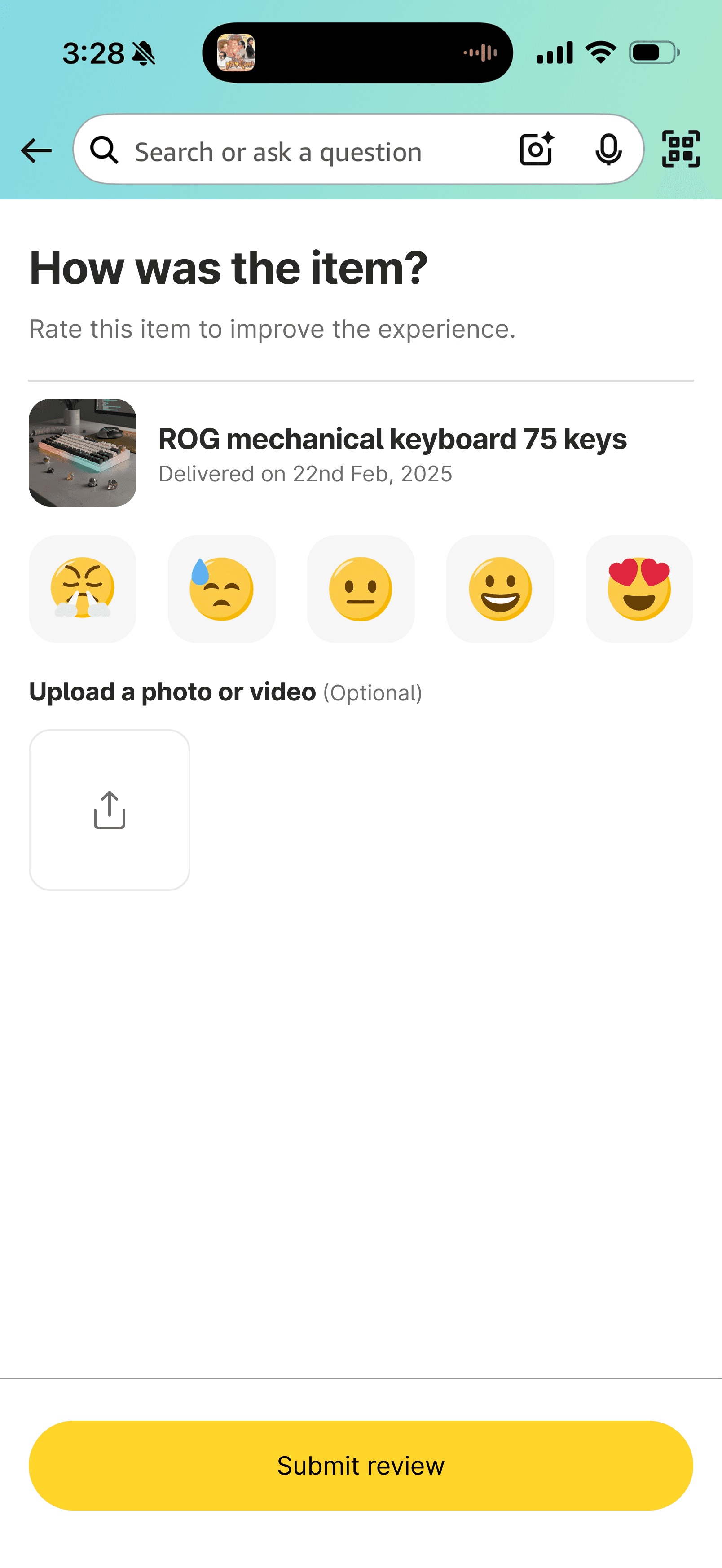
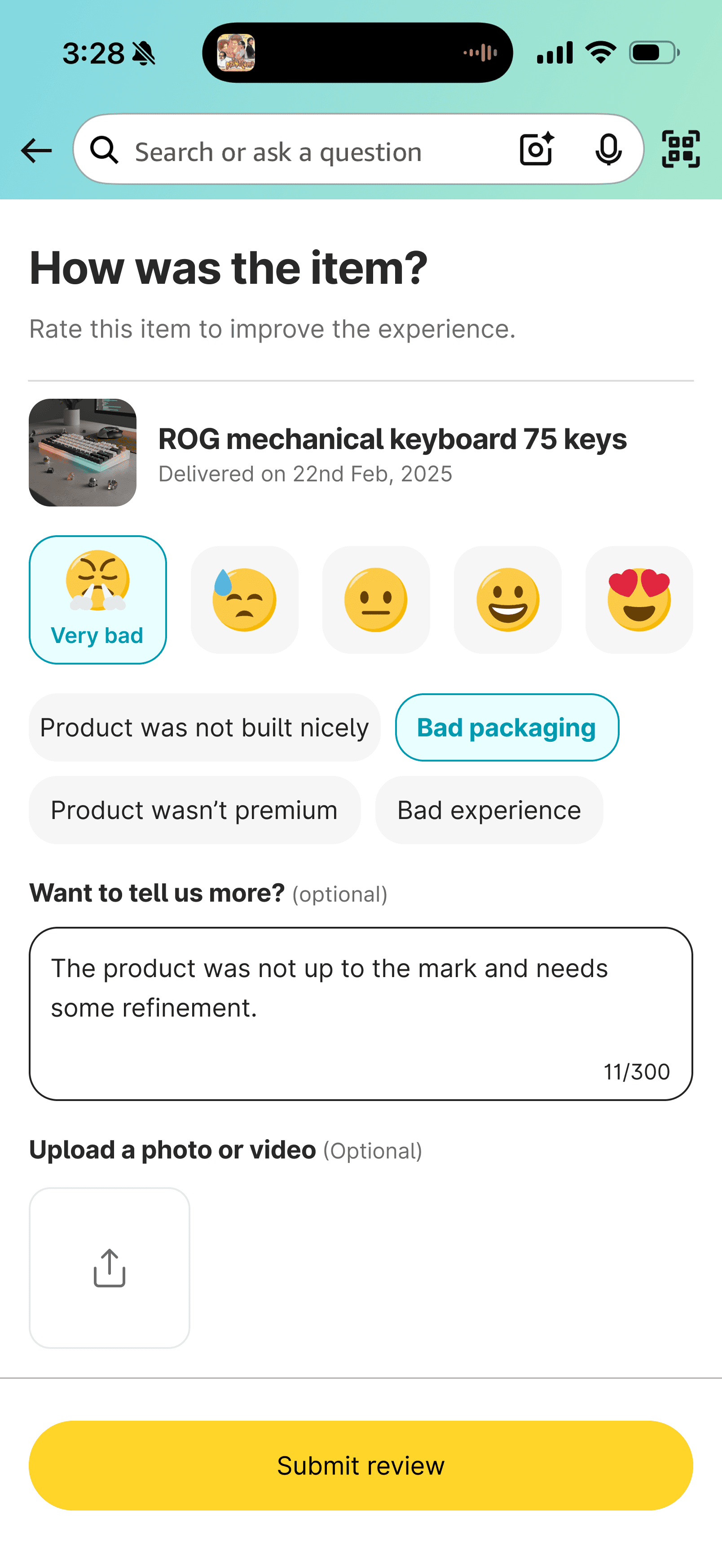
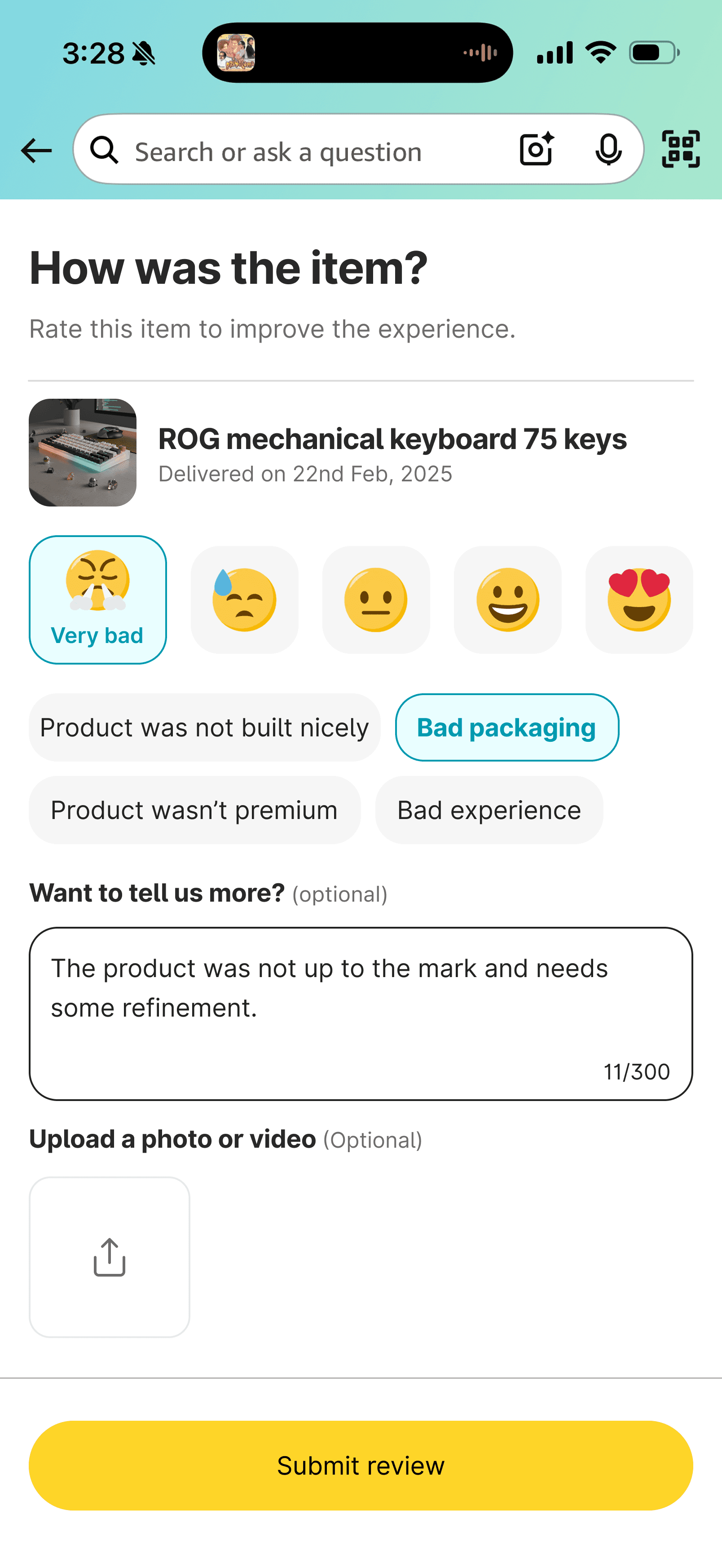
A redesigned review interface with emoji-based ratings, structured prompts, and predictive text reduces writing effort and removes blank-page friction.
Who it’s for
Primarily occasional users and younger audiences (19–28) who hesitate due to writing effort, and power users who want faster submission.
Impact (In Numbers)
• Reduces review flow drop-off
• Increases written review ratio by 20–30%
• Improves overall review completion rate significantly
Why it works
Emoji ratings and predictive tabs lower cognitive load, making reviewing feel quick and effortless rather than formal and time-consuming.
Solution 5: Emailers, notification & WhatsApp



Amazon should be pushing eye catching notifications like Zomato & Swiggy to make the user click and go directly to the review screen in order to increase reviews.
Email and Whatsapp should act as a followup method to check on the customer's response 3 days after delivery to ensure that customer does not have to enter the app to review and can review using capability of mail and WhatsApp.
Seller side solutions

Request a Review: Sellers manually send Amazon-approved review reminders post-delivery to increase feedback collection.
Package Inserts: Physical inserts like QR codes, review link etc. inside shipments to politely ask customers to leave a review after receiving the product.
Handling other flows
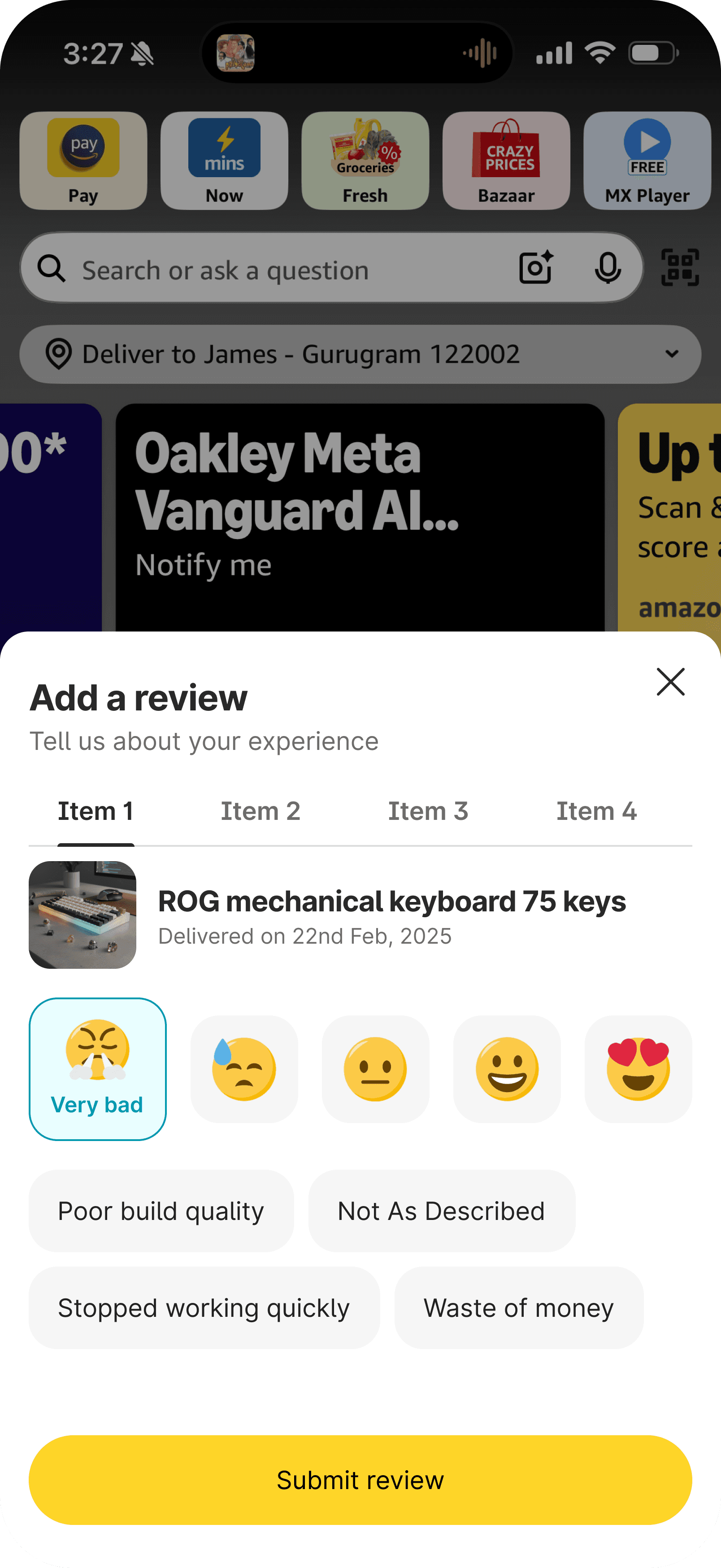
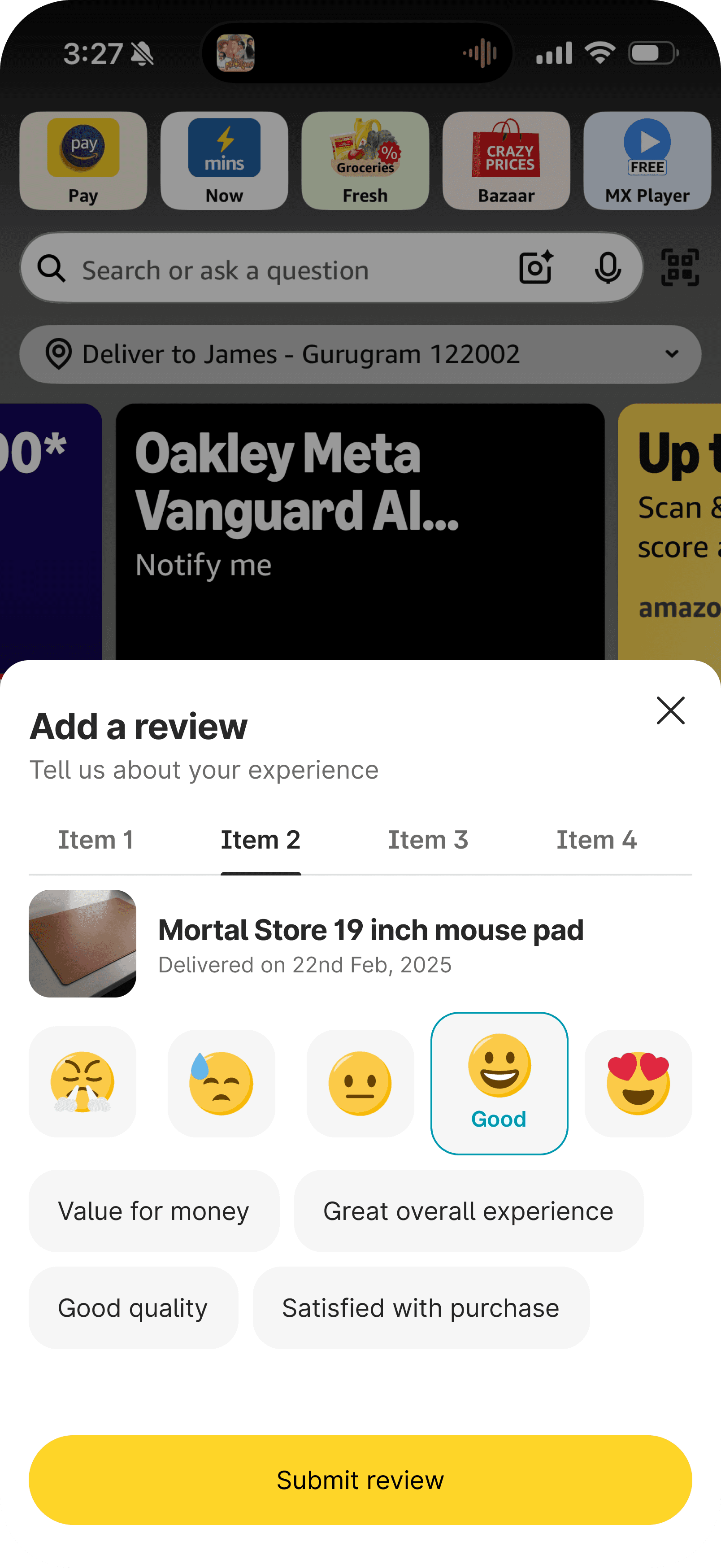
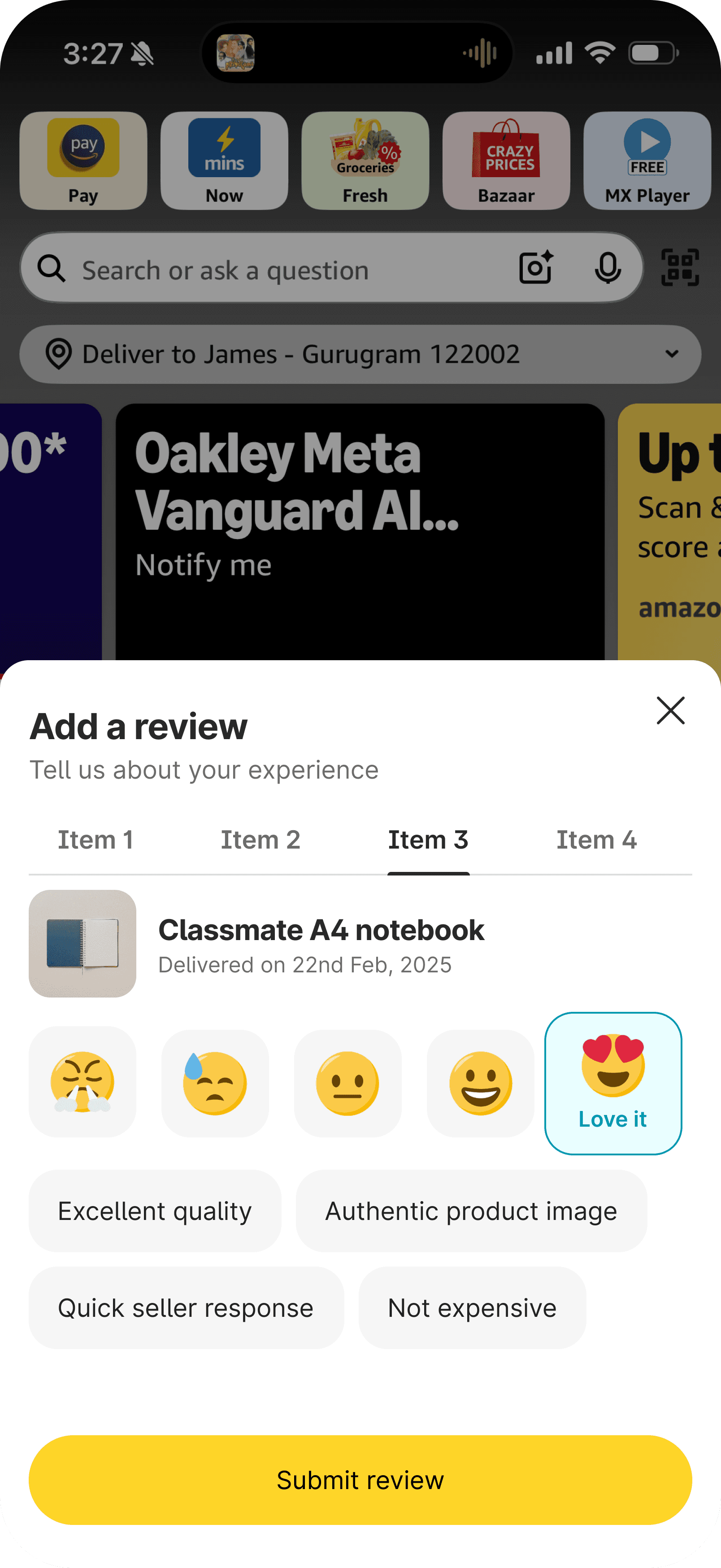
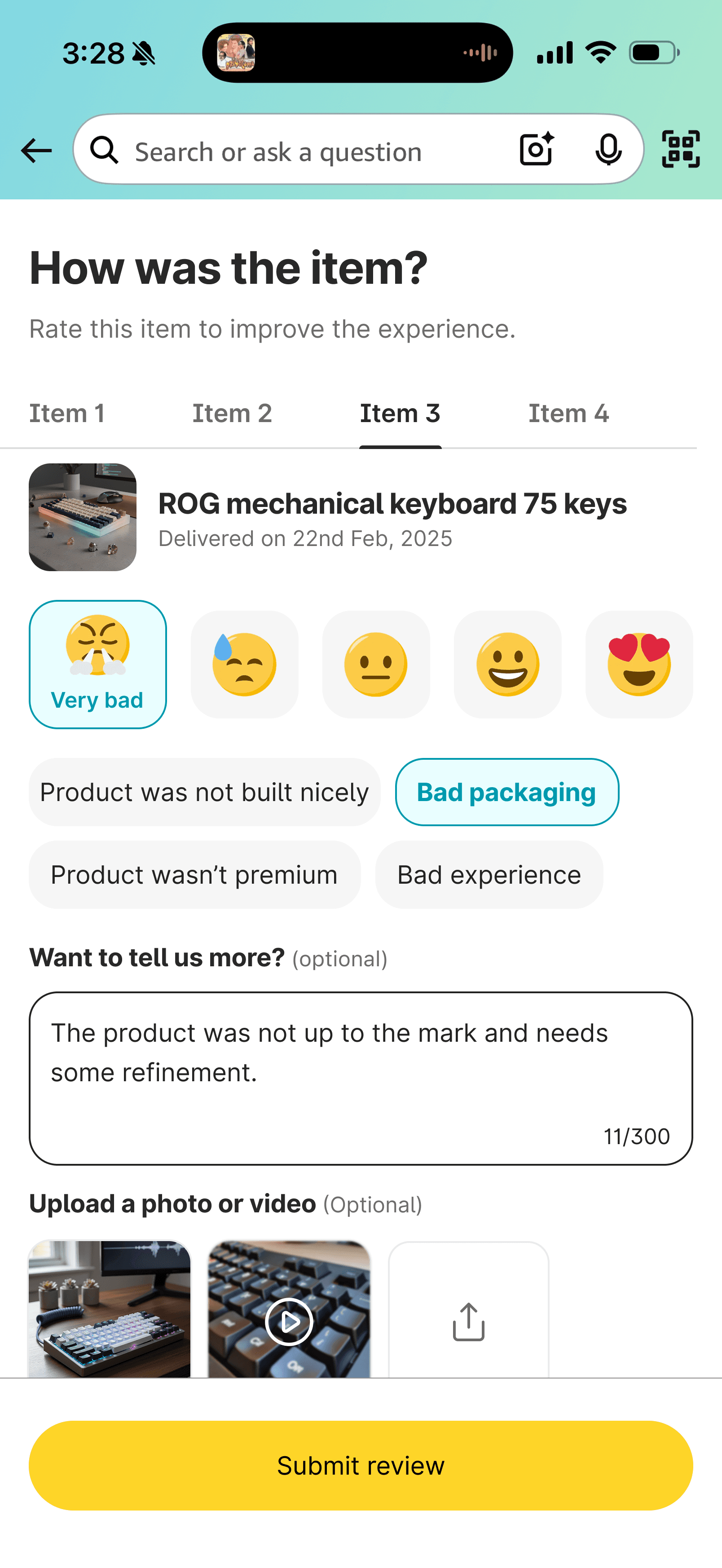
If multiple products are ordered in the cart, this solution allows users to quickly rate each item without opening a new screen.
The conclusion
⏱️
Faster Reviews
+
🎯
Lesser Clicks
+
💡
Insightful Data
Amazon’s review ecosystem is trusted but under-participated. While nearly every customer reads reviews, only a small fraction contribute.
The core issue is not willingness, it is friction, visibility, and lack of motivation.
By introducing contextual nudges, simplifying the review flow, leveraging AI-assisted writing, capturing high-intent return moments, and rewarding consistent contributors through Amazon Voice, this solution transforms reviews from a hidden action into a seamless part of the shopping journey.
The result is higher participation, better quality feedback, and stronger long-term trust across the marketplace.
Success metrics
⏱️ Review Submission Rate
Increase overall review participation from 1–3% to 5–7%.
❤️ Review Initiation Rate
Measure the percentage of users who enter the review flow after seeing a prompt.
🎯 Review Completion Rate
Reduce drop-off within the review flow by ~30%.
📈 Written Review Ratio
Increase text-based reviews by 20–30% to improve depth and usefulness.
🔁 Repeat Reviewer Rate
Increase users submitting 3+ reviews by 20–25% to drive long-term engagement.